Bayreuth outside the moat
Pablo Heras-Casado conducts at the Palau de la Música the awaited concert with the orchestra of the Wagnerian festival
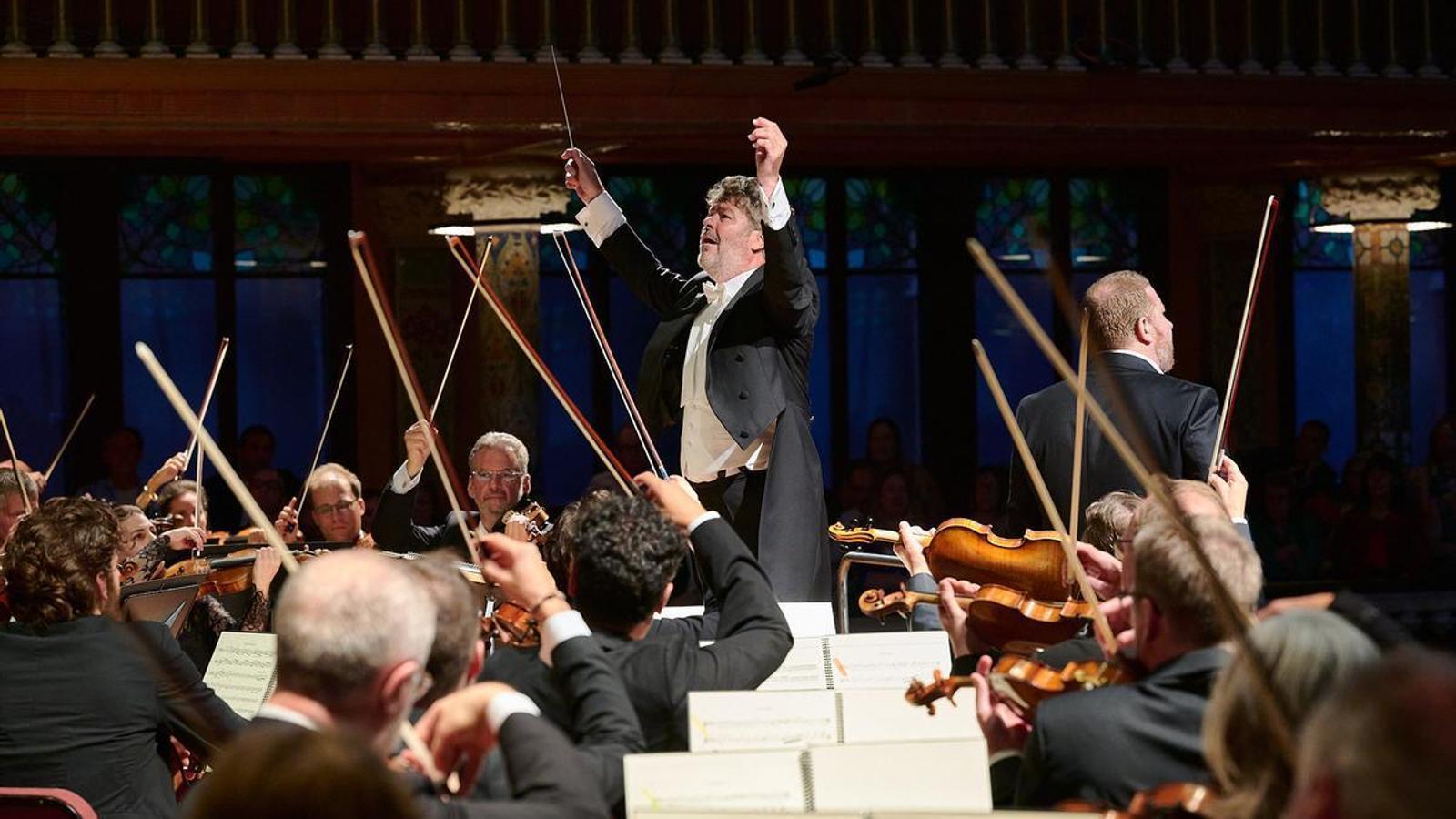
-
CAT -
CAST
- Palau de la Música. August 29, 2026
End of concert with a bis: the instrumental version of the well-known Ride of the Valkyries, that opens the third act of The Valkyrie (The valkyrie). It was the flourish that paid homage to the stones of a Palau de la Música of Wagnerian architecture, with the sculptural group of the Valkyries on the arch of the stage. A flourish, also, of a highly anticipated concert, and which puts an end to the 4th edition of the Perelada Festival. Over the coming days, Madrid, Valencia, and Seville will enjoy the same program.The main attraction was the presence of the Bayreuth Festival Orchestra, known for its excellence. And it delivered, although the ensemble's sound is not the same as in the Festspielhaus, where the orchestra remains hidden beneath the stage, which contributes to a unique sound.The third visit of the Bayreuth lords to Barcelona (after those of 1955 and 2012 at the Liceu) will not have been the best. And it must be explained: the acoustics of the Palau are not those of a theater, and even less so of Bayreuth. Pablo Heras-Casado, who has proven to be a good Wagnerian conductor, and in 2028 will take over the leadership of The Ring of the Nibelung (The Ring of the Nibelung) to the German theater, he did not control the sound plans of the selected pages of the Wagnerian tetralogy enough. Apart from very slow tempos, the brass and percussion drowned out the strings at the end of "The Rhinegold (The Gold of the Rhine) and Siegfried's funeral march in Götterdämmerung (The twilight of the gods) also suffered a certain acoustic lack of control, with sonorities resolved for show and without caring for the nuances of the page. Much better, however, were the murmurs of the forest of Siegfried, which did have the subtlety and detail that the score demands.

The selection included passages for vocal soloists. Nicholas Brownlee was the one who indisputably shone above the rest. The voice is authoritative, with the right darkness but with the musicality required for Wotan's farewell, at the end of Die Walküre. The American singer, moreover, conveys the expressive meaning of each phrase, attentive to the emotional intensity of the character.Good performance also by Klaus Florian Vogt, a tenor much criticized by some sectors of the public, but who at 56 years old continues to demonstrate that he is an all-rounder and knows all the tricks, with a very effective versatility. A shame, however, that the final scene of Siegfried, together with Catherine Foster, revealed the soprano's more than questionable vocal state. And this meant that the immolation scene of Brünnhilde, at the end of Götterdämmerung, was marked by the interpretive discretion of a singer who, apart from the fact that her instrument is seriously worn out, does not sufficiently convey the meaning of the Wagnerian word.Concert, ultimately, very anticipated and longed for, but which fell by the wayside. A pity.
