30 years chasing the San José galleon to end up erased from the official photo
Julian Sancton investigates the discovery and the disputes surrounding the finding of the Spanish ship, sunk by the British in 1708
-
CAT -
CAST
BarcelonaThere are stories that remain buried in the depths of the sea, not just under tons of water, but also under a thick layer of secrets and litigation. The galleon San José left Cartagena de Indias (Colombia) on May 29, 1708, with tons of gold, silver, and precious stones that the Spanish had extracted from America. The destination was Cádiz, and the Bourbons were anxiously awaiting its arrival because the coffers were quite empty due to the War of Succession. The ship, with 600 crew members, never reached its destination: the British, who also coveted the gold and silver, were lying in wait and sank it near the Rosario Islands, in the Caribbean. The treasure, which is not documented, went to the bottom of the sea with all the crew and has since fueled a host of legends. Even Gabriel García Márquez mentions it in Love in the Time of Cholera.
Many treasure hunters sought it and, finally, in 2015 it was located. Then another battle began to see who would take the credit and who would keep it. Journalist and writer Julian Sancton (New York, 1981), fascinated by this search, discusses it in depth in Neptune's Fortune (Capitán Swing). When Sancton began looking for information on the case, he encountered real difficulties because there was a lot of opacity. One of the reasons is that in 2015, when Colombian President Juan Manuel Santos announced its discovery, he warned that information regarding the galleon would not be disseminated: it had to be a State secret to protect it.
"Colombia had decided it was a State secret and companies and archaeologists were not talking about it. I wanted to find Roger Dooley – the Cuban-American archaeologist and researcher who spent over thirty years investigating historical archives to locate the exact position of the San José – but no one was talking about him. He could not be found. He was not affiliated with any academic institution and had no social media... The way I contacted him was by letting all the people who might know him know that I wanted to speak with him. And finally, he called me," explains Sancton.

The Archive of the Indies clue
Dooley had stumbled upon the first clue about the San José in Seville, at the General Archive of the Indies, while looking for information about another vessel, the Nuestra Señora de las Mercedes. In his search through different archives and libraries, consulting navigation logs, maritime charts, and various records, he managed to reconstruct the ship's sinking and find its coordinates.
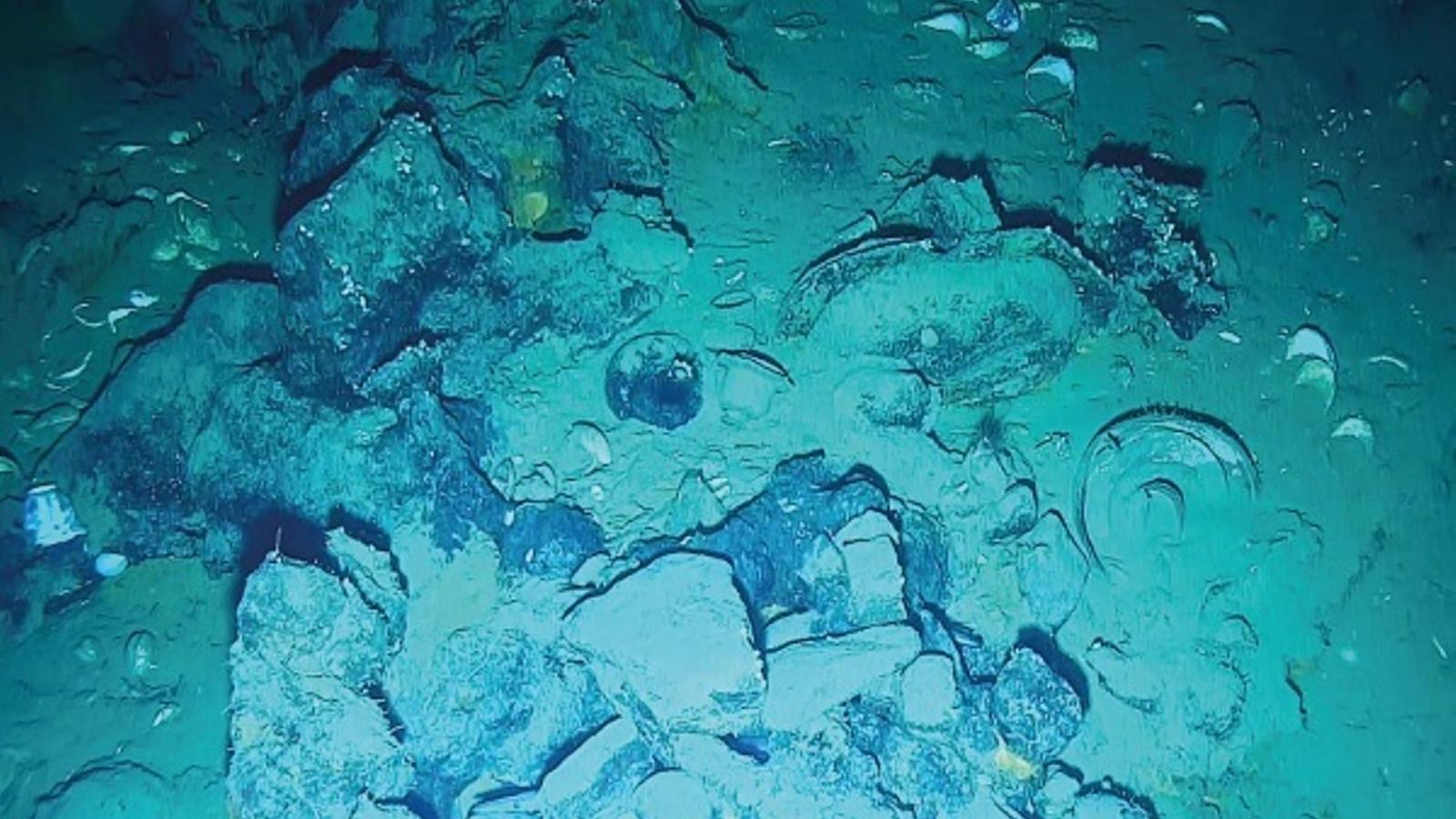
To finance the expedition, Dooley convinced British fund manager Anthony Clarke—a man fascinated by the myth of the search—and secured the alliance of the Woods Hole Oceanographic Institution (WHOI). With deep-sea technology, autonomous underwater vehicles, and remote-controlled robots, in November 2015 Dooley's team descended to a depth of 600 meters, and there appeared the bronze cannons engraved with dolphins. They had found the San José.
A few days after the discovery, in December 2015, Colombian President Juan Manuel Santos appeared before the cameras to make the announcement: Colombia had found the most sought-after galleon in history thanks to a scientific dream team. But in the official speech, there was not a single mention of the man who had dedicated his life to finding it.
"I think Dooley called me because he was fed up with having no recognition and having had no voice and not being able to tell his story. When the San José was discovered, Santos said it was a Colombian project with a team of scientists of the highest prestige, a dream team. This was the important moment of his life and they didn't even mention him. So he felt devastated and betrayed," explains Sancton.
"Santos argued that he wanted to protect him from accusations of being a treasure hunter and did not want to let Dooley's somewhat ambiguous past darken the discovery," says Sancton. For Sancton, however, the figure of Dooley is closer to Hemingway's fisherman: "He never kept anything; he has only one coin, and it was given to him by a Cuban historian. I think he is a romantic character. An obsessed man, like the protagonist of The Old Man and the Sea. He spent his life without any recognition and obsessed with the search for the shipwreck. He was 70 years old when he finally caught the biggest fish, and all the sharks attacked him," Sancton opines.
An obsessed man
Sancton is fascinated by those who, like Dooley, dedicate their lives to finding treasures lost in shipwrecks and battles. He believes they have certain similarities to the myth of the American entrepreneur. "It's this idea of venture capital: spending a lot of money and a lot of time on something very risky, but with a huge reward if it works. For something like that, you have to have a certain vision, a certain delirious optimism... The problem with treasure hunting is that it's the worst investment in the world, because the odds of finding something are practically nil," asserts Sancton. What drives them, the journalist and author believes, is the thrill of the quest. "It's the hunt. And for many of these people, this lifestyle is already its own reward. Smart treasure hunters realize that they won't make a fortune finding a treasure, but by selling the dream of the treasure to someone who can finance your search," reflects Sancton.
"There are many claims of ownership or rights over the San José and its contents. The problem is that there is not a single court that can judge these claims. And some of these claims are contractual; others are claims of sovereign rights, such as Spain and Colombia... Others are moral. There are the indigenous communities, which also claim the treasure because their ancestors were enslaved, many lost their lives, extracting all this fortune from the mines," says Sancton.
Spain claimed ownership of the San José based on sovereign immunity (warships remain the property of their country of origin regardless of the time elapsed) and on the principles of the UNESCO Convention on the Protection of the Underwater Cultural Heritage. A convention that Colombia never signed. For the moment, Colombia has kept the San José protected as a Cultural Interest Asset and has prohibited its commercialization. Sancton does not believe that the Colombian state has the budget to carry out an excavation. Even so, the journalist advocates for excavating because the ship can explain many things about colonialism.
