Why is it news that a queen repeats a dress?

-
CAT -
CAST
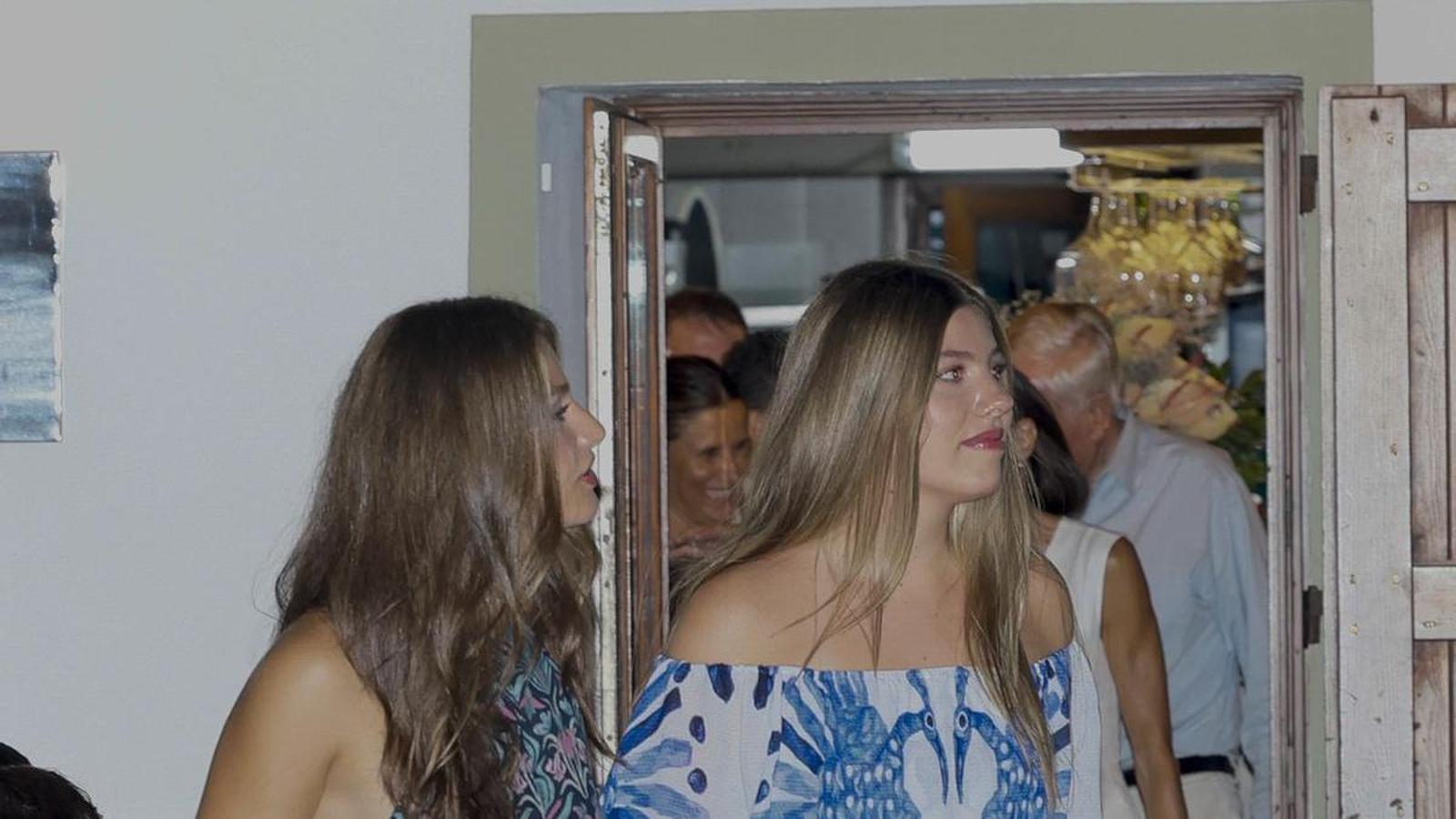
At the beginning of August, during the royal family's stay in Mallorca, Infanta Sofia caused some surprise among the media for an apparently unusual gesture in the protocol of royal houses. The reason? She was wearing a Desigual dress that Queen Letizia had already worn in 2023 and that Princess Leonor had reused in 2025, during the respective Marivent receptions. In fact, Queen Letizia has repeated dresses on more than one occasion, and each time the fact has become news. But what does it say about us, as a society, that it seems so exceptional to us for a queen to repeat a dress?The reuse of clothing has been an inherent practice in fashion throughout pre-industrial history, when clothes were scarce, expensive, and often had to be passed down from parents to children. It was a practice that affected all social strata, including European courts. Royal families had record-keeping systems to document existing garments, specifying their characteristics, measurements, and decorative elements, as well as the repairs and modifications they had undergone, with the aim of facilitating their reuse within the same family. Everything indicates that clothing was conceived less as strictly individual property than as dynastic heritage capable of circulating among different members of the lineage. And when clothes ceased to be used, they could become diplomatic gifts or be passed on to members of the service to ensure alliances and loyalties. Likewise, fabrics were dismantled and reused in new garments, ornaments, furniture, or liturgical objects, and only when they had exhausted any possibility of use were they destined for paper manufacturing. The wardrobe was thus understood as a true reserve of material resources and political strategies. Therefore, what has changed between the old European courts and the current royal family for something that was completely normalized in the past to have become an exception today?

The novelty and the quantity
Queen Letizia has not discovered reuse; what has changed is the value we assign to clothing and the meaning of this practice. The Desigual dress had a relatively affordable price, around 150 euros, far from being a haute couture piece or a heritage jewel. If before industrial production became widespread, a good part of the value of clothing resided in the quality of materials, the complexity of its making, the working time or its durability, today ideas such as novelty and quantity, which directly collide with repetition, have become pillars of the economic value of fashion and, consequently, symbols of ostentation. Hence, in our daily lives, we do not usually wear the same clothes three days in a row even if they are still clean, but rather we let some time pass so that our colleagues or friends have had time to forget about it and we can once again play the cards of novelty and variety.In Letizia's case, believing that repeating outfits stems from a genuine concern for sustainability would be too naive a reading. Reuse, related to circular fashion and responsible consumption, imbues the Spanish monarchy with a certain aura of modernity, absolutely necessary to counteract the musty excess that characterizes the institution.

Furthermore, repeating a garment that comes from fast fashion conveys a supposed austerity and everydayness that many read as a shortening of distances with the rest of the citizenry. A marketing strategy that is complemented by the fact that, rather than sharing clothes, they are sharing the same visual identity: a way to dispel any idea of distancing or disunity and, on the contrary, to reinforce the idea of family unity, lineage continuity, and institutional perpetuation. In short, we have managed to turn into a gesture of modernity and exceptionality what was previously simply common sense, while values such as sustainability and austerity have ended up being converted into simple and clumsy propaganda strategies.
