Why does Trump wear a cheap suit?

-
CAT -
CAST
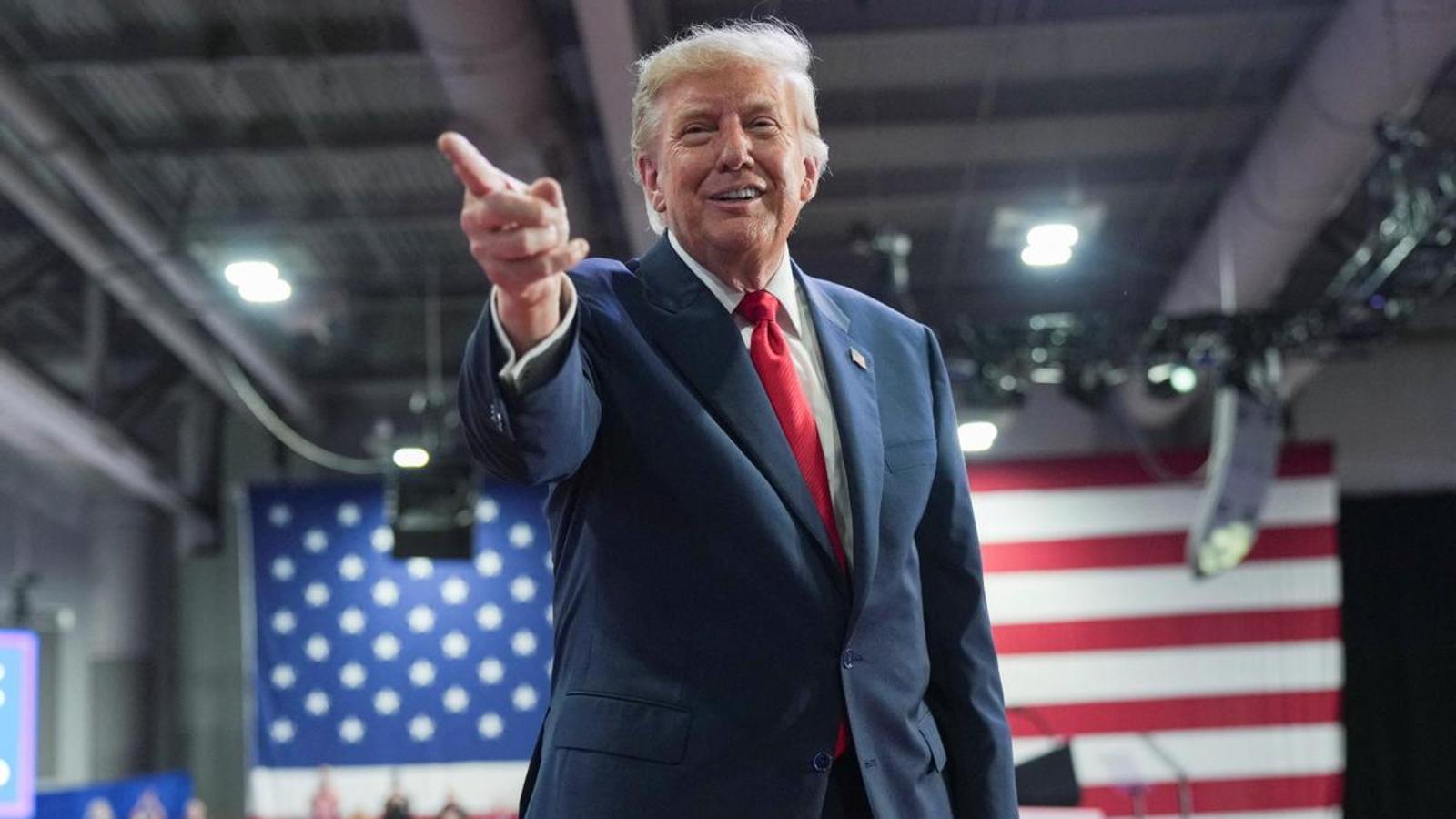
On October 5th, in the middle of the midterm election campaign, Donald Trump delivered a speech in Nebraska. Nothing new: patriotic grandiloquence and discursive posturing about the greatness of America. Once the speech ended, Y.M.C.A., by the Village People, played—that song which in the seventies became an icon of gay culture and which today Trump has adopted as his campaign soundtrack. The president then gave himself over to his now-characteristic robotic dance, until a movement revealed an unexpected detail: the suit's label, with the name Jos. A. Bank. An American brand that, at first glance, seemed consistent with one of Trump's most recurring proclamations: consuming products manufactured in the United States. But is the case of Trump and his protectionist measures in fashion exceptional?
Throughout history, many fashions that today may seem to us the result of aesthetic preferences were, in reality, a response to economic interests and disputes between countries. The Habsburg dynasty made black an emblematic color of European courts, from Charles I to Philip II. Beyond religious fervor, often cited as the main reason for this preference, there were also political and economic interests. Campeche logwood, coming from Mexico, allowed for the production of intense and bright black dyes, which were highly prized in courtly attire. Its trade generated significant profits and contributed to consolidating the mercantile networks of the Hispanic monarchy, in a context of rivalry between European powers.
Louis XIV and his minister Jean-Baptiste Colbert also understood the importance of the king himself wearing fabrics produced in French royal manufactories. The court imitated the monarch and adopted the fashions he consecrated, so that the consumption of French fabrics ended up reverting to the national economy. In the 18th century, printed Indian cottons, known as calicoes and chintz, enjoyed great success in Europe, to the point of threatening English wool and silk manufacturers. To protect their own industry, the English Parliament restricted their import and sale, in an attempt to curb a fashion that could have serious economic consequences for the country.

These historical precedents find a parallel in the measures that Trump intends to promote. China is one of the United States' great economic competitors and, at the same time, one of the main global powers in fashion manufacturing, along with India. Promoting clothing manufactured in the United States can favor domestic industry and, at the same time, harm the Chinese competitor. The problem is that Trump's suit brand, Jos. A. Bank, despite being American, outsources a significant part of its production to China and Bangladesh. Therefore, it is possible that the president's suit was manufactured in Asia and not in the United States, that country he never tires of promising he will make great again.
This anecdote highlights the contradictions of Trump's protectionist discourse. To begin with, the current world has little to do with what Charles I or Louis XIV lived through: in a globalized economy, recovering national production is much more complex than political rhetoric suggests. Furthermore, asking for national products to be consumed can be unfair if it implies an additional cost that not everyone can afford. Trump, with an estimated fortune of 7 billion dollars, can hardly claim that: before reaching the presidency, he had expressed his predilection for Brioni, the Italian high-tailoring firm, with suits that can exceed 10,000 euros. A notable contrast with those of Jos. A. Bank, which are priced approximately between 250 and 700 dollars. I do not know if it is a premonition of the soufflé that has deflated, but, at the very least, this suit remains far from projecting the American greatness that Trump proclaims so much.
