"When Barça called me to sign me, I thought it was a joke"
Roberto Bonano lived two and a half very turbulent years at the Barça club
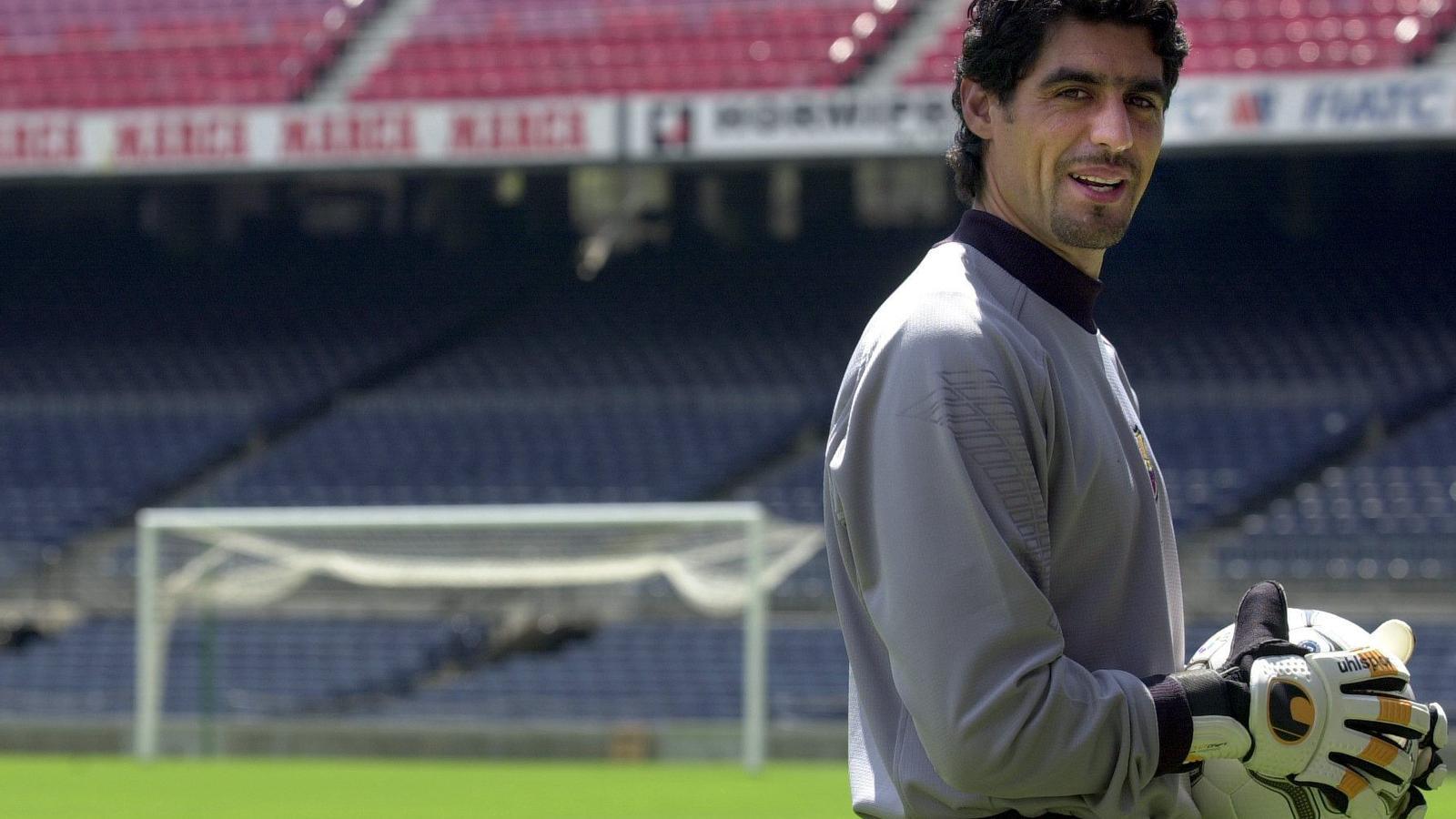
Torelló"They weren't good years for Barça. It was a difficult, transitional era. But for me it was a beautiful stage because I wasn't expecting it. I was already 31 years old. With time, one values it even more and lives it as something even more positive," acknowledges Roberto Tito Bonano (Rosario, Argentina, 1970). He landed at Barça just 25 years ago. He already had one foot in Alavés, but suddenly an offer from Barça arrived. "At first I didn't believe it. I asked my agent if it was a joke. I wasn't expecting it because they said they would sign Oliver Kahn, Buffon, or someone like that. But I was the cheapest because I was South American and had been released by River Plate," he says.
As a child, he liked Barça because of Maradona, but he preferred Athletic Club for its philosophy and for the figure of Andoni Zubizarreta, one of his role models. "Later I developed a bit of a dislike for him because everyone said he was Barça's last great goalkeeper. His shadow was a very big burden," admits Bonano, who when he landed in Barcelona settled in the Sarrià neighborhood with his family. He knew the city through Antoni Gaudí and Joan Manuel Serrat. "Many things surprised me when I arrived. The speed of European football and Barça's style of play. The silence of the Camp Nou and most stadiums in Spain. It seems like a theater coming from Argentina, except for the matches against Madrid. I was also surprised that the rivalry between Catalonia and Madrid went much further than sport," he points out.
"In Argentina, we all came from the youth academy and were personal friends to the point of visiting each other's homes. Here I started sharing a locker room with two Frenchmen, one Italian, four Catalans, six Dutchmen, and three Brazilians, and it felt strange. It's hard to make a group of friends like that," he highlights. He also coincided with a compatriot, Javier Saviola, who was also signed that summer. Messi had arrived in the city shortly before, and his agent asked them if they could go visit him. "He told us that he was a very introverted boy who greatly missed his family and country." They went for a walk around the Sant Pau hospital and invited him for an ice cream. "Now he could buy all the ice cream shops in the world. We looked like a family," says Bonano, laughing. He was 31 years old. Saviola, 20. And Messi, 14. "We barely heard him speak," he recalls.
Bonano underlines that Messi, a son of Rosario like him, is "the best player in history". "In Argentina we have our hearts divided by Maradona's charisma, but on the field Leo has achieved incredible things". He also acknowledges that the Spanish national team is a fair World Cup champion because it was "much superior" to the "albceleste team. The former Barça goalkeeper explains that when he arrived at Camp Nou the club was already living in a "turbulent" era, accentuated by the goodbyes of Luís Figo and Pep Guardiola. In the League they finished fourth. "I came to Barça to win titles and when I see myself tenth in the standings I feel rage and sporting shame," he said at the time. But in the Champions League they made their way. They reached the semifinals, but fell to Real Madrid's galacticos. He was the starting goalkeeper ahead of Pepe Reina and Richard Dutruel.
Two and a half years, four coaches and three presidents
In the second season, the goalkeeping teammates were Robert Enke and Víctor Valdés, from the reserve team. Enke only played one match, the painful defeat against Novelda in the Cup. He committed suicide in 2009. "Many times we shared a room. He was a very humble person. It surprised me because I never thought he could be going through depression and that he would have such a tragic end. Now I try to be very attentive to any symptom I can detect," he assures. The season had started with Valdés in goal and Bonano in the stands, but the Argentine soon regained his place. "Víctor was a great goalkeeper and only needed a coach who gave him confidence and security," he highlights. They started the season with Louis van Gaal. In February, Radomir Antić arrived and in the summer, Frank Rijkaard. And also Rüştü Reçber: Bonano was sidelined and in winter he ended a spell of 74 games as a blaugrana and moved to Murcia.
In two and a half years at Barça, he had four coaches and three presidents (Joan Gaspart, Enric Reyna, and Joan Laporta). "Of course I would have liked to be part of another story, a much more beautiful, more winning story, but I am also realistic and fair: perhaps that is what allowed me to reach Barça," he admits with a smile. In an interview from that time, he acknowledged that he lacked charisma: "I lacked skills, better footwork. There are many factors. Also selling myself better. The moment of the team and the club didn't help much either. Perhaps winning a title would have reduced the pressure." He confesses that he regrets not being able to win any titles: "It makes me angry that and having to leave so soon. When you join a great team, you have to stay and live there, if you can".
In the last six months he lived with Ronaldinho. "Barça changed emotionally from his arrival. It stopped being that problematic, half-sad and self-conscious club. It was another Barça. It gained momentum and courage and equaled Madrid," he emphasizes. He would retire at Alavés, but then he continued living in Barcelona and even worked as a goalkeeping coach for the Catalan national team in a match against Argentina. The coaches were Johan Cruyff and Maradona and he met Valdés again. Later he worked with coach Eduardo Berizzo, whom he assisted at Celta, Sevilla, Athletic and the national teams of Paraguay and Chile.
Now he lives in his country and 25 years later he still remembers his days at Camp Nou, so unexpected, with a smile. "It was an impressive experience".

