"The pioneers of sport were insulted, caricatured and erased from the archives"
Elisenda Albertí rescues from oblivion the "movie-like lives" of fascinating athletes
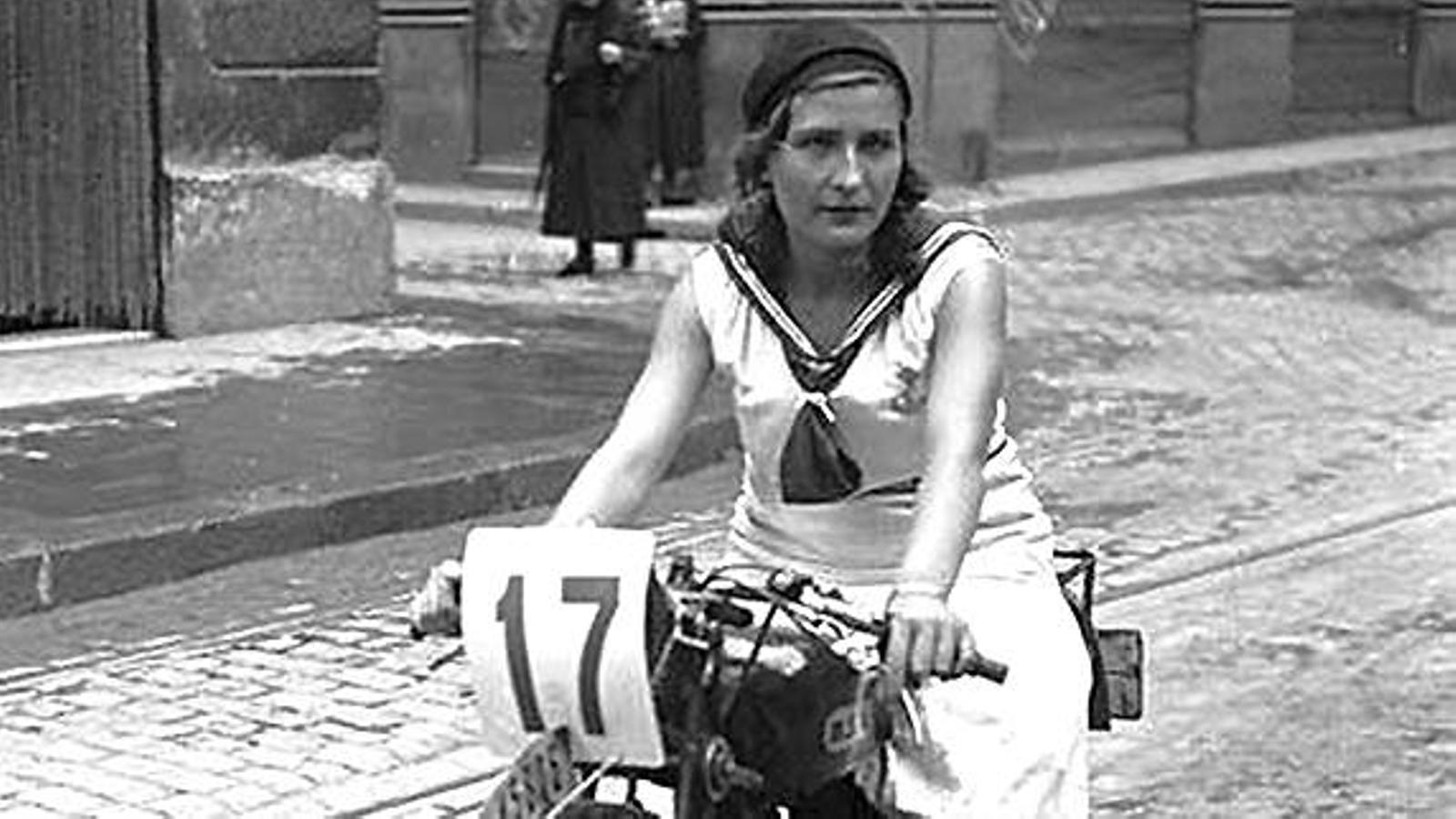

BarcelonaThe incorporation of women into the world of sport has suffered serious impediments throughout history. The obstacles have changed according to the era and location, but some pioneers defied stereotypes and prejudices to achieve their goals. Publisher and writer Elisenda Albertí has compiled 19 of their stories in a book –Pioneers of Sport– which gathers emotions and joys, but also disappointments and sorrows.“The difficulty of the book was to make a selection, because I gathered many biographies. Athletes, both Catalan and international, appear. This allows us to compare the situations in different countries to know where we stood at each moment,” Albertí tells ARA. The role of women in the world of sport began to be claimed at the end of the 19th century in Anglo-Saxon culture. “In our context, we have to wait until the beginning of the 20th century, when there were still many reservations. The sports that were successful among women were few, but the sum of this practice with the first feminist claims served to combat hostility. In Catalonia, for example, the big change came with the Mancomunitat and the Second Republic, but then this openness receded,” he assures.Some of the pioneers had problems because of their political ideas. “If a woman opened her mouth, she had problems. When there are changes or novelties, there is always a type of person who criticizes and burdens it. They had defenders, but also many detractors. There were written media that treated them well, although others mistreated them. Some sports pioneers were insulted, caricatured, and erased from the archives. They had a very difficult time and, with Francoism, many suffered severe repression. The sports records of some of these pioneers were even erased. They disappeared and no longer exist,” she warns.

“Some had problems coinciding with the President of the Generalitat in the same stadium. For the simple fact of being there. Or they joined the women's section, which the vast majority did not do or had to stop practicing sports,” explains Albertí. The origin of these athletes was very different. “Everything ended up conditioning their sports practice. From their family to their club, which were very politicized. Everyone who had participated in events from the time of the Republic was punished or repressed,” he analyzes."Manifest and insistent will"
The archives of the time contain a lot of information. “These pioneers were public women, recognized in the world of sport. They interviewed them and invited them to inaugurations. Some even appeared on covers, but when Francoism arrived they disappeared and were never heard of again. The girl who signed up to play a sport had to sign up for the women's section, where she received political guidance. The pioneers were not role models for subsequent generations, because they were made invisible. In other countries they were role models, but here, unfortunately, they were not,” she explains.

“For some years there has been a clear and insistent desire not to publicize the female part of the world, which is 50% of the population. Therefore, there has been an insistence on the topic that over time has triumphed. What I am looking for is to try to unearth these women who disappeared,” she says. Elisenda Albertí asks for a further step to be taken. “It is becoming urgent that at an official level these pioneers be recognized in some way. They should be rescued because some of their lives are like movies. If we were a normal country, we should make movies about some of these women,” she adds.

