An "impressive thud" and calls to family members: the tragedy experienced by the residents of Urda
ARA speaks with witnesses who were very close to the accident and who helped the injured from the first moment

-
CAT -
CAST
Urda (Toledo)In recent days, the residents of Urda have become the involuntary protagonists of an accident that will leave indelible marks on this small town seventy kilometers from Toledo. They are a multitude of anonymous people who did not hesitate to approach the scene, who were on the front line from the very first moment to help the victims. Now, still in shock, they remember a few hours that have changed their lives. Nor will the passenger of another AVE train that was covering the route from Seville to Madrid, and which stopped 500 meters from the accident, ever forget it.
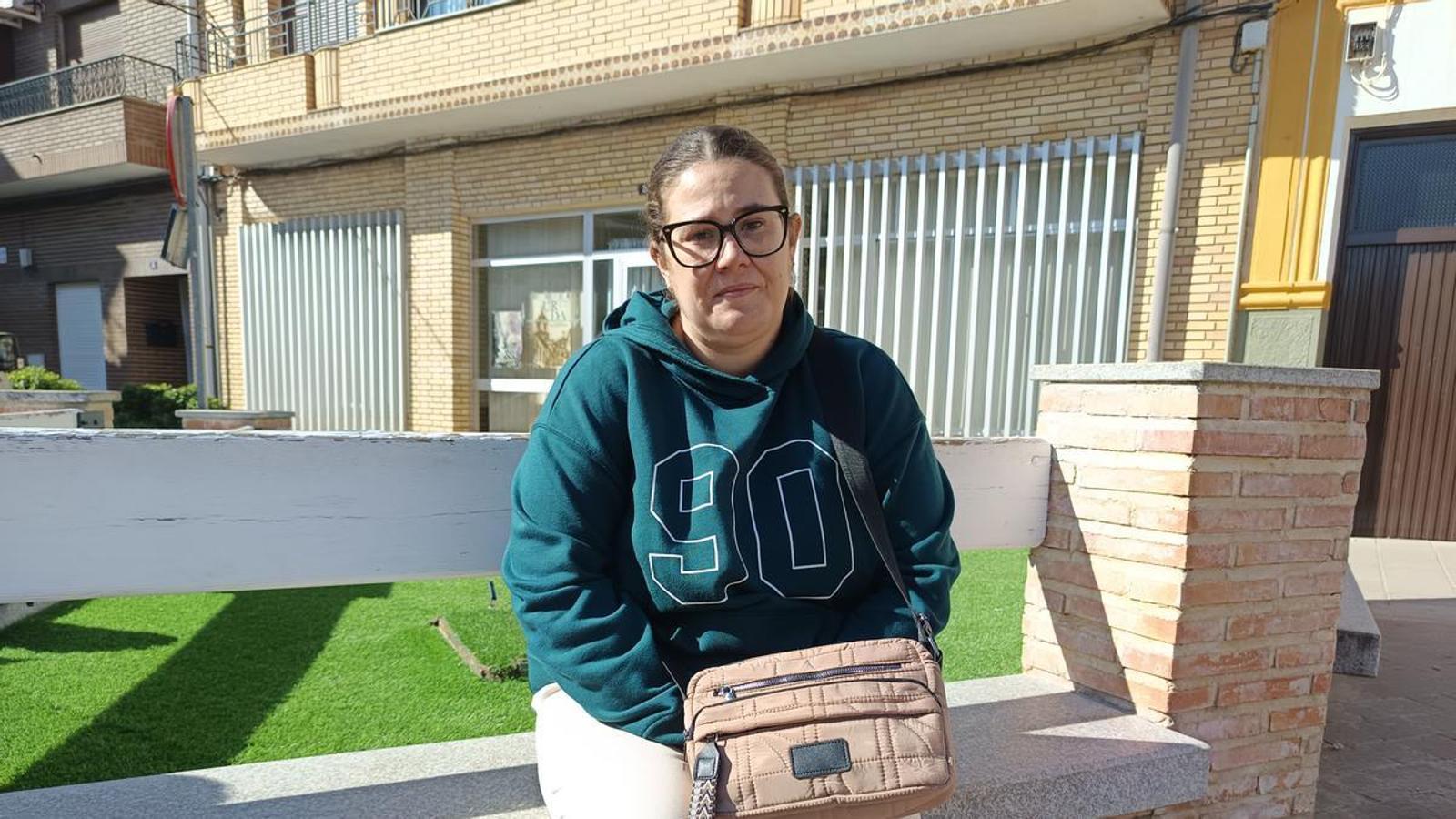
Tamara, resident of Urda
"I told a wounded man's wife that we must have a coffee when he recovers"

How and when did you find out that there had been an accident?
— I knew it a few minutes after the tragedy happened. Without thinking, we took the cars and went to ground zero.
What did you do there?
— The accident was horrible. People running, people scared, people covered in blood. The first thing we did was start treating the slightly injured. We gave them some support, hugs, we talked to them a little. A medical team taught me how to set up an IV. You do everything that comes to you, everything they tell you. I am not a healthcare professional, but on Wednesday I considered myself one.
Were you able to speak with the injured?
— Yes. They were conscious, I asked them their name and how they were. It was very curious because they told me they were fine, but that they were very, very afraid. The word that was repeated the most was this one: fear. And one of the first times that I attended to an injured person, my boss said: "If the phone number is known, call the family". And I started to ask them for it. Immediately, I began to call the relatives.
How were the families?
— They were expecting this call. For better or for worse. They were in shock, but I sensed relief in them. This has marked me deeply.
Have you kept in contact with any of the injured or their relatives?
— On Thursday I called all the families. Only one did not pick up the phone. Everyone was stable given the gravity of the situation. But I am quite worried about one of the families of a boy whose name I cannot remember. I have called several times and they have not picked up the phone. I would like them to call me; for me, it is very important to know if he is okay.
What were the families you were able to speak with saying?
— They are grateful. Thank you, thank you, thank you. One is Mario. His wife told me that he has asked about me, she said I am his angel. The only thing I could say to his wife is that we must have a coffee when he recovers because I would like this to go beyond this help. She told me that this coffee is a promise. I will go wherever I have to go. And I wish I could have it with everyone I helped.

And how are you?
— I am in shock. I still cannot believe what has happened. You have a mix of feelings that will be difficult to forget. These hands that did not know how and did not see themselves capable of doing something of this nature did it. I am proud to have been able to help.
How will the people be able to rebuild?
— I do not know. Time will heal the wounds. It is very difficult to know how we will move forward. Right now I am a block of iron, but when I fall, I know the blow will be hard.
Alejo, resident of Urda
"I heard an impressive thud and a chilling silence"
What were you doing on Wednesday morning?
— Usually in the morning I take my bicycle. When I was near the tracks, I saw that the Iryo train was slowing down until it stopped. I found it curious and wanted to approach it to see the train's cab. When I arrived, there were some cows that were grazing and I took a photograph of the landscape. But I continued my route. I had traveled about four or five kilometers when I heard an impressive bang. Like a bomb. And I attributed it to another train having crashed into the one that was stopped. It seemed impossible to me that it could happen.

What did he do next?
— I turned around, started to go down, and began to hear some sirens. I approached and saw that the two trains had collided and that a little smoke was coming out. And a chilling silence, you couldn't hear a pin drop.
Was he alone?
— The property manager appeared with a pickup truck. And he approached the fence, which was the closest point to the train. Ambulances, doctors, police, and firefighters were arriving. They didn't know where the entry point was. I stayed there pointing out to them that the entrance was a little further ahead until the man from the property cut the fence. We removed it and they started to pass through there.
How were the wounded?
— Those who were better off, who could walk, did not know what had happened to them, they were totally disoriented. They had blood on their faces and clothes. At twelve o'clock, a Civil Guard agent arrived and told me that civilians could not be there. And I had to go down home.
How does a town recover from a blow like this?
— It's hard. A few days ago we had a DANA and many premises and houses were flooded. And now this. Although it is different, it is also hard for you to digest it and get used to the idea. You don't believe it will come near you. We will have to get through it as best we can, little by little.
Feli, neighbor from Urda
"It is as if it had been a nightmare"
Where were you on Wednesday morning?
— I was at home and I heard a siren, but I didn't pay much attention to it. Later it was when my daughters, who live away, called me and I found out what was happening.
Did he approach the pavilion? What did he see?
— I helped by cleaning wounds with saline and gauze and distributing bottles of water or food to those who wanted some. The doctors were really the ones doing the heavy lifting.
Were you able to speak with some of the injured?
— I asked them how they were, but they did not have the strength to speak. They were grateful that you were there, but they were in shock.
How are the people of the town now?
— It is as if it had been a nightmare. That is to say, I still cannot quite believe it. Later, with time, I imagine I will manage it, but right now I do not know, it is a somewhat strange feeling.
How do you think the people can move forward from a tragedy like this?
— I don't know, I imagine with time. You talk to several people who were there and the next day everyone slept poorly.
Ramón Rubio
"When sticking my head out the door, the Iryo could be seen perfectly"
Where was it Wednesday morning?
— I had taken a train from Seville to Madrid that was leaving at five past six in the morning. The conductor warned us that we were delayed because there were speed restrictions. I remember that during the last half hour we stopped three or four times. When I saw that the stop was dragging on, I went to the cafeteria. It was 9:08. At nine-thirty, someone in the carriage said that their family members had written to them saying that there had been an accident. Almost from the first moment we were left without power, there was no air conditioning and the toilets were not flushing.
When were you able to leave?
— At ten o'clock, when it was already very hot, we were allowed to open the doors, and when we poked our heads out of the door we saw the red front of the Iryo perfectly. We were right in front, about 500 meters away. A group of kids called 112: "They told me that whoever can help should go there". Thirty or forty people went. That was when we started to become aware of it. There was already news of deaths.
How long were you there?
— At twelve o'clock they put up a ladder so we could go get some air. Inside it was insufferably hot. People had stayed inside the carriage, crowded near the open doors.
What did they tell you?
— We were told that a train would come to tow "these trains". We said: "But what do you mean by these trains?". "You are the third ones," they replied. There was an Iryo, which was also stopped, and behind the Iryo there was another one.
What did you think when you saw the Iryo?
— We were calm, but it didn't seem real. There was a feeling of not really knowing where we were. The phrase the whole time was the same: "How lucky, how lucky, how lucky". I don't know if it was a manual or automatic brake, but from the driver's cabin, the Iryo could be seen perfectly.
Did you receive calls from friends or family?
— Since eight o'clock I had been writing WhatsApp messages to family and friends saying "This AVE thing is crazy, there are still incidents". Maybe the last messages they saw were these. I started talking to my wife at ten past nine. Maybe they knew the magnitude before I did and for twenty or thirty minutes they had no answer from me.
How were you able to return and what was the journey back to Urda like?
— In theory, we were going to be towed by the diesel locomotive, but suddenly a bus arrived that was going to Urda. I saw it from afar and ran out because I wanted to get to Madrid because I had an event. When we arrived, the press threw themselves on us as if we were on the wrecked train. They didn't know there was another train, they had no idea.
