The Blue Box, the revolution of breast cancer screening
Through a box and a urine sample it is possible to detect breast cancer. This is The Blue Box, the Catalan start-up winner of the award in the Health category of the FAR Awards
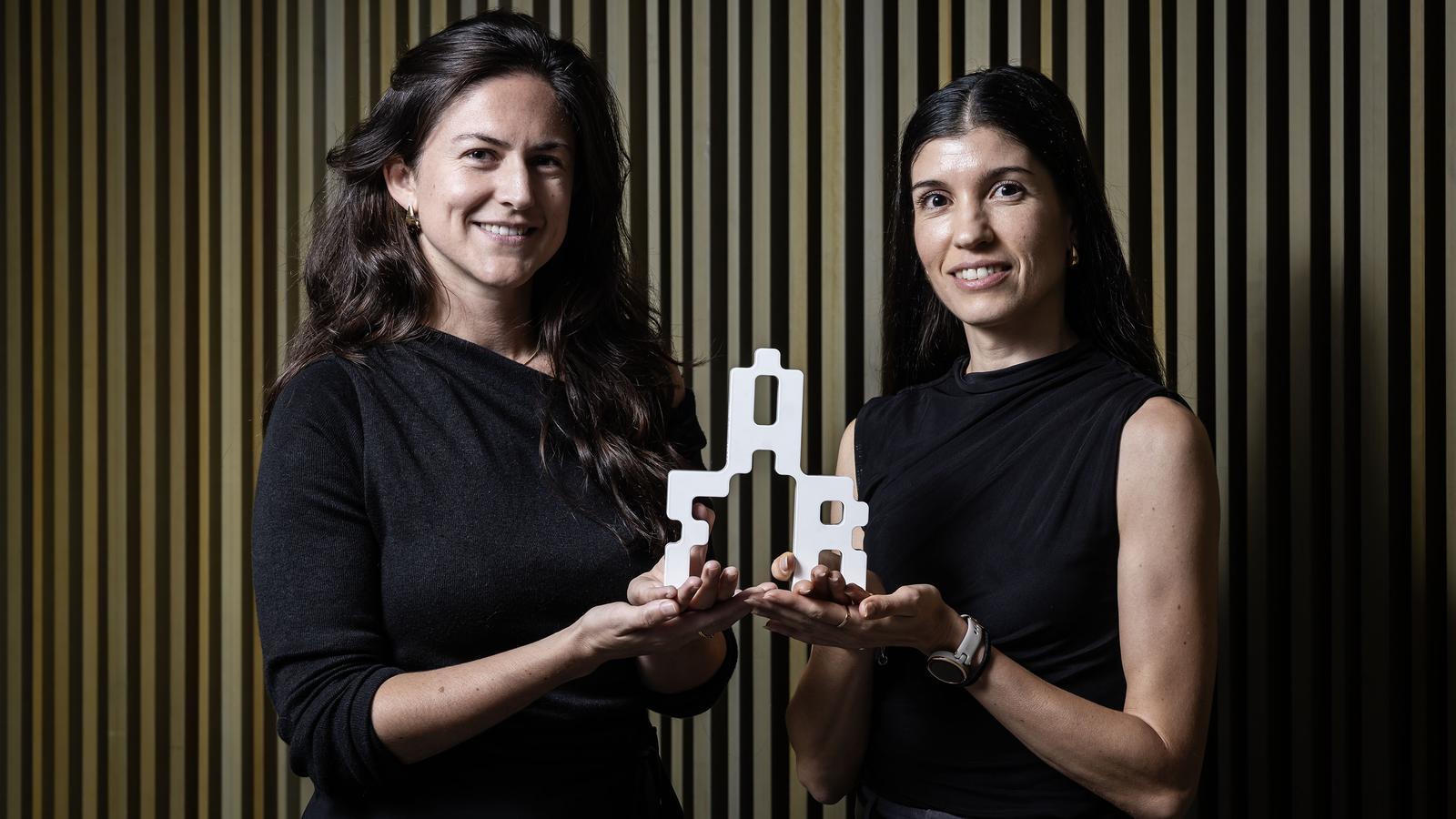
A master's thesis and its author's enthusiasm to generate change are the origin of The Blue Box, thestart-up from Catalonia that has taken the prize in the Health category of this first edition of the FAR Awards, organized by the newspaper ARA. The company, co-founded by biomedical engineer Judith Giró, inventor of the biomedical device that gives it its name and which aspires to replace mammograms as a breast cancer screening method, is on its way to becoming a revolution.
Through a box equipped with a matrix of chemical sensors, The Blue Box analyzes a urine sample and, through artificial intelligence, identifies patterns associated with breast cancer. The device functions as a kind of electronic nose –similar to how dogs smell cancer, as some scientific studies demonstrate–, which detects the volatile compounds present in the urine that the algorithm is responsible for interpreting based on the activation pattern of the sensors.
If dogs are capable of detecting cancer, why don't we learn from them? This is the question that Judith Giró asked herself during her research and that led her to develop The Blue Box. The question, apparently naive, found an answer in artificial intelligence, which, after years of studies and trials, has managed to reproduce the biological patterns that dogs are capable of detecting through smell in a urine sample.
Seven hospitals and two universities
More than 450 women have participated since then in the studies led by The Blue Box in collaboration with seven hospitals: the Joan XXIII University Hospital of Tarragona, the Sant Joan University Hospital of Reus, the La Paz University Hospital of Madrid, the Infanta Sofía University Hospital, the Pius Hospital of Valls, Dexeus Dona and the Terrassa Health Consortium have worked on the collection of urine samples. The University of California Irvine and the University of Barcelona have participated in the development of the software and the sensor technology (application and construction of the sensors), respectively.
The Blue Box is now in the clinical validation phase, prior to its arrival on the market. The company plans to start offering the device to private gynecological clinics, with a diagnostic model based on subscription (diagnostics-as-a-service) and payment per test (pay-per-test).
The goal of The Blue Box is to develop a rapid, simple and accessible breast cancer detection test, based on a urine sample and without the need for radiation or breast compression. The project plans to expand the studies to several European hospitals to validate the device and train the algorithm with a broader and more diverse sample of patients. The company's goal is to definitively launch The Blue Box in 2027.
The end of mammograms?
The Blue Box, awarded the prestigious 2020 James Dyson Award, has now been recognized by the ARA newspaper's FAR Awards for its positive impact on society through innovation and technology. Its proposal to make breast cancer detection tests more affordable and less invasive has earned the jury's recognition.
The goal is for a woman to be able to perform a breast cancer detection test in the future in a quick, simple, and affordable way, without radiation or pain, based on artificial intelligence analysis of a simple urine sample. And that she can even do it from home. The Blue Box, a portable, low-cost, and easy-to-use device, thus aspires to generate a change in the lives of many women. Perhaps, even, to put an end to mammograms.
-
Sector
Medical technology, women's health and artificial intelligence
-
Headquarters
Barcelona, Catalonia, with presence in the United States
-
Who is behind it?
Judit Giró Benet, co-founder and CEO
-
Purpose
The Blue Box is a breast cancer detection system using a urine sample and artificial intelligence, a non-invasive, radiation-free and more accessible alternative to facilitate early detection.
-
FAR Award
Health
