More investment to advance towards modern and sustainable mobility
The improvement of public transport, the reduction of dependence on private vehicles, and the deployment of more resilient and accessible infrastructures focus the objectives of the new budgets of the Generalitat in mobility matters
-
CAT -
CAST
The Generalitat's mobility policies receive a significant boost in the 2026 Budgets. The allocations for transport and the improvement of infrastructures and mobility throughout the country are among the fastest growing, with an increase of 30% compared to the last approved accounts. If in 2023 the allocation was 3,067 million euros, it now reaches 3,986 million.
In this context, the Department of Territory, Housing and Ecological Transition is reinforcing investments to transform the way we move and inhabit the territory. Budget policy is structured around three main axes: the improvement of public transport, the reduction of dependence on private vehicles, and the deployment of more resilient and accessible infrastructures, in line with the country's decarbonization and territorial cohesion objectives.
Improvement of railway infrastructures
Budgetary efforts are mainly focused on three areas: support for public passenger transport, improvement of road transport, and modernization of railway infrastructure. The objective is to promote more sustainable, modern, efficient mobility adapted to the challenges of the 21st century.
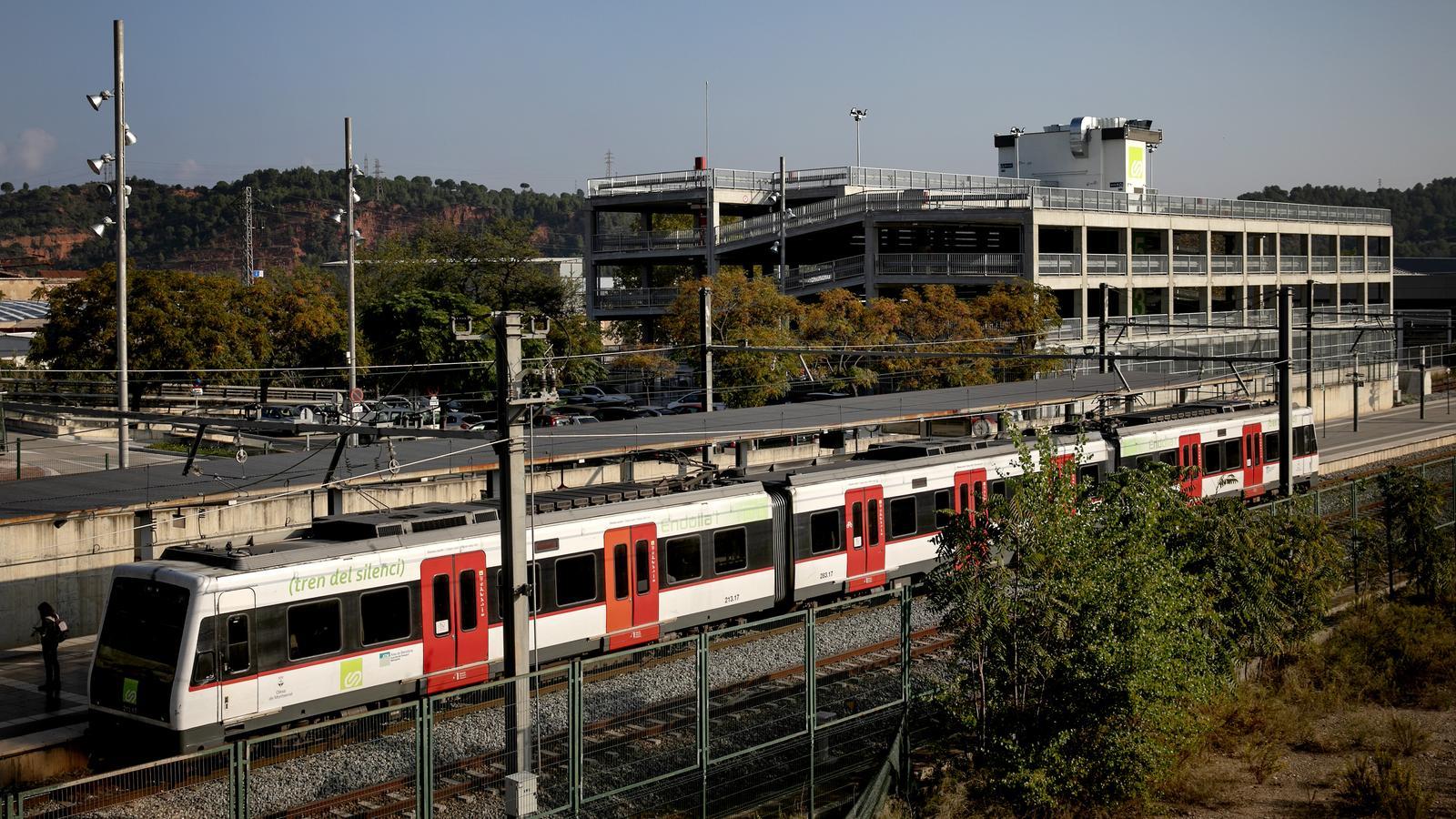
In the railway sector, resources are allocated to the improvement and expansion of infrastructure that falls under the responsibility of the Generalitat, including the modernization of the Ferrocarrils de la Generalitat (FGC) network and the Barcelona metro. The accounts also include the necessary provisions to deploy the assumed responsibilities in terms of Rodalies services, with the aim of continuing to advance in the management of local railway transport.
Key actions
Among the most notable actions in the 2026 Budgets regarding mobility is the maintenance of T-Usual and T-Jove discounts throughout the legislature, a measure funded with 194 million euros. To implement the integrated tariff model and boost T-Mobility, 529 million euros are allocated, and the accounts also include 355 million euros for the Rodalies de Catalunya management contract.
Regarding investments, the budgets also have 311 million euros allocated to railway and metro infrastructure, with the aim of continuing to modernize the network and make it more accessible. The goal is for the metro network to be 100% accessible, with 157 stations (96.3%) already adapted for people with reduced mobility.
Ferrocarrils de la Generalitat de Catalunya (FGC) also concentrates a significant part of the investments. The extension of the Llobregat-Anoia line will have 102 million euros, and 13.4 million euros will also be allocated to improve Lleida's railway infrastructure, with the aim of strengthening the service's resilience and response capacity. In addition, the works for the new Camp de Tarragona tram will receive funding of 101 million euros.
Finally, the budgets maintain the boost to one of the metropolitan area's major infrastructures: the central section of metro line L9. Investments will allow for the continuation of works on the tunnel, tracks, and various stations to advance a key infrastructure for improving metropolitan connectivity.
The road network
Regarding the road network, the budgets reserve 307 million euros for the improvement and conservation of roads. They also provide for actions to modernize bus stations, improve connectivity and promote intermodality between different means of transport. On the other hand, they include the development of new routes to expand the network of cycle lanes, up to a total of 42 km of new cycle paths.
Intercity bus and express bus lines receive 60 million euros; BRCAT corridors, 16 million, and 26 million are for the duplication of the Barcelona tram network.
In the territorial scope, the 6.4 million euros for the new C-37 between Vic and Olot and the link with the A-26 stand out, the 6.1 million euros for the works to condition the Comiols pass (la Noguera), 1.1 million for the Sant Joan de les Abadesses - Vilallonga de Ter section of the Via Ciclista del Ter or the 2 million to integrate the N-152z cycle lane between Montcada i Reixac and Mollet del Vallès. In addition, almost 9 million euros will be allocated to the construction of the new Lleida bus station.
