Edgar Tello: "Teenagers fail math, but they give great life lessons"
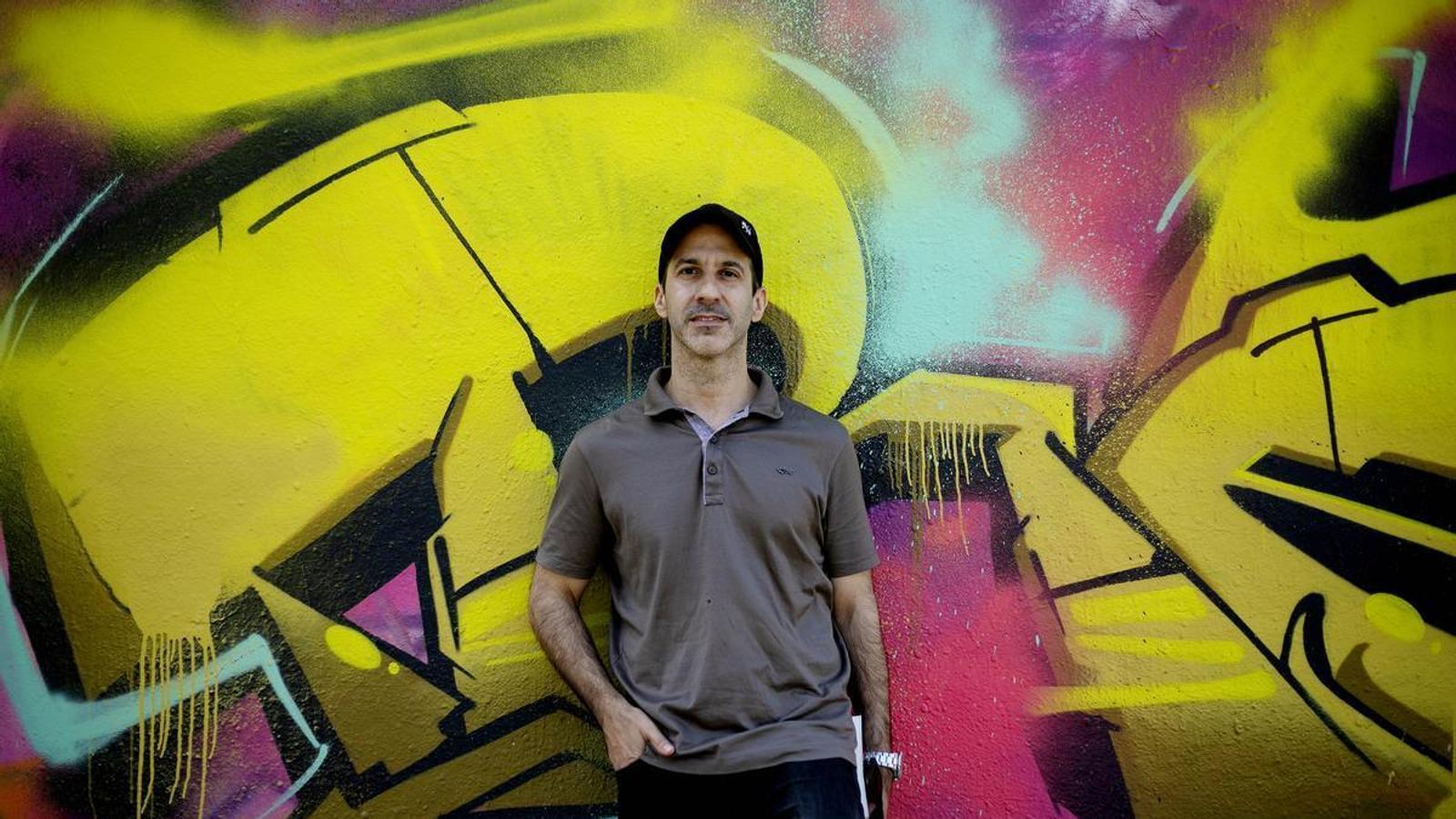
Doctor in Hispanic philology, high school teacher, literary critic, writer and father of 12-year-old Laia. He publishes 'Dietari d'insensibilitats' (Electa), a book where he speaks of his compulsive passion for reading diaries, an intimate text full of intelligence and tenderness about the pleasure of reading. He also publishes literary criticism in specialized magazines

I suppose that all paternities are similar, sudden and unexpected, even if they were greatly desired. We live them in our own way, like everything in life, but the path is the same and it is no mystery. You are born, you grow, you reproduce, etc.
When you became a father, did you write?
— Of course, as a form of therapy, with the aim of calming the hormones, the tears, the anger and the usual tiredness that we new parents suffer, fruit of the impotence.
Make me a list of good books about children.
— For example, the horrible Letter to His Father by Kafka or the nobler one by Paul Auster, The Invention of Solitude. There are very many. Of diaries dedicated to newborn sons or daughters, we have a very good one, the one by Carme Riera, Temps d’una espera. We also have very good material in the elegant diaries of Salvador Pàniker, especially in those where he explains the detoxification and death of his daughter. Josep Maria Espinàs also talks about it in his. Or Joan Margarit, in narrative poems. And Manuel Baixauli in his latest novel, Cavall, atleta, ocell. Recently, we have the diary of Manel Alonso, Quadern en la penombra, about the premature death of his son.
When you meet other parents, what do you talk about?
— I do not usually talk in depth with other parents. The topics are usually doubts or criticisms of the teachers. Since my daughter goes to a public high school, I try not to get into these conversations because I would end up—and, in fact, I do end up—angry as a hornet. The other parents—men—are, as Sartre would say, hell. And better not to talk about the mothers, always afraid, always in the shadows, always exhausted. The level is like that of mathematics: very low. We are all prophets, we all have clear guidelines and illusions, and we all end up drinking from the fountains of Innovamat, from the psychology of yoga teachers, and from the latest educational guru—be it Bofill, Rosa Sensat, or Eckhart Tolle. And so we have teenagers who, despite failing literature or math, are capable of imparting great life lessons to the responsible adults that we are. Perhaps it is true that, finally, we have managed to square the circle and are the best buddies to our children, but then Mr. PISA comes along and tells us that we have raised some fools.
I understand...
— Won't it be us, the parents, once again, who are to blame? I would like to say this ironically, but I don't always succeed. In any case, the blame lies with the unbridled capitalism that leaves us thinking only about future projects, football, cars, restaurants, travel, women, and houses. That is if we aren't caught up in running or padel, which, with the midlife crisis, is the most enormous of the pseudosciences.
Already...
— After so much activity and so much muscle and sportswear, few people feel like studying mathematics in depth, reviewing verb tenses from memory, or drawing the rivers and landforms of Spain. Anyway, there is nothing to be done and it is the law of life.
What are you worried about?
— Adolescence, vulnerability, the definitive loss of my daughter's innocence, according to the various beatings at the high school, which will be inevitable. There is nothing that makes me fear this era, beyond her leaving home with a Spanish boy. And even so. I have always worked with adolescents and nothing makes me think that Laia is an exception. In any case, it intimidates me that she might bring out a very dark part of me.
What do you like to do with Laia?
— Playing video games. But above all, criticizing each other, and criticizing people and the world. We are very good at that –she is better than me, I find.
What makes you reflect?
— My daughter has a sharp irony that I don't know if she will use for or against, to destroy or to protect herself. In any case, I will find either option fine.
And what amazes you?
— What strikes me about young people is their great vital intelligence, combined with an absolute inability for any practical experience. I do not know if we were also like that when we were young. I suppose more or less, but now we have more indicators and evidence.
What do you tell yourself when you can't take it anymore?
— I do not lose heart: it must be said that wine, love, a kind partner, and good food warm one along the way. But the Latin phrase ego sum quod eris, fui quod es always accompanies me: I am what you will be; I was what you are.
