HM Nou Delfos Hospital debuts a pioneering unit to treat functional neurological disorders
These diseases affect some 25,000 people in Spain and continue to be great unknowns despite being one of the most common neurological disorders
-
CAT -
CAST
September 29, 2026
The HM Nou Delfos Hospital in Barcelona is launching a pioneering Functional Neurological Disorders Unit dedicated to improving the diagnosis and treatment of these diseases, which are still little known, but already affect about 25,000 people in Spain and have become one of the main causes of disability.
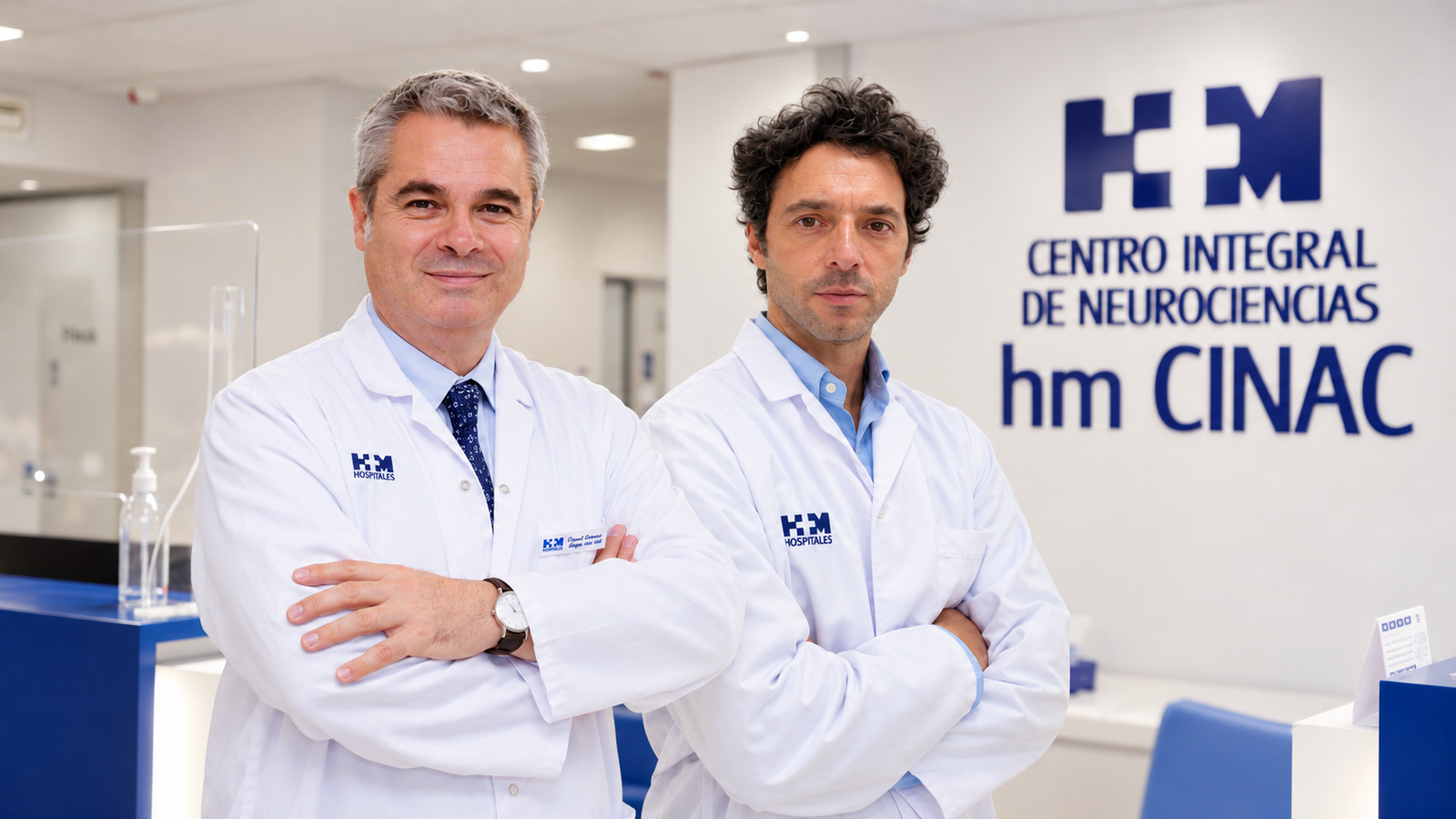
Led by neurologist Dr. Rodrigo Rocamora and psychiatrist Dr. Nicolás Lombardi, specialists in this field, the new unit has the diagnostic technology and the most advanced treatments of the Abarca Campal Comprehensive Neurosciences Center - HM CINAC Barcelona, located at the HM Nou Delfos Hospital, and a highly specialized multidisciplinary team to treat these patients comprehensively.
This new unit is the first in Catalonia focused exclusively on functional neurological disorders (FND) and also aims to position itself as a benchmark in the field of teaching and research to contribute to improving knowledge and awareness of these diseases.
The stigma of the invisible disease
FNDs are disorders in which the nervous system stops functioning normally without there being a structural lesion to explain it. The brain transmits information to the body abnormally, which can generate very diverse symptoms and conditions. They can include everything from tremors, weakness, or paralysis of arms and legs to alterations in gait, speech, memory, or concentration, as well as dizziness, loss of vision or hearing, and even dissociative-type crises similar to epileptic ones.
Overall, FNDs are more frequent in women and, although they can affect both children and adults, the symptoms usually appear around the age of 30. Their evolution can also be very variable: there are cases that remit in a matter of weeks, while others become chronic for years.
Unlike other neurological diseases such as stroke, multiple sclerosis, or Parkinson's, in FNDs there is no visible damage to the nervous system; even brain images and other diagnostic tests are usually normal. For this reason, it is common for affected people to have to face the misunderstanding of family and friends, who may consider that they are faking it. But that is not the case. When the brain is evaluated using functional neuroimaging techniques, such as functional magnetic resonance imaging, anomalies are detected in the connections between brain structures that are at the root of this brain malfunction.
"FND symptoms are real, have a recognized neuroscientific basis, and can cause a significant degree of disability and deterioration in quality of life," remark doctors Rocamora and Lombardi, coordinators of this specialized unit at Hospital HM Nou Delfos. "Early diagnosis and treatment are essential to alleviate symptoms and, on many occasions, achieve a complete recovery."

For proper attention
According to the Spanish Society of Neurology, FNDs are one of the most frequent causes for consultation in Neurology services –close to 18% of the consultations attended by these specialists–. However, they are very poorly understood diseases both by society and among healthcare professionals. Their symptoms can be confused with those of other diseases and many patients are treated successively in different departments and by various specialists. A pilgrimage that delays diagnosis and access to appropriate treatment.
The Functional Neurological Disorders Unit at HM Nou Delfos was created to concentrate clinical experience, technology, and care for these patients into a single care pathway, facilitating the detection of these diseases and early access to specialized resources.
Patients can come directly or be referred both from the same hospital and from any other healthcare center. After an initial assessment, a joint study is carried out from a neurological, psychiatric, and neuropsychological point of view to confirm the diagnosis, detect other pathologies that may coexist, and define the most appropriate treatment for each person.
To do this, the unit has a multidisciplinary team composed of specialists in neurology and psychiatry, experts in epilepsy, movement disorders, and cognitive alterations, as well as neuropsychologists, clinical psychologists, nursing staff, and physiotherapists.
With this new unit, HM Hospitales reinforces the development of highly complex programs in Barcelona and consolidates a model based on clinical excellence, innovation, and the integration of specialties. The group, with 7,500 professionals and 55 healthcare centers nationwide, has the hospitals HM Nou Delfos, HM Sant Jordi, and HM Nens in Barcelona, in addition to three polyclinics and several hospitals and clinics in the Maresme and Girona areas.
