The Cicle Gaudí celebrates its 10th anniversary this year, consolidated as the great network for the stable exhibition of Catalan cinema in Catalonia and internationally. In a decade, the circuit has reached 199 municipalities, has scheduled 104 films in more than 8,000 screenings, has brought together more than 330,000 spectators, of whom 8,000 are young audiences, and currently has 137 affiliated venues, in addition to 6 international locations. To commemorate its trajectory and its 10th anniversary, the Cicle Gaudí of the Catalan Film Academy begins a year full of new features this October, including the celebration of a very special event on October 22nd at the Casino de Rubí, which will pay tribute to the eleven pioneer venues that have been part of the Cicle since 2016. The celebration will also include the screening of Balandrau, vent salvatge, as part of the Cicle Gaudí programming in Rubí. More news coming soon at www.ciclegaudi.cat.
Álvaro Cervantes: "'Balandrau, wild wind' is a film for those who watch us from the mountain"
The actor talks about the challenges of playing the only survivor of the Balandrau tragedy
-
CAT -
CAST
Giving life to a real person who survived one of the most extreme mountaineering tragedies in Catalonia is a challenge that goes beyond acting. In Balandrau, vent salvatge, Álvaro Cervantes steps into the shoes of Josep Maria Vilà, the only survivor of the tragedy. His first contact with the story came through the documentary about the events. "I was very impressed by his mental strength to endure everything he endured," he explains.
Getting to know Vilà personally allowed him to delve into his personality and understand this capacity for resilience. Cervantes discovered "a special person, with a kind of internal balance" and identified this strength as the great challenge in building the character. "It is not something that can be photographed," he notes. For this reason, he worked from a place of restraint, avoiding complaints even in the most extreme situations: "Complaining would weaken him mentally in the eyes of the viewer."
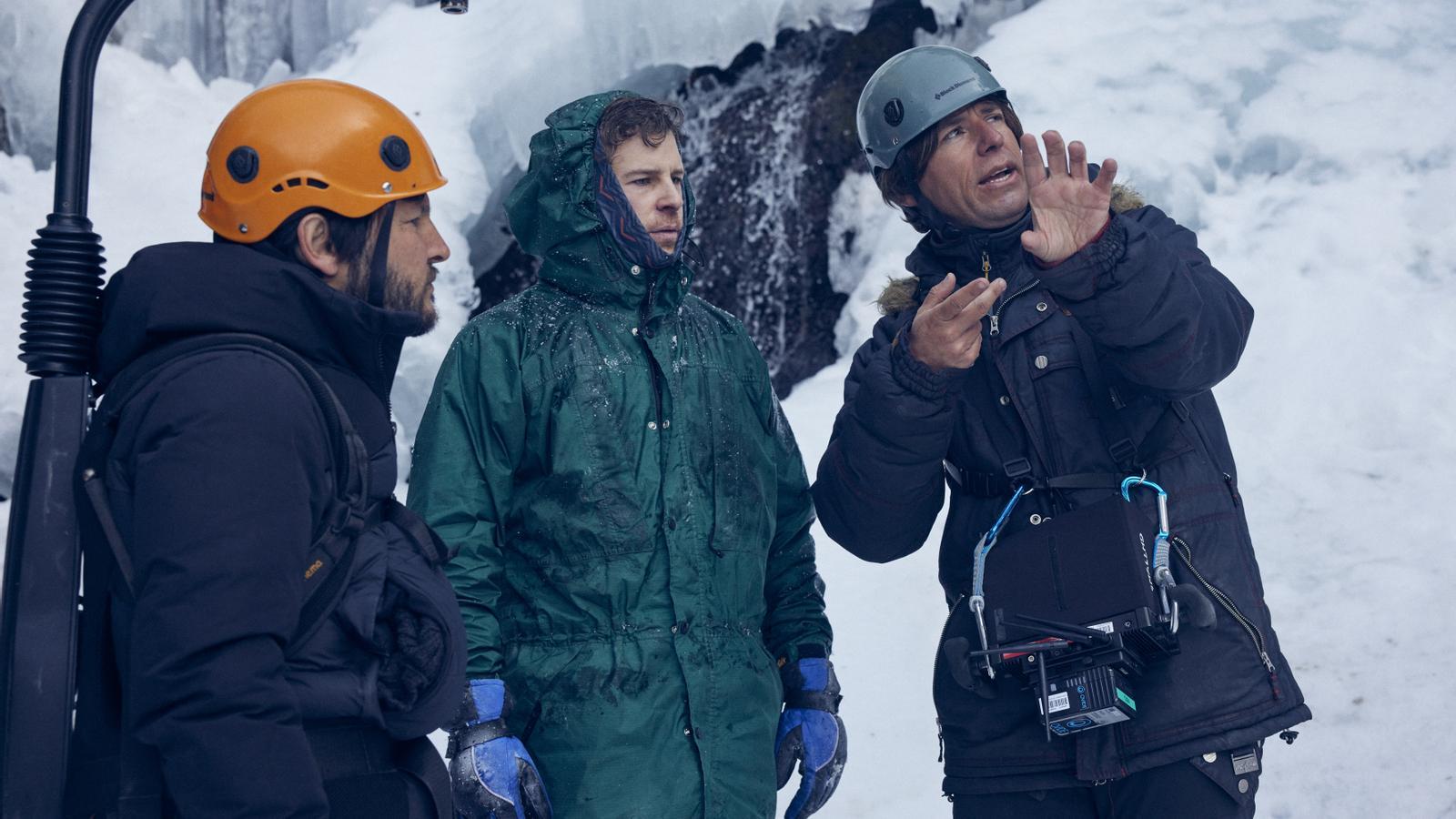
The Balandrau mountain is a central element of the film and practically becomes another character. The team filmed at a real frozen waterfall, recreating the space where Vilà was trapped. During filming, however, the weather was different. "It wasn't cold at all, I had to act it out," recalls Cervantes. The most extreme conditions arrived on set, with giant turbines that propelled kilos of shredded cellulose to recreate the blizzard. "You swallowed it and it got into your eyes," he explains.
But Balandrau, vent salvatge goes beyond a story of survival. The film focuses on the bonds between people and on the love for life and nature. Cervantes highlights the vision of the director, Fernando Trullols, who wanted to tell the story of a group of friends united by a deep love for the mountain and pay tribute to them. "I feel that everyone involved in this film has worked for them," he states, and recalls a phrase from Trullols: "For those who watch us from the mountain."
Bringing real events to the cinema also implies an added responsibility. Cervantes advocates treating these stories with "great care and rigor," especially when they may be the viewer's first contact with the facts. His wish is that, beyond the tragedy, the film connects the public with "the day-to-day and with the loved ones who are part of their life."
