Parlon defends the management of the floods, which have left one dead: "The alert did not arrive late"
The storms cause effects on mobility, a sinkhole on the R2 North and serious flooding at the Vall d'Hebron Hospital

-
CAT -
CAST
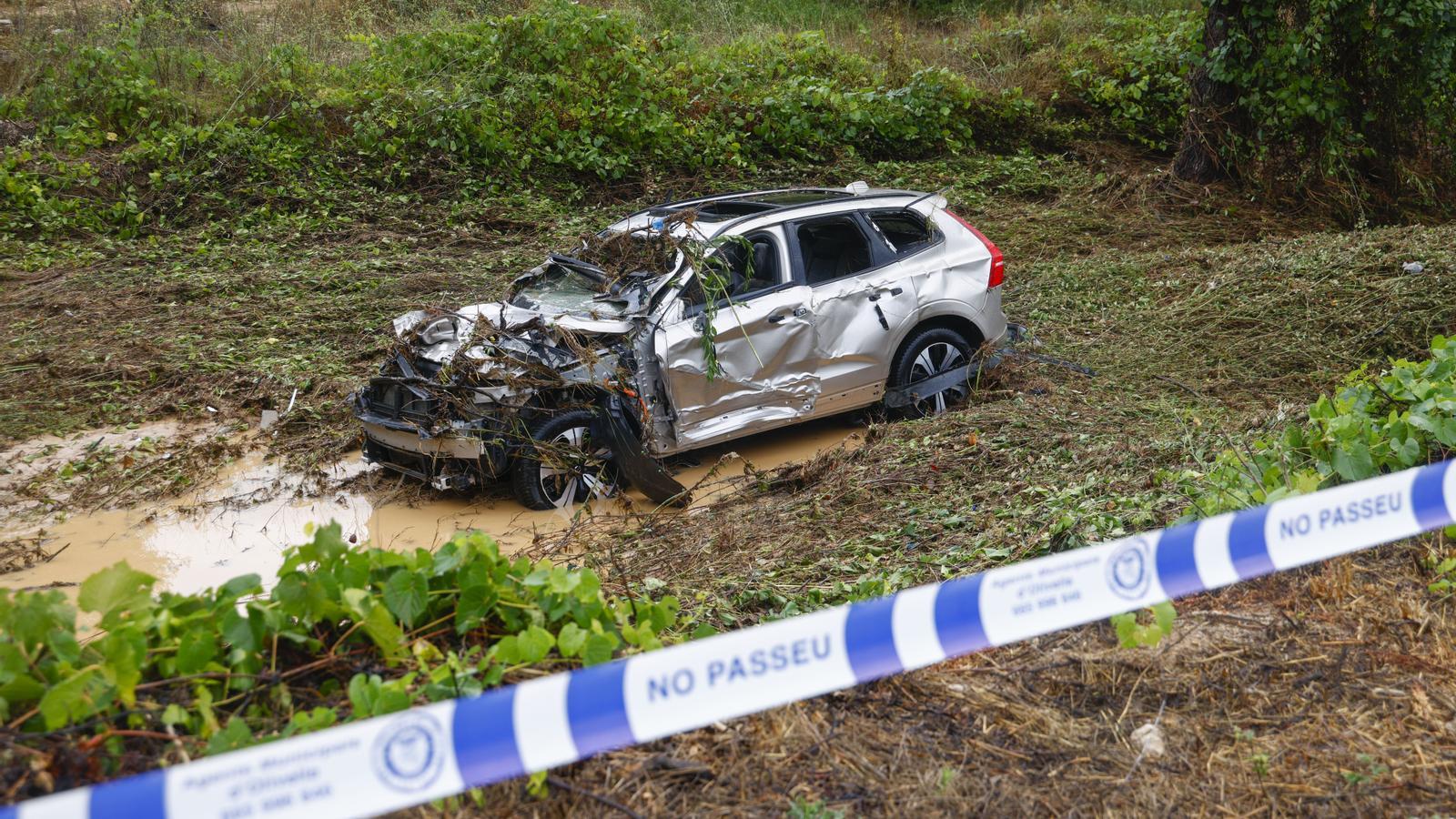
BarcelonaThe Minister of Interior, Núria Parlon, defended this Thursday that the mobile alerts for the intense rains on Wednesday night were sent in light of predictions of "sudden" floods. "They do not arrive late, but rather when the population must protect itself," she argued. The minister said this in a joint appearance with the deputy director of Civil Protection of the Generalitat, Sergi Delgado, in which they reported on the management of some downpours that caused the death of a 48-year-old driver in Olivella, in the Garraf region, when he was trying to cross the Begues stream with his car, in addition to cuts on roads and trains, flight cancellations, and various floods.
According to Parlon, the sending of the ES-Alert messages –in the evening and at night in the metropolitan area, when it was already raining intensely– was correct and was "fully justified," in accordance with the "weather forecast corrected for the risk of sudden flooding." "We do not send the ES-Alert to warn that it will rain a lot," the minister stressed, recalling that the precipitation did not have a "stable behavior." In this sense, she considered that "alerts are not sent lightly," but only once the danger to the population has been assessed. "We cannot stop life in general, because in the end, no one would listen to us," she stated. And she added that "no one would have accepted" that the FC Barcelona match be suspended.
Specifically, Parlon recalled that there were warnings issued by Meteocat that pointed to an episode of "locally very intense" storms and, following them, up to 48 municipalities activated their civil protection plans. However, she detailed that during the episode, Meteocat corrected the forecast and issued a warning for intensifying rain first in Barcelonès and Maresme, and then also in Baix and Alt Penedès, Baix Llobregat, and Vallès Occidental. It was then that the ES-Alerts were sent to warn the population.
The explanations come after the Firefighters found the lifeless body of the driver at midnight who was dragged with his car by a stream in Olivella. The alert was received at 23:03, but it was impossible to find the victim. The rescue teams first located the car and, finally, the man about 500 meters from the vehicle. The mayor of Olivella, Marta Verdejo, has highlighted that although the ES-Alert arrived when the stream had already increased its flow, the previous warnings to the municipality's residents had been made as appropriate and that, therefore, the dangers that an episode like this could entail were known.

Verdejo has assured that the Mossos and Firefighters are investigating how the dragging occurred, given that in 20 years she had never seen the Begues stream flow with the force it did on Wednesday. "This has surprised everyone," she added. However, she assured that the bridge had not been closed because the water usually flows at a great distance, and that in other, even more intense, rain episodes, such a strong flow had never been seen.
Damage especially in the Garraf
The rain, which fell heavily on the coast of Garraf and Barcelonès, caused floods and serious mobility problems. The Ronda de Dalt was cut off in both directions and there were also cars trapped in Santa Coloma de Gramenet, in the direction of Mataró. By 11:30 p.m., the firefighters had already accumulated almost 300 warnings due to the storm.
The mayor of the Catalan capital, Jaume Collboni, closed ranks this Thursday with Parlon and rejected that it was necessary to send the ES-Alert earlier. In this sense, he stressed that both the City Council and Civil Protection had already issued warnings throughout the day to the population regarding the prospect of heavy rains. Regarding the flooding in the metro – on lines L4, L1 and L11 – or on the Ronda de Dalt, Collboni has admitted that if these rain episodes become more frequent, "it should not be ruled out" that it may be necessary to review some infrastructure to improve its resistance capacity to downpours.
Wednesday's downpour also caused destruction in several houses in the Les Amèriques urbanization in Canyelles, in Garraf, located next to the Vilafranca stream. The force of the water allegedly dragged a car which, in turn, would have caused a blockage, according to the neighbors, on Equador street. This meant that the water rose over a meter inside one of the homes located at street level, a fact that, together with the darkness of the night, made the neighbors leave with only the essentials without knowing the magnitude of what was happening. Those affected have been assessing the damage they suffered this Thursday, which, fortunately, is only material. The city council has made itself available to the three affected neighbors, while the municipal brigade has been working all morning to remove mud in different parts of the town, especially on the C-15B road.
Severe flooding in Vall d'Hebron
Vall d'Hebron Hospital is also suffering the consequences of yesterday's storm. The downpour caused flooding in the basements of three buildings of this reference medical center, which are still being cleaned this morning. The rain even caused part of a false ceiling to collapse in the pediatric nephrology ward, without the damage affecting any patients. As a precaution, however, some of the inpatients were moved to other areas.
