The new struggle of Seat: not to be reduced to a factory
Martorell is the headquarters of the Catalan company, a fact that gives it a certain independence from Germany

-
CAT -
CAST
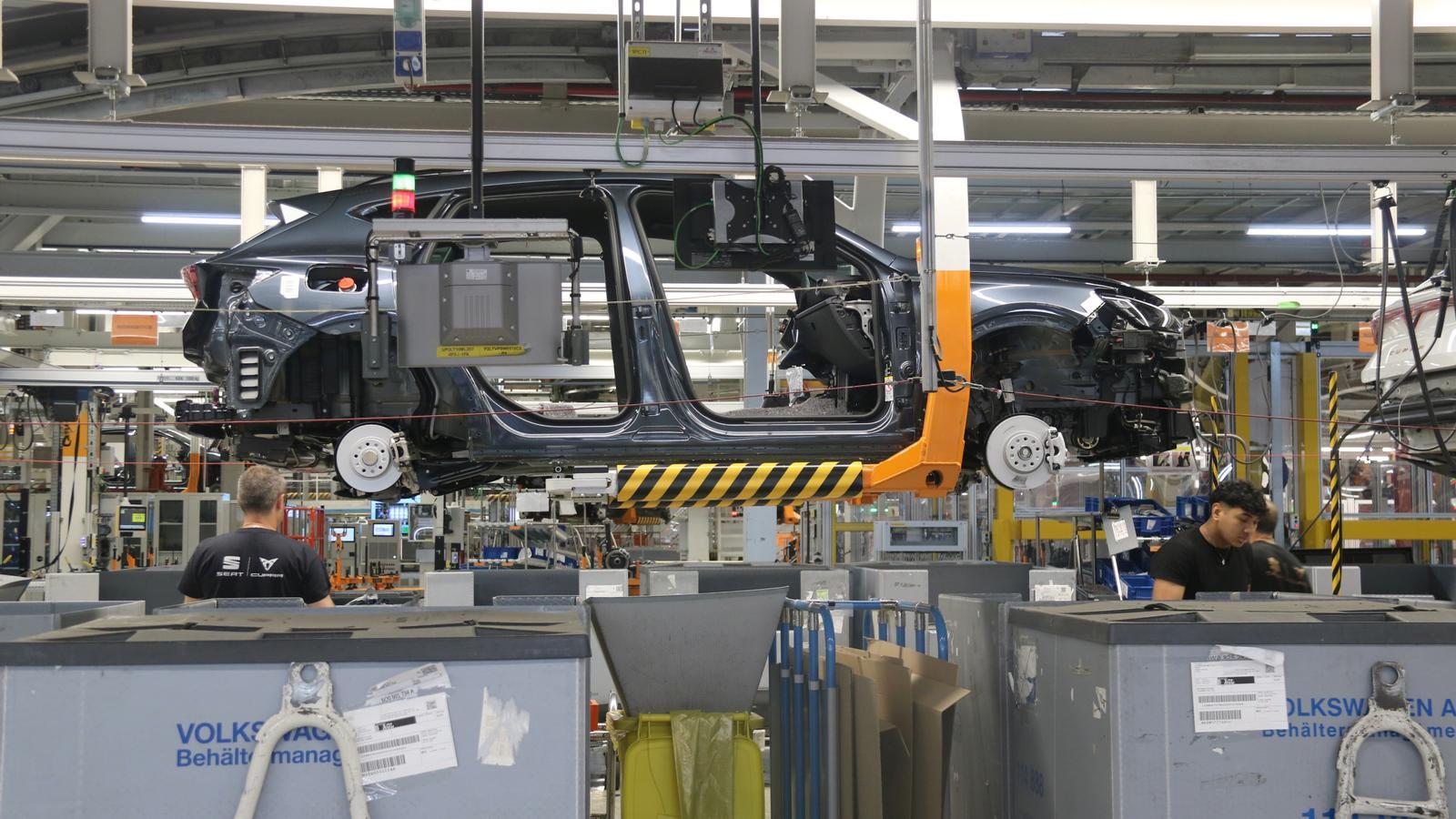
BarcelonaThe crisis facing the Volkswagen Group on a global scale is having an impact in Martorell. The Seat brand will not be electrified, and its models will gradually disappear as regulations on CO₂ emissions progress, provided that sales do not fall sharply beforehand. But this commercial impact will not be the only one that the Catalan branch of the group will face: Cupra, which is currently eight years old and still in an expansion phase, will also not launch any new models in the next four years, as reported a few weeks ago by the CEO of Seat and Cupra, Markus Haupt, in a meeting with journalists. The decision has been precipitated by Volkswagen's restructuring plan, which aims to halve the total number of models from its firms.
In this context, sources from Martorell point out that, currently, it is not only the future of the Seat brand that is at stake, but also that of Cupra. “When a brand is launched, a strong investment is needed,” they note from the car factory, adding that it is always very important, especially during the first years, to continuously renew the firm's model range. Volkswagen's decision will mean that the group's Catalan branch will spend the next four years without presenting any new cars, after the Cupra Raval was launched this summer, an urban electric vehicle that, according to company sources, is becoming a best-seller.
“There is no doubt that Martorell will still be making cars in ten years' time; the question is whether it will be the headquarters of Seat or if it will be a branch of the group,” the same sources point out. The Catalan plant is not just a factory of the group like, for example, the one in Landaben (Pamplona), but as a headquarters, it also has different departments and more structural positions. Now, this role that provides a certain independence to the company could be at stake, and voices from Martorell are asking the current management to strengthen its position. It should be remembered that, a few months ago, Volkswagen already began to restructure certain parts of the organization chart more vertically, which until then depended on each company, in order to centralize its management.
An agreement up in the air
The group's situation has also led the company's executives to have to take complicated measures regarding its workers. Specifically, Volkswagen has proposed to the German unions freezing salaries during 2027 and 2028, eliminating various salary supplements, and introducing more flexibility in the working day to reduce personnel costs in Germany. The company communicated these demands this Wednesday in a statement to the IG Metall union – the largest workers' organization in Europe – ahead of the next collective bargaining agreement, which is scheduled to begin on Tuesday, November 24, in Emden.
This negotiation, although not binding for Catalan workers, may well set the tone for the debate on a new collective agreement for Seat, since the current pact expires at the end of this year. “We are looking at whether to postpone the negotiation of the agreement while waiting to see what happens in Germany,” union sources explained to ARA. During the Paris Motor Show in early October, the CEO of Seat and Cupra said that when it comes to negotiating the next agreement for the Catalan company, it would be necessary to contribute a “grain of sand” to the group's restructuring plan, since it “affects the entire group, and is not exclusive to the German factories.”
Specifically, the demands made by Volkswagen this Wednesday to its German workers put on the table proposals such as being able to work more hours without financial compensation and suppressing an additional payment equivalent to 27.5% of the average monthly salary or, alternatively, six days of paid vacation. Furthermore, it proposes eliminating a salary supplement of 167 euros per month. Regarding the working day, the company led by Oliver Blume wants to expand the ability to adapt weekly working hours to production needs. Currently, the ordinary working day set in the agreement is 35 hours. Thus, the company proposes adjusting it “according to the needs for utilizing operational capacity, without compensation in case of an increase and with a proportional adjustment of remuneration in case of a decrease.”
The manufacturer justifies the measures due to the need to strengthen competitiveness in the face of increasing pressure on costs, tariff barriers, the contraction of the Chinese market, and the increase in competition in Europe. The German group's plan, in addition to eliminating half of its models, also envisages reducing its production volume by 25%. To achieve this reduction, the Lower Saxony group's proposal involves closing four plants in Germany and cutting up to 100,000 jobs worldwide. Currently, the entire German consortium has more than 650,000 employees.
