Hidden, sleeping in the open or in temporary facilities: the reality of migrant minors in Ceuta
There are still between 3,000 and 5,000 people who entered the city illegally, of which a thousand are children

-
CAT -
CAST
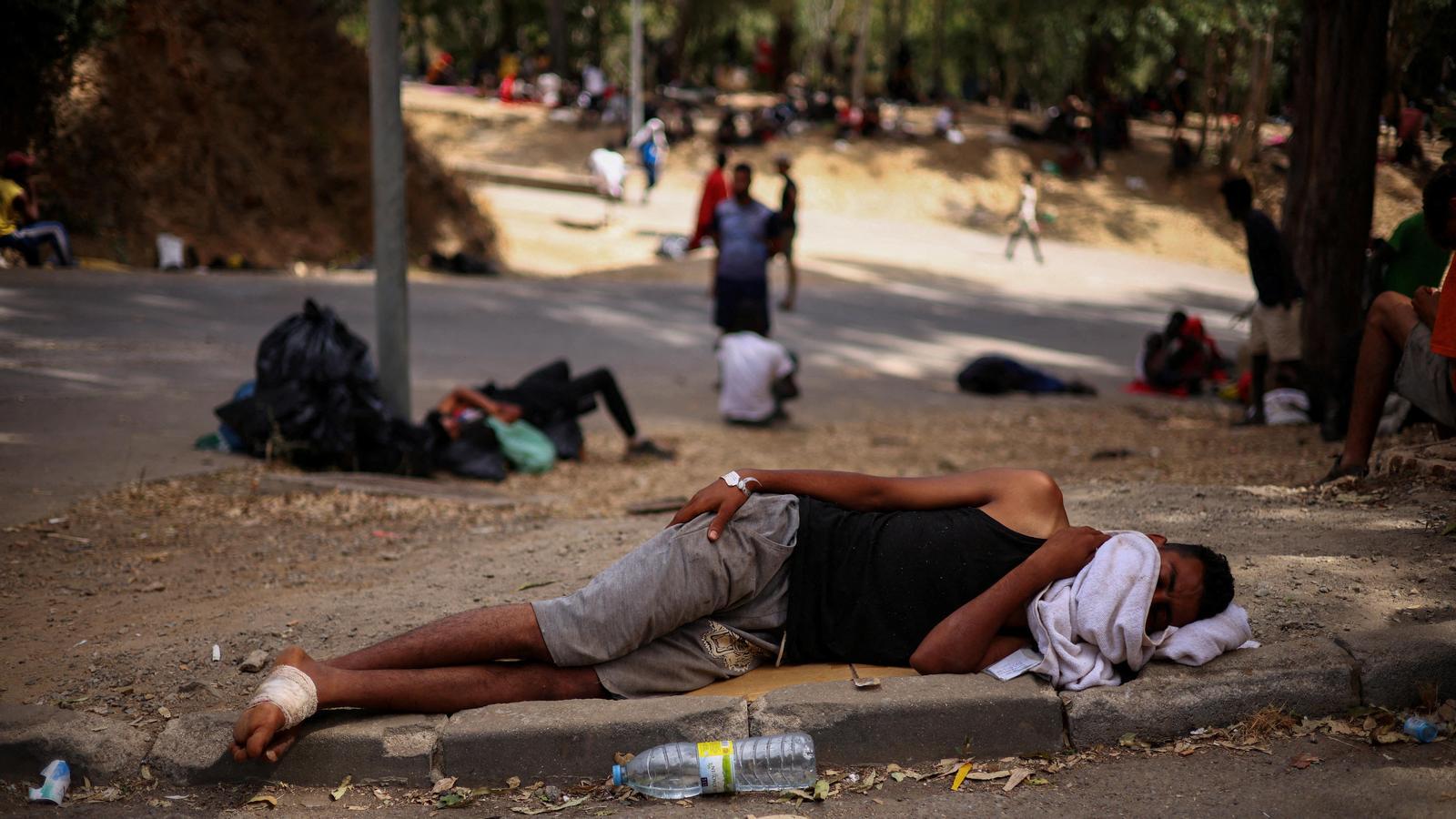
BarcelonaThe Government of Ceuta has estimated between 3,000 and 5,000 people are still in the autonomous city after last Thursday's massive entry that has caused an unprecedented migratory crisis. Of these, at least about 900 are minors who are in reception centers and other extraordinary resources that have been set up in the city. However, the executive led by Juan Jesús Vivas (PP) is aware that there are many other children who entered the city illegally on July 30 and who have not yet requested to be assisted or continue to be hidden in illegal settlements — especially in the mountains — or have not been detected by the Local Police, which is responsible for transferring them to reception centers.
On the other side of the border, in Morocco, there are desperate families looking for news of their children. Photos of missing people are circulating on social networks and local pages. X, Instagram, or TikTok — where there were previously calls encouraging the Moroccan population to cross the border to Ceuta — are now the main channel for locating the missing. "It cannot be that minors are used as they have been used," warned the Minister of Defense, Margarita Robles, who once again pointed to the role of mafias and asked the Moroccan government to get to the bottom of the matter to clarify the causes of this tragedy.
For the moment, sources from the Ceuta executive have explained to Efe that the La Esperanza reception center, the Tarajal Nueva Esperanza warehouse, and the two spaces set up in Piniers have registered 862 minors, all of them Moroccan. Likewise, they believe that the figure may vary in the coming hours and exceed one thousand, even though some of these minors returned voluntarily to Morocco with their parents. The situation has also shaken Melilla: the other autonomous city currently hosts 344 unaccompanied foreign minors, double the number before the migratory crisis and four times its maximum permitted capacity.
Meanwhile, the Local Police are in charge of locating these Moroccan citizens who are allegedly minors in order to transfer them to the city's facilities, which are managed by the main center of La Esperanza, while the Samu and Engloba associations are taking care of the provisional resources. This Monday morning, as Efe has been able to verify, many minors were around the Tarajal border, specifically in the warehouses of the industrial estate located next to the border crossing.
Protection system overcome
Save the Children has already warned of the "serious risk" that some minors may be left outside the protection system in Ceuta given the increase in arrivals in recent days. The city's protection system is well above its structural capacity, as it has less than a hundred places and, instead, is attending to almost a thousand children. The organization fears that there may be children who have not yet been identified or referred to resources, and who are on the street or in spaces that do not meet the necessary conditions to guarantee their safety and well-being.
"The priority at this time must be that no boy or girl is left without protection. All minors must be identified as soon as possible and transferred to a safe resource where they can receive specialized care and psychosocial support," states Save the Children. For this reason, they call for strengthening the teams responsible for identifying minors, providing humanitarian assistance, and speeding up their referral to resources, as well as enabling new reception spaces that allow for responding to current needs while transfers to the peninsula are being organized.
Sources from the Ministry of Youth and Childhood explain that the situation in Ceuta has been closely monitored to guarantee the rights of all unaccompanied migrant children and adolescents in the city. Furthermore, it is working to activate all mechanisms to provide "dignified reception," emphasize the same sources, recalling that the law establishes that reception is "binding and supportive" on the part of all autonomous communities. The provision of new spaces and infrastructures that offer dignified initial care to these children moments after their arrival is another of the ministry's priorities. Funding and extraordinary credit allocations will be made available for this specific measure.
