The Brazil stock market collapses due to Lula's victory
After the first round of the presidential elections, the markets had discounted a Bolsonaro victory
-
CAT -
CAST
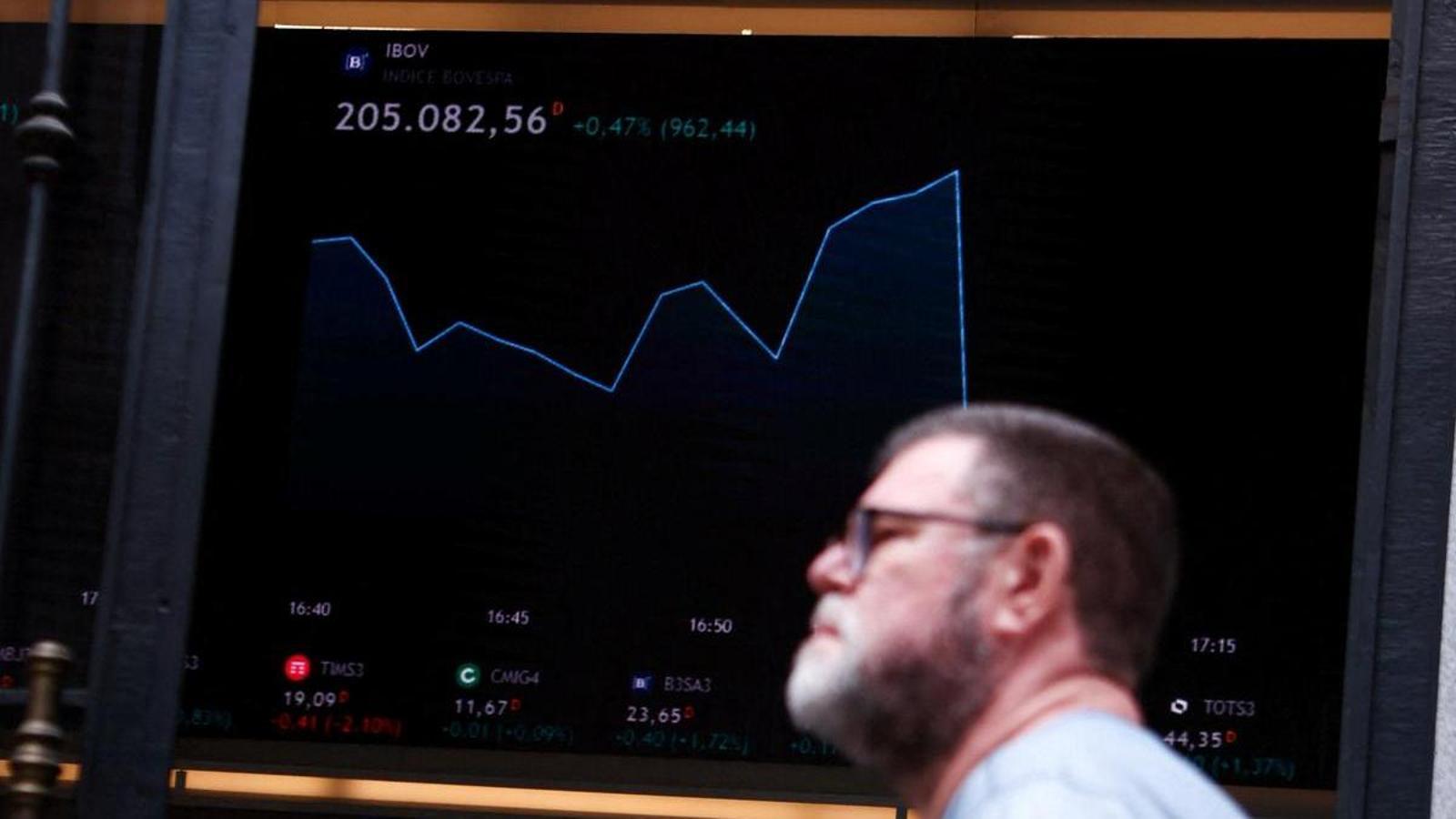
BarcelonaThe São Paulo stock exchange, the most important in Brazil, plummeted at Monday's opening by more than 15% following the unexpected second-round victory of Luiz Inácio Lula da Silva in the presidential elections held this Sunday. Lula's re-election has not been well received by the markets, which expected a change at the head of the most populous country in South America and the entry of the ultra-conservative Jair Bolsonaro.
The Bovespa index (B3), the benchmark in Brazil, fell in the first moments of the session to around 170,000 points from the 205,083 points at which it closed last Friday. Specifically, it was trading around 16:35 (Catalan time) at 173,888 points, 15.21% less.
The Brazilian market was halted for 30 minutes after reaching losses of 10%, as required by the rules, according to a statement from B3, the company that operates the São Paulo trading floor. Likewise, the Brazilian Treasury has canceled the two sovereign bond issues scheduled for Tuesday and Thursday of this week.
"After the first round, held at the beginning of October, the markets had largely discounted a Bolsonaro victory; this suggests a significant correction in Brazilian assets and higher volatility, given that doubts persist around fiscal policy," explained Julius Baer fixed income analyst Eirini Tsekeridou, in statements reported by Europa Press.
Specifically, investors are anticipating that Lula's legislative agenda will be hindered by the fragmentation of Congress and its predominantly center-right tendency, which would make any possible structural reform difficult.
For his part, Vontobel portfolio manager and analyst Thierry Larosa described the renewal of Lula's mandate as a "surprise in itself," given that the polls were very tight and Bolsonaro had already won in the first round. "We believe that Lula's government will have no choice but to also undertake fiscal consolidation measures. However, most investors doubt that they will be sufficient to get debt sustainability back on track," he added.
In particular, Larose predicted a "significant readjustment" of government bond yields, the Brazilian real, and the DI curve, an acronym for Depósitos Interfinanceiros, one of the main interest rates for Brazilian debt.
Lula, from the Workers' Party, has obtained re-election with 51.79% of the votes against the 48.21% obtained by Bolsonaro, from the Liberal Party.
Effects on the Spanish stock market
The triumph of the leftist leader has impacted the Spanish stock market after Telefónica saw its share price drop around ten in the morning by 7.23%, to 3.17 euros, and Banco Santander by 4.6%, to 10.98 euros.
These stocks have been affected by the elections due to the exposure of their businesses to the region, as the Spanish telecommunications multinational operates in Brazil under the Vivo brand and the bank presided over by Ana Botín has its main subsidiary outside of Europe there. In fact, it is the fifth largest commercial bank in the country by volume of assets.
