The riots and the performative crime

-
CAT -
CAST
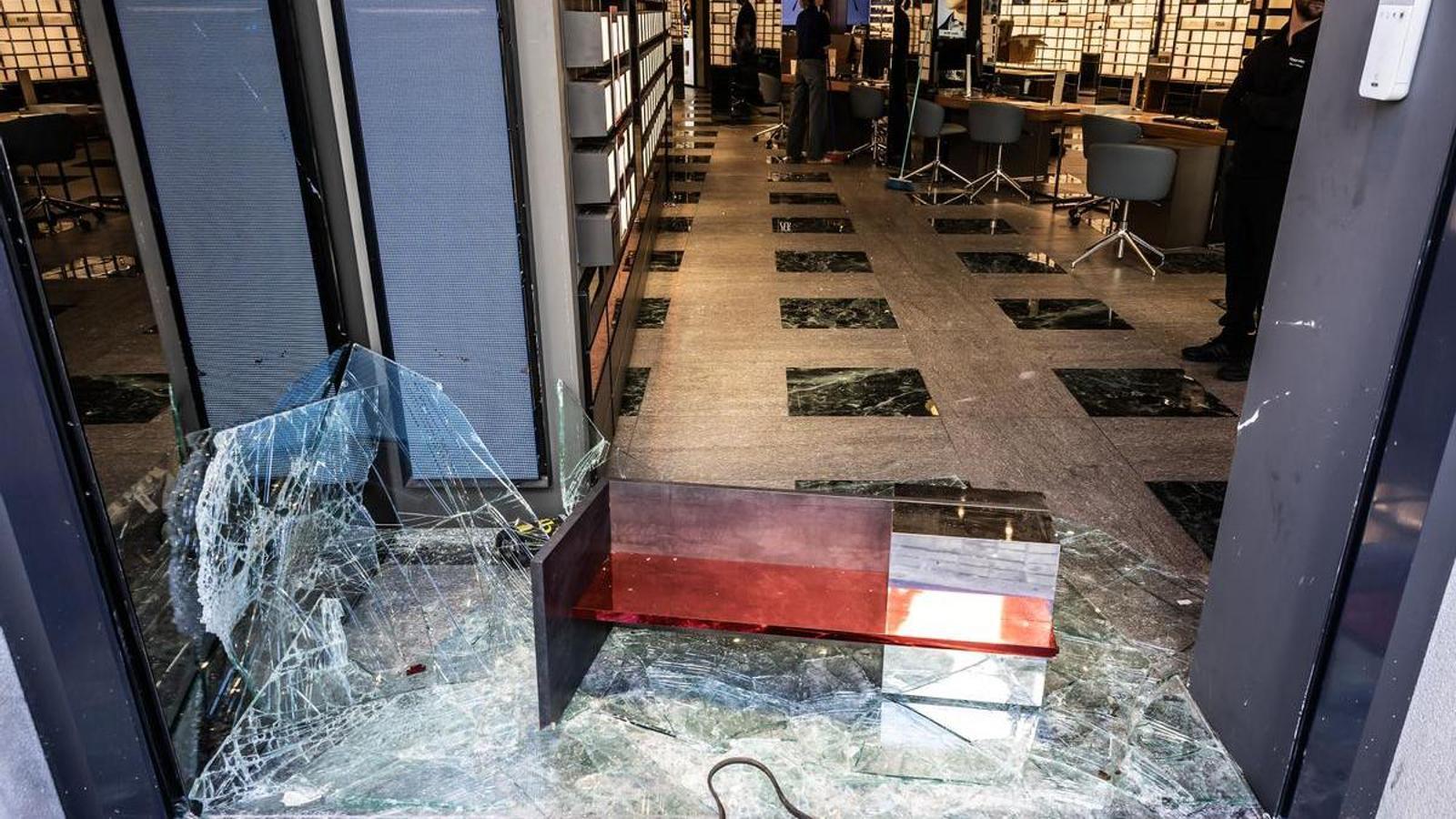
On Saturday, 500 violent youths did not meet at Plaça Catalunya. 500 youths met in a context that makes almost any adolescent capable of doing things they would never do alone.
The first mistake would be to read this as a replica of France. There, there is an articulated movement: secondary students denouncing overcrowded classrooms and unfilled teaching positions, with families and teachers by their side. In Barcelona, the motto (“Institut Indignats”), the name of the profiles calling for it (“Blocus”, as French students call the blocking of high schools), the aesthetics, and the date were imported, but not the content. There was no claim.
What there was, was a well-designed mechanism: a funnel. At the mouth, TikTok, an open network with excellent segmentation to reach adolescents. At the neck, a closed WhatsApp or Telegram group where an administrator must approve you. The emotional sequence is extremely powerful. First, you feel called, when the video finds you. Then chosen, when they admit you to the group and you receive instructions: dark clothing, gloves, covered face. On the street, you feel welcomed. And finally accepted, when you post your video and the "Likes" and comments from your peers pour in. For those who feel lonely or invisible, this instant sense of belonging is worth more than any slogan.
In sociology, a distinction is made between the mass and the crowd. The mass is formed by people who think and act in a similar way without knowing each other or ever meeting. The crowd meets in one place. On Saturday, we saw how a mass dispersed on TikTok turned into a crowd at Plaça Catalunya. But Saturday did not start on Saturday. The algorithm that summoned them is the same one that, for months, had served them gratuitous violence as a spectacle: in the United Kingdom, almost half of the adolescents who use TikTok have seen real violence there in a single year. The call, disguised as a replica of the French Blocus, offered them the opportunity to go from admiring it to starring in it. However, if so many had seen it and only 500 went out into the street, it is evident that receiving the call does not mean joining in. Studies agree: the majority of young people who participate in a riot are not violent by nature. Violence is primarily situational: it arises from the combination of a moment, a group, and an opportunity.
The group weighs in: Laurence Steinberg's studies show that adolescents take much greater risks when they are watched by their peers. Anonymity adds to this, because covering one's face does not cause a loss of control, but rather leads to adopting the group's norms, and this group had been summoned to destroy. Among hundreds, responsibility is diluted and impunity seems guaranteed. And there is the adrenaline of transgression, the carnival of a night, with a strong component of masculinity: the vast majority were boys, and collective violence is a way of showing off in front of others.
But what makes this episode unique is its dimension of performative crime, according to criminologist Ray Surette: acts designed to be recorded and shared. The mobile phone is not a witness; it is part of the action. The audience is not the pedestrians or the police, but the followers. The street becomes a set and the burning dumpster becomes content. And the circle closes where it began: on the web, where the video is transformed into recognition. In the attention economy, destruction is a currency of status.
If violence is situational, prevention must be too. France gives us a clue. The Minister for Digital Affairs, Anne Le Hénanff, summoned TikTok and other platforms. TikTok activated its crisis protocol: it removed videos, stopped live streams, and limited searches. Stopping the live streams is not a detail: if the crime is performative, taking away its audience deactivates part of its meaning. And Vinted, eBay, and Amazon monitored the resale of the loot. Platforms are not just a channel: they are there before, when they normalize violence; during, when TikTok calls and WhatsApp or Telegram instruct; and after, when they turn the destruction into a showcase. Acting at only one moment leaves the circuit open.
Almost a decade ago, when we talked about clicktivism, many voices predicted the end of street mobilization. Today we see that what originates in the digital realm has physical consequences, and that new forms of calling to action are appearing. This time, it took only four days to summon 500 adolescents who have shielded themselves and emboldened themselves with the "everyone was doing it" excuse.
