Blood as evidence: this is how the trail of drugs is read after a crime
The pioneering technology with which they work at the Institute of Forensic Sciences gives very concrete information about what a person has done in the preceding hours
-
CAT -
CAST
BarcelonaWith just a blood sample, a pioneering machine from the Institute of Legal Medicine and Forensic Sciences of Catalonia (IMLCFC) provides very specific information about what a person has done in the hours prior. The chromatograph's screen shows which substances are present and in what quantity of caffeine, drugs, alcohol, or psychoactive substances, for example. Through this technology, many more components can be detected than others – including the most unusual drugs – and their quantity can be much more precisely determined; this is especially useful information in cases where it must be clarified whether a person has committed a crime under the influence of drugs, as it can lead to a sentence reduction, or to prove whether chemical submission has occurred in a sexual assault case.
Jaume, one of the chemists working in the IMLCFC laboratory, quickly recognizes just by looking at the numbers appearing on the screen whether the detected quantities are normal or not. To make it clearer, the computer itself also displays it in the form of a graph, so that it clearly shows what substances the person had taken. In this laboratory, chemists and forensic doctors work closely together to detect and interpret the results that will ultimately help judges decide how to resolve a case, with samples that sometimes come from corpses undergoing autopsies and others from living people, both victims and defendants.

For about two years now, they have had four of these devices in the laboratory with "very advanced" technology, which is not yet present in many forensic laboratories in the State and which allows them to detect more substances – around fifty – and more accurately, according to the director of the IMLCFC, Eneko Barberia, and the head of this laboratory, Geli Gallego. "Drug consumption has changed, new psychoactive substances are appearing that are not so widespread, but they are active at very low concentrations," explains Gallego as an example of drugs they can now detect better.
The sensitivity of these devices would also allow, for example, to quickly detect if a person has been hospitalized. "Before we couldn't know if they didn't tell us, now we can, just by looking at the blood," explains Josep. They do this by detecting substances that are only used in a hospital setting, such as when a patient is given an IV line. A key factor in refining the results is the time that has passed, and the reference point is usually the time of the crime. Many times the analyses are carried out while the suspect is detained.
Unimaginable results years ago
In cases of traffic accidents where it is necessary to check if those involved had consumed alcohol or drugs – last year, with 233 fatalities, 36.4% of drivers or victims tested positive – the timing of sample collection is also important. If, at the time of the accident, the person has received medical assistance and a sample was taken at that moment, the laboratory will prefer that one over one taken hours later. The four chromatographs used to analyze the samples were acquired in 2023, on a rental basis, for a period of six years and with a total value of 1.8 million euros, as reported by the Department of Justice at the time.
More and more cases like this arrive at the IMLCFC; in the last nine years, they have more than doubled. Last year, they closed with 6,733 cases requiring the processing of over 18,000 samples. Among last year's cases, there were 1,394 for sexual assault, the highest number to date, and they involved 653 toxicological studies.
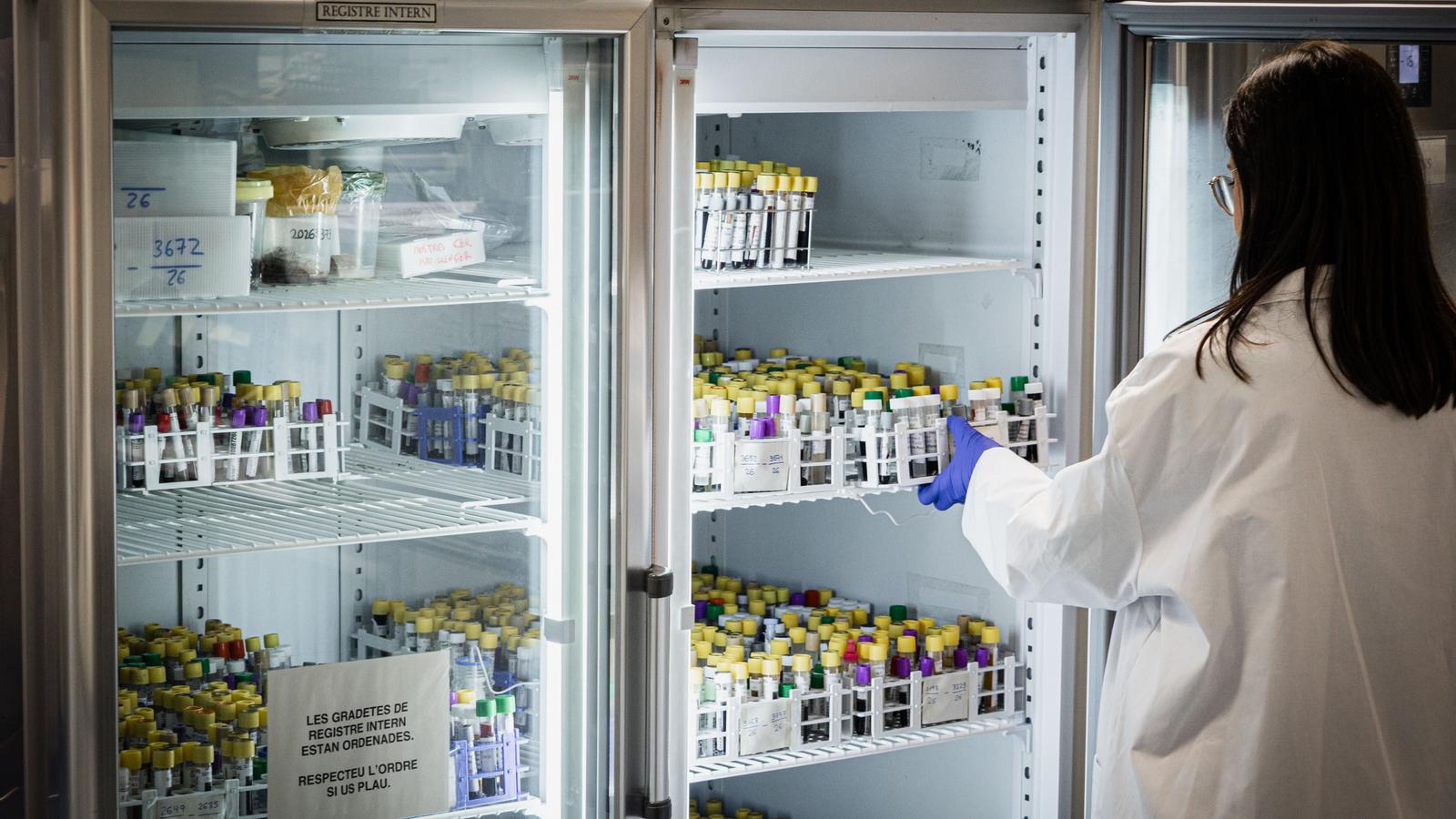
Of all the samples taken, a sub-sample is kept frozen for 10 years. This period could always be extended if the judge in charge of the case deems it necessary. In fact, advances in the equipment and techniques used in the laboratory have also made it possible to find results in old samples that "15 years ago were impossible to consider," acknowledges Gallego.
