Three years of a divorce that can condemn the left
The backpack of the breakup between Sumar and Podemos and the wounds of the drafting of the lists in 2023 weigh on the current relationship
-
CAT -
CAST
Madrid"It's been many years and many hatreds." That is how Gabriel Rufián spoke, in an interview this Friday on RAC1, about the obstacles to achieving a unitary list of the left in the State. Personal enmities also influence the dispute between parties, and the baggage of the divorce between Podemos and Sumar still weighs heavily; this was definitively consummated three years ago in Congress and may condemn the electoral prospects of the left. In the negotiations of the last few days, wounds that are still open and distrust that has been dragging on since the process of drafting the lists for the 2023 elections have been perceptible.
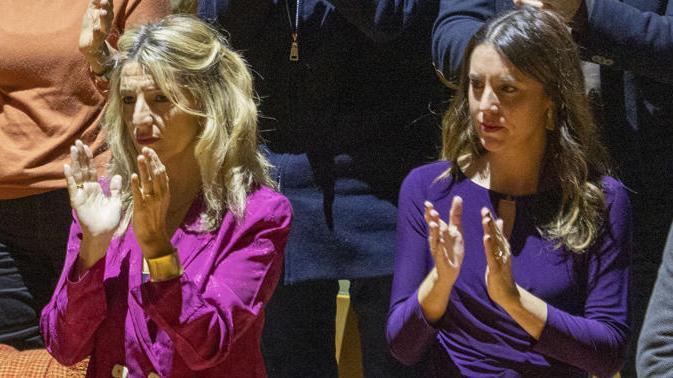
The name of Irene Montero has been one of the cornerstones of the break between the 'liles' (Podemos) and the formations that now group together under the name of Broad Front. When the brand around which Comuns, Més Madrid, and IU were running was Sumar—which three and a half years ago was not yet a party but the umbrella that brought together the already existing formations—and the leadership fell to Yolanda Díaz, the former Minister of Equality of the 'liles' was excluded from the candidacy. Podemos has never forgiven what it denounced as an "unfair veto," and already during the 23-J campaign, tensions and reluctance to be part of Díaz's candidacy were evident, even though there were names from Podemos on the lists.
The turning point of this conflict came four months after the elections when the five deputies of the 'liles' broke with the Sumar parliamentary group in Congress and moved to the mixed group. Podemos had repeatedly denounced a dynamic of marginalization that they saw as intrinsic to the configuration of the space led by Díaz, which also left them without any ministry in the new coalition government with the PSOE. Since then, the party led by Ione Belarra has dedicated itself to exercising harsh opposition to the Spanish executive, rivaling Junts to be the party of the plurinational majority that put it most against the ropes. Podemos has been especially belligerent with Sumar, whom it has accused of not having pressured the PSOE enough to achieve social advances.
Thus, Podemos's claim of Montero and Rufián as the tandem "that really responds to what the people are asking for," that is, a "brave left," is framed within this strategy of differentiation and disqualification of Sumar that the purples have also deployed through Pablo Iglesias's television channel and newspaper. At the same time, the fact that after Podemos's departure, an internal struggle was triggered within the Sumar parliamentary group due to the discomfort of other parties such as IU or Més Madrid with Díaz's hyper-leadership, reinforced the purples' decision to remain on the sidelines of this amalgamation of parties.
The refoundation as a Broad Front without Díaz as leader and with a more horizontal dynamic has not convinced the purples, who see the new coalition as a replica of a formula that no longer worked for them. In the background, moreover, there is also the purples' aspiration to once again be the benchmark of this political space, as they were before 2023.
The Madrid battle
The main battle when it comes to reaching an agreement for November 29th is Madrid and the leadership of the Madrid candidacy. For months, Podemos has firmly put forward Montero, while the Broad Front has spent months struggling to reach a consensus on who their leader would be. The 'liles' (Podemos members) demanded open primaries again, as they had done in 2023. A demand that has met with the refusal of the Broad Front. In Más Madrid, who also did not like how the lists were drawn up in 2023, they now advocate moving away from the way Díaz acted back then and argue that in each territory, it should be the majority force that leads the way and places its own people in the top positions.
In fact, Más Madrid, which was born as a split from Podemos, with whom it has a well-known bad relationship, chose to strike a blow on the table and claim its place as the party with the most weight in the region –the 'liles' have no representation in either the Assembly or the City Council of Madrid– by initially putting forward its own names in the starting positions on the Madrid lists. Despite the subsequent invitation to include Montero, this clashes with the wish of Podemos for her to be the point of reference for the left and also activates within the Broad Front old "hatreds, philias and phobias," in the words of Rufián, which cannot be understood without the shared past with the 'liles'.
