The dual vote of the extreme right in Catalonia

-
CAT -
CAST
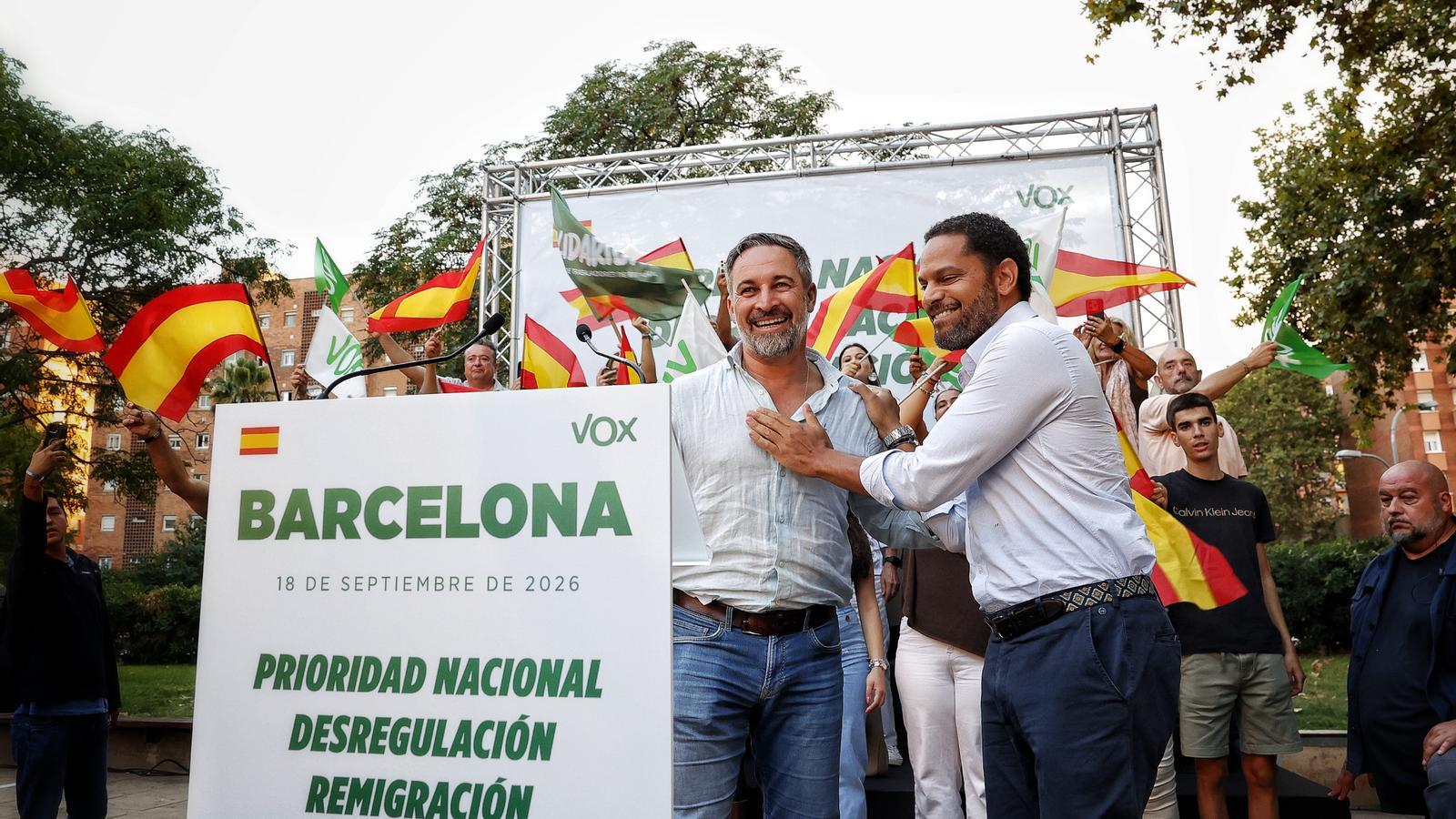
BarcelonaPolls have been warning for some time of a transfer of votes from Vox to Aliança Catalana in the event of elections to the Parliament, as Sílvia Orriols' party is seen, even by Spanish nationalist voters, as the most competitive in the field of immigration in Catalonia. Specifically, in the YouGov poll published by ARA in May, 23% of Vox voters said that this time they would lean towards Aliança. Aliança is not running in the upcoming Spanish elections on November 29, so the far-right voter has only one option, which is Vox. Is it possible that, in the same way that there are Spanish nationalist voters willing to vote for Sílvia Orriols in a Catalan election, there are pro-independence voters from Aliança who lean towards Santiago Abascal's party in a Spanish election? ARA has collected testimonies from Aliança Catalana sympathizers who claim that this coming November 29th they will vote for Vox. Sílvia Orriols herself already opened the door to this possibility in an interview, highlighting the fact that voters belong to no one, ergo giving permission, if one can call it that, for her supporters to vote for a neo-Francoist style party, yet one with which they share the core of the anti-immigration discourse.
We are, therefore, facing a strange case of dual voting between two apparently opposing parties, but which seem to have reached a kind of non-aggression pact or, to put it in geopolitical terms, a division of spheres of influence. The fact is that Vox does not mind at all losing ground in Catalan elections if, in exchange, it receives a good transfusion of Aliancista votes in a general election, as its main objective is to reach the State government in order to, from there, undermine the self-government of Catalonia.
The phenomenon that explains this is the prioritization of the anti-immigration vote over other considerations. In practice, a portion of Aliança voters are willing to support a government hostile to Catalonia (in the realm of self-government, but also regarding language, investments, etc.) if, in exchange, more restrictive immigration policies are implemented. The goal of independence, which was the engine of Aliança's growth initially, would here move to the background. Only in this way is it understood that Sílvia Orriols herself does not publicly discredit the vote for Vox and that they mutually support each other in many initiatives in Parliament with often interchangeable speeches.
In any case, this logic leads us to the creation of a pool of far-right voters in Catalonia, whose exact size remains to be seen, willing to move from one party to another depending on the electoral call. This pie is large enough that the PP, which is the other party openly playing this card, has placed someone with the profile of Xavier García Albiol as number 1 in Catalonia. Curiously, Albiol has stated that he would like to meet Sílvia Orriols, a not-at-all subtle way of telling his voters that he would also be delighted to receive their votes.
