Owl or hawk: the duel to occupy the nest of the ECB presidency
Hernández de Cos aspires to replace Christine Lagarde, who will leave her position in advance on February 7th
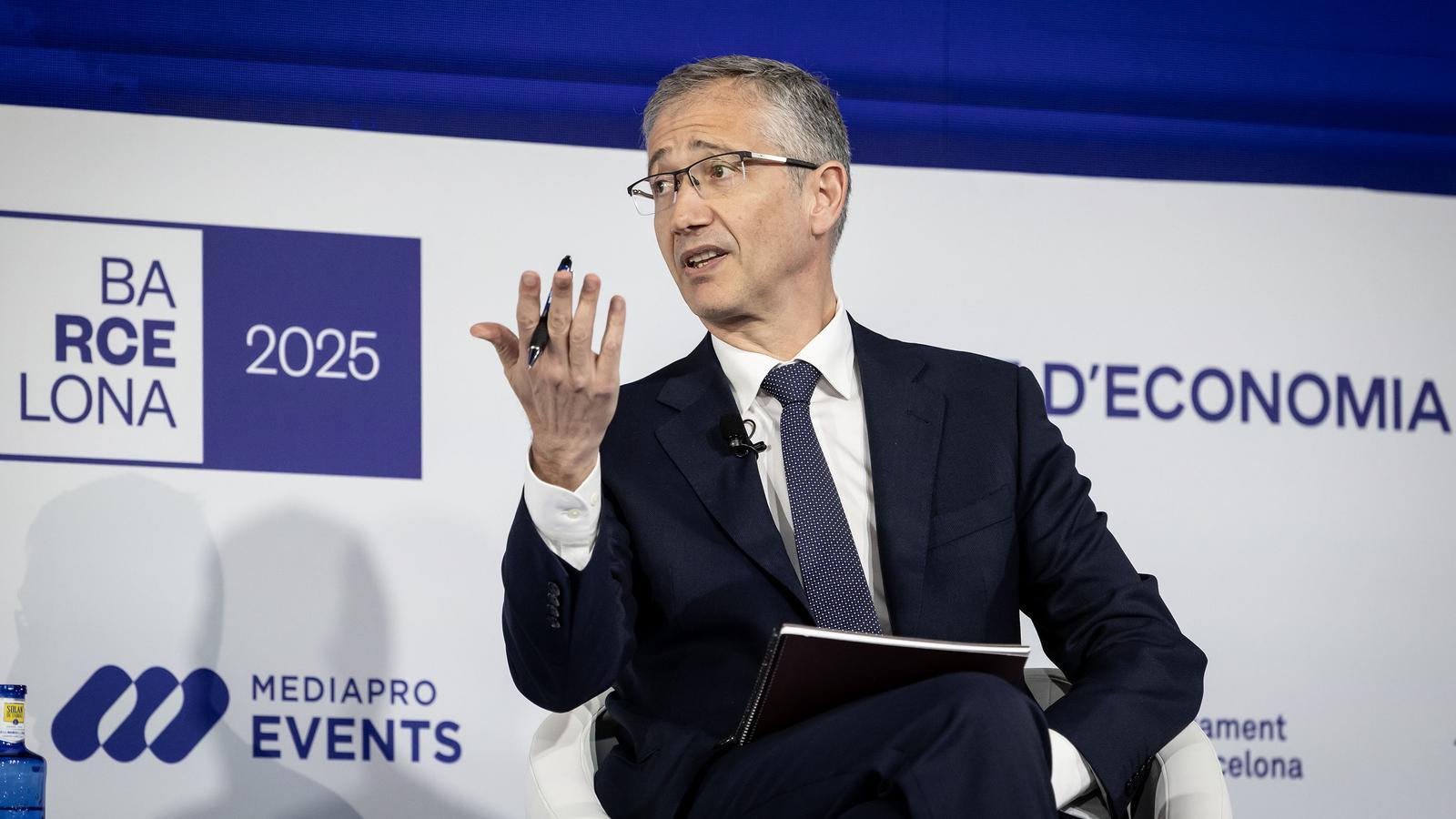

Brussels"I am an owl," joked Pablo Hernández de Cos in a session of the Círculo Ecuestre de Barcelona colloquium series held in April 2024. The question invited him to take a stance between the two positions traditionally known in monetary policy: the hawk, which opts for more restrictive policies, and the dove, which opts for looser ones. De Cos, however, dodged the dilemma and opted to mimic the response of the person he aspires to have as his predecessor, Christine Lagarde: "President Lagarde was asked this question and said she was neither a hawk nor a dove, that we are all owls.".
With this moderation as his banner and with Lagarde as a benchmark, the current general manager of the Bank for International Settlements – the central bank of central banks – has officially nominated himself to succeed Christine Lagarde at the head of the European Central Bank. The candidacy arrived on the day the deadline set by the organization expired and was submitted by the Minister of Economy – and now also of Transport –, Carlos Cuerpo, who sent the Spanish proposal by letter to the president of the Eurogroup, the Greek Kyriakos Pierrakakis.
If there are no surprises, the race is shaping up as a duel between the former governor of the Bank of Spain and the Dutchman Klaas Knot, who presented his candidacy on Wednesday. While De Cos swims between two waters, his opponent openly qualifies himself as a hawk. This same week, Knot warned that inflationary pressures could persist and spill over into the prices of services and consumer goods, which, in his view, will force the ECB to maintain a "more restrictive" monetary orientation.
The Dutch candidate has led the central bank of the Netherlands for fourteen years – 2011-2025 – and has been part of the ECB's governing council during a good part of the main economic crises of the last decade and a half. Despite his inclination towards restrictive policies, he has shown that he can also fly towards more pragmatic positions. Knot, initially critical of Mario Draghi's monetary stimuli, has ended up getting along with Lagarde.
On the other hand, Spain has turned to its best man to recover its weight in the ECB's leadership, after having lost the vice-presidency previously held by Luis de Guindos. De Cos, who holds a doctorate in economics from the Complutense University of Madrid, has in his track record almost seven years of experience as governor of the Bank of Spain, during which he had to navigate the difficulties of the pandemic, the inflationary crisis, and the cycle of interest rate hikes by the ECB.
There has never been a lack of praise for someone who has established himself as a consensus candidate. First introduced by Mariano Rajoy's PP government, De Cos's trajectory has earned him the respect and trust of the socialist Pedro Sánchez, who endorsed him in September, and of his inseparable acolyte in the matter, Carlos Cuerpo. This is confirmed by the qualifiers of "exceptional candidate" and the praise for his "international prestige" and his "leadership, independence, and capacity for dialogue," with which the head of the Economy at Moncloa has completed the candidacy. But, at the same time, De Cos receives the support of the opposition leader, Alberto Núñez Feijóo, and this allows him to present himself as a national candidate.
The renewal of the leadership has accelerated after Lagarde announced that she will leave the position on February 7, almost nine months before she officially exhausts her term. The early departure will allow her replacement to be settled before the French presidential elections, with Emmanuel Macron still at the Élysée, and he will be able to intervene in the negotiation.
Complicated negotiations
The Economy and Finance ministers of the euro zone will take stock of the nominees during the next meeting that will take place on Monday in Brussels. However, the race is expected to be long, and the final word will rest with the European Council, with the support of at least 16 of the 21 states representing 65% or more of the euro zone's population. The presidency will be negotiated, in addition, with two other vacancies: the head of market operations and the chief economist. And this is crucial because it will mark the balances between the states and, very particularly, the positions that France and Germany end up adopting.
For its part, Paris—which has already had a compatriot at the head of the institution—wants to preserve its influence over the course of monetary policy at a time when the French fiscal crisis has sent the risk premium soaring. For this reason, according to the Reuters agency, Emmanuel Macron would be willing to support Knot if France obtains, in exchange, the position of chief economist of the ECB. The proposal, however, would clash with Germany's reluctance.
Berlin, on the other hand, which for the moment has ruled out presenting its own candidate, looks more favorably upon the Spanish option. The government is interested in occupying one of the executive board seats and has set its sights on the vacancy that will be left by Isabel Schnabel, head of market operations, in January 2027. On this board, the reluctance of the most indebted countries, such as Italy or Greece, may also carry weight, as they fear that a Knot presidency will end up harming them. Be that as it may, the race is expected to be long and, whether it is a dove or a hawk, alliances will be essential to obtain the most prized nest of the ECB.
