The 'Renove plan' shakes up the Catalan PP
The changes to rejuvenate the provincial leaderships generate unease among the popular cadres

-
CAT -
CAST
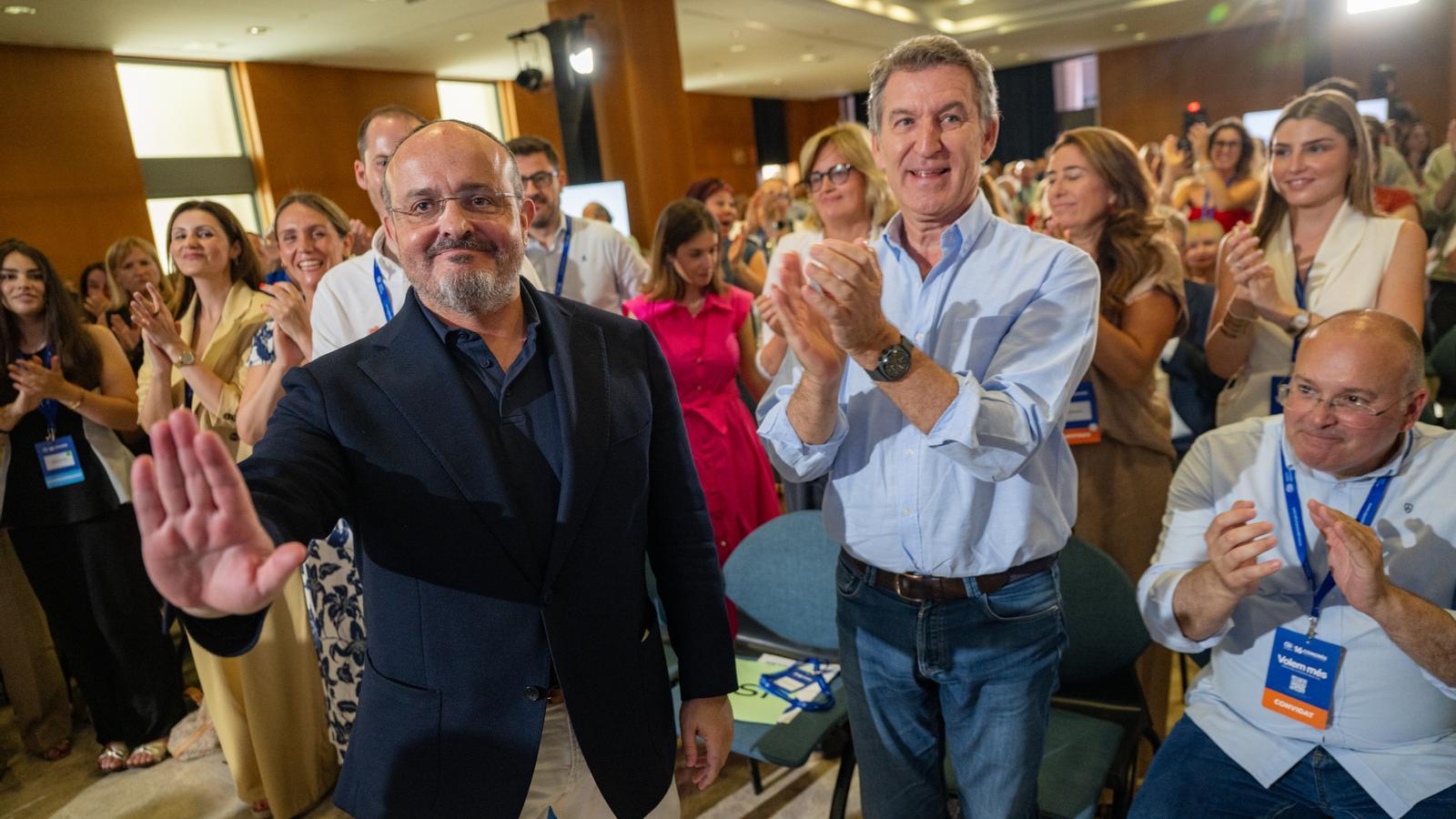
BarcelonaAlberto Núñez Feijóo is 65 years old and, if he obtains a majority after the next Spanish elections, he could become the oldest president of the government to arrive at Moncloa. In parallel, the leadership headed by the Galician leader is promoting a kind of renewal plan for the party's territorial organic structures to rejuvenate them, dispensing with senior leaders due to their age, which curiously oscillates between 60 and 70 years old. In particular, this is happening in the provincial leaderships of Catalonia following the calling of the respective congresses. For the moment, it is not causing any war or major tensions, but it does generate uncertainty, especially due to the state leadership's fixation on the age they want the officials to have. And, in this sense, the anxiety among the party cadres is knowing who will occupy the position of secretary general when there is less than a year left until the municipal elections, that is to say, who will be promoted and "how the families will be repositioned".
As confirmed by ARA, there is an order from the state leadership to change the second level and "rejuvenate it". There is a consensus within the Catalan PP about the importance of young people entering positions of responsibility, and one of the reasons the party gives is to combat Vox and use "the new channels and language" of the youth. The challenge is to combine this with having knowledge of the party and organic experience. However, several voices consulted wonder if it is convenient in a position such as that of provincial secretary general. "It is ageism," multiple sources assure, although they admit that, despite everything, it will not cause any conflict. "It is absurd to fire someone because of their age," others stress. They add, moreover, that the congresses now, and not after the municipal elections, are "a mistake". Others, however, emphasize that "it is what is required" to give the "push" that the formation needs.
Who carries the organic weight in each demarcation? It escapes no one that the person rolling up their sleeves and traveling miles to draw up lists and build territory in Tarragona is number 2, Rafa Luna, just as Josep Tutusaus – mayor of Pontons – does in Barcelona and Joan Simeón in Lleida. The situation in Girona is different: the young Alfonso Sánchez could be replaced by the Calonge councilor Alberto Mas as secretary general, according to various sources after ARA published the internal unrest over day-to-day management, bearing in mind that Sánchez lives in Barcelona. In any case, other sources warn that everything is still open.
In the Girona executive, beyond deputy Jaume Veray, a member by virtue of his position in Parliament, it is not expected that there will be any member of the Veray Girona dynasty, as this newspaper has verified: Concepció Veray is excluded – she is now delegate of the Junta de Andalucía in Catalonia. In the case of Tarragona, sources consulted warn that "there may be problems" due to the enmity between Maria Mercè Martorell, councilor and Tarragona provincial president, and the Catalan leader, Alejandro Fernández. In the past, she was involved in a tough battle with Fernández that still resonates today in popular circles and she also carried out a purge of close cadres.
Continuity among provincial presidents
Broadly speaking, it is assumed that the Catalan PP is currently "united" around Alejandro Fernández, but uncertainty looms over "who they will appoint as secretaries general" the provincial presidents. "Depending on whom they appoint, there could be a battle," stress some consulted sources, who add that it may depend on profiles linked to PP families and the capabilities they possess.
The forecast is that all provincial presidents will continue, even though some have been dragging out a clash with Fernández for years. In addition to Maria Mercè Martorell, this is the case for Manu Reyes, mayor of Castelldefels and provincial president for Barcelona. In contrast, one of the most established is Xavi Palau from Lleida, leader of the opposition at the Paeria, projected to fight electorally against the PSC, while Dani Ruiz from Girona faces the challenge of lifting the party in the province, where they have seven representatives and a complex war in Figueres. It is the province with the fewest militants, with barely 200 people up to date with their payments.
The PP has called for provincial congresses because it assumes that Pedro Sánchez will not bring forward the state elections this year and wants to prepare the party for the municipal ones. In the case of Girona and Tarragona, the last congress is a distant memory and the concatenation of management committees and internal wars is very close. On October 23 and 24, the congresses for Lleida and Barcelona will be held, and on November 27, that of Girona, as this newspaper has verified. The one in Tarragona will also take place this month.
