“The Disney world has done a lot of harm”: tips for organizing a wedding with personality
The keys to planning a celebration far from established formulas, a long-distance race that starts between a year and a half and two before the big day
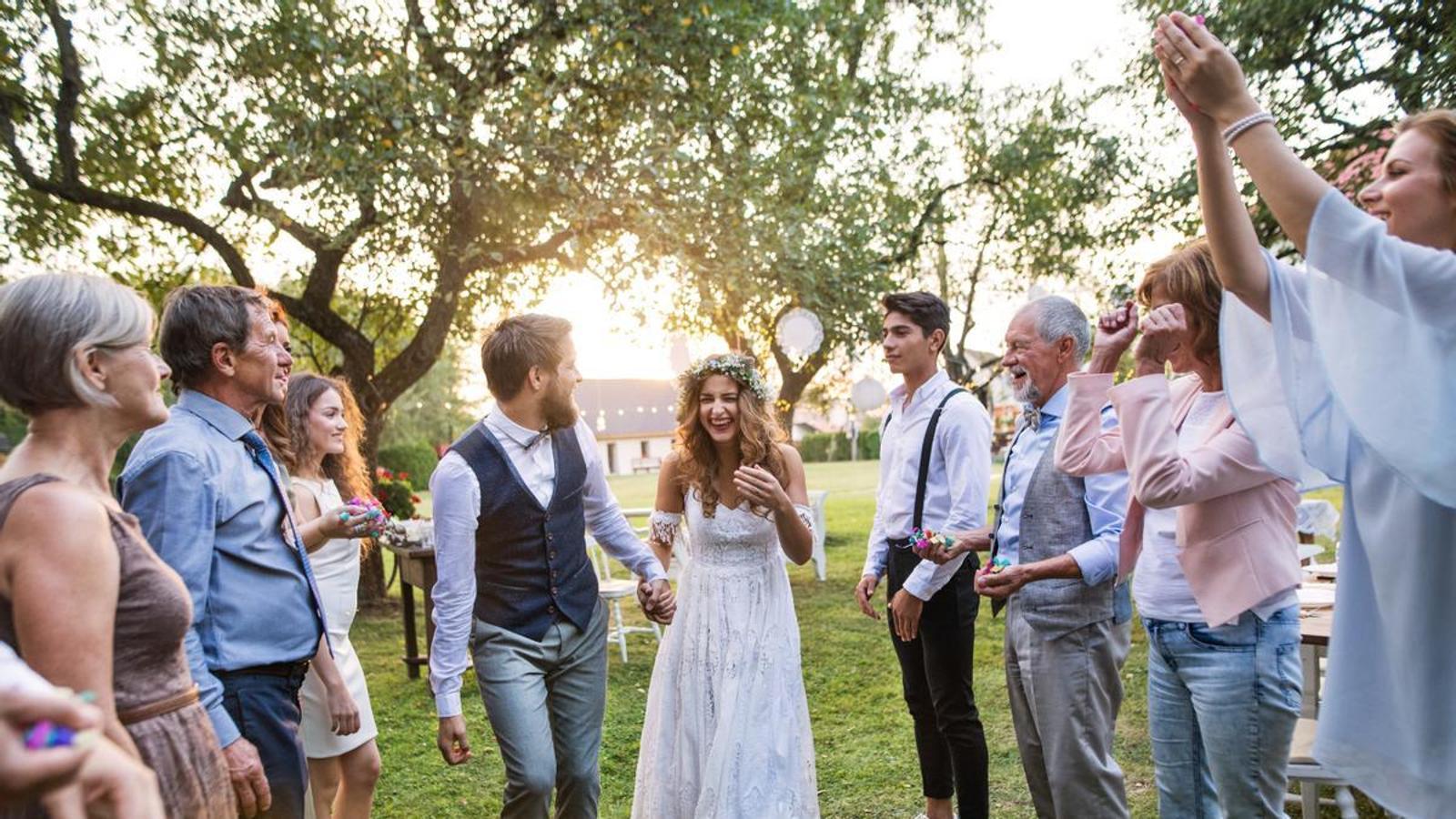
BarcelonaAn infinite table that runs along a Formula 1 circuit, galloping horses and high-speed motorcycles bursting into the middle of dinner, a village created from scratch to become the setting for a love story... A wedding can be much more than a ceremony, a banquet, and a party. For Josep Plana, founder and CEO of the event agency La Puta Suegra, it is an experience that must reflect the personality of the bride and groom and surprise the guests. After organizing large-scale celebrations and some of the most media-covered weddings in the sector, Plana has decided to share the secrets of his work in Wedding Survival Guide (Planeta, 2026), a manual that gathers the keys to planning a wedding with judgment, personality, and fewer headaches.
An organization that, according to the expert, begins between a year and a half or two years before the big day. This is due to two things: there are few spaces to get married, even though he assures that Catalonia is one of the places in the country where there are more options, and that the months of the season are few. Between May and October, at the latest, is when the majority of weddings are concentrated, and if one takes into account that most are on a Saturday, the supply begins to be limited.
Knowing what you want
However, before starting to organize anything, the most important thing is for the couple to have an honest conversation about what they expect from the wedding. “There are many who contact us and haven't even had this conversation beforehand,” explains Plana. Issues such as whether they want a daytime or evening celebration, how many guests there will be, or what budget they have are fundamental to aligning expectations. “There are couples where one of them wants something very intimate, with thirty people, and the other wants one with three hundred,” she exemplifies. It is a conversation that can be uncomfortable, but one that she considers essential to stay grounded and know what resources they have.
But, beyond practical issues, Plana argues that the bride and groom should ask themselves what they want to tell that day. “We celebrate love, but sometimes we forget to look inward and look too much outward,” she reflects. According to her experience, many couples are more focused on aesthetics, details, and how they will surprise the guests than on finding a genuine way to express their story. “For me, the most important thing about a wedding is authenticity: that it be a genuine, real, and authentic celebration,” she concludes.
The wedding planner Mireia Baró also bets on weddings always speaking to the couple's history. “If, for example, the couple's first date was at a Japanese restaurant, we can put on a sushi buffet as a tribute; or if they met on the Costa Brava, we try for the venue to maintain a bit of that essence,” she remarks. That is what Anna and Àlex did, a couple who met in Mexico and at their wedding gave the guests small handicrafts made in that country, in addition to inviting everyone to a tequila tasting.
It is about fleeing from trends and the competition to see whose wedding is more spectacular and opting for a celebration that truly reflects the couple. Plana considers that the event industry itself contributes to homogenizing weddings, turning them into a succession of trends that couples try to overcome: if one paints everything blue, the next one does it in red or looks for an even flashier proposal. “It becomes a competition of trends and not a competition of authenticity,” she laments.
For this reason, the expert speaks of “McDonald’s weddings”: celebrations that follow an established formula, with a fixed menu of options, without departing from the script. The result, he warns, is that guests end up with the feeling that all weddings are the same.
Once the expectations are defined, the next step is to find the space where to hold the wedding. Plana explains that the organization follows a production order and that, unlike what happened before, where the bride and groom hired a banquet hall or a hotel that already offered them a good part of the services, today many weddings have become large productions that require specific planning. For this reason, the space is the starting point from which the rest is decided. It must be taken into account that not all have the same infrastructures: some do not have bathrooms, electricity or a kitchen, services that may be necessary depending on the type of celebration.
Managing the budget
Mind you, always keeping an eye on the budget. One of the main mistakes is managing time poorly and booking too quickly for fear of running out of availability. This is explained by Baró, who always advises couples to have a defined and realistic financial forecast from the beginning. "It is easy to get carried away by ideas and end up spending more than planned," he assures.
In this sense, Plana warns that the sector itself, faced with a scarcity of dates and venues, often pressures couples to make decisions quickly. This can lead them to book services or buy accessories on impulse, without having reflected enough on whether they really fit the wedding they want. "The result is that after a year you find yourself with a hodgepodge of things that perhaps don't match each other, a kind of Frankenstein," he explains. For the expert, the desire to take care of the guests and offer them the best should not be accompanied by rush. Time is needed to choose with criteria and build a coherent celebration. "The 'rush, rush' is very counterproductive," he warns.
What is recommended is to always bet on quality over quantity. "Less is more," summarizes Plana, who argues that there is no need to accumulate elements or big spectacles to make guests happy. Sometimes, a simple but well-chosen proposal can have much more value than a display of means. "Before putting in a super-orchestra, perhaps it is better to hire a guy who plays the guitar and has incredible talent," he exemplifies.
At a wedding, however, there may also be unforeseen events that are difficult to control. The most complicated, according to experts, is the weather, especially wind and rain. In Catalonia, where many celebrations are held near the beach or in mountain areas, the wind can play tricks. Furthermore, they consider that weather forecasts are increasingly difficult to make well in advance.
“You must always have a plan B, even C and D,” adds Baró. “This takes away a lot of pressure and ensures that the celebration can always go ahead under the same conditions and with the same enthusiasm,” he continues.
Enjoying the day
And once the big day arrives, how can the bride and groom avoid worrying about every detail and dedicate themselves to enjoying the celebration? Plana believes that the pressure to achieve the perfect wedding has a lot to do with the imagery we have built. “The Disney world has done us a lot of harm,” asserts Plana, because it has created an idea of a perfect wedding that many couples try to reproduce.
Therefore, the recommendation is to relax, be yourself, and let things flow. If the cake does not turn out as planned, the ceremony is delayed by twenty minutes, or the dance ends with a stumble, it does not matter. “You shouldn't look for perfection at a wedding; you should look to flow and enjoy,” she summarizes. After all, the family will be just as happy even if some detail does not go as imagined.
Mind you, it is important to think about the guests' experience. “It’s not just about having a beautiful wedding, but about making sure everyone feels comfortable and well taken care of,” notes Baró. Thinking about details such as the climate control of the venue, transportation to the party, or food intolerances is basic to ensuring everyone enjoys a good party.
It is also not a good idea, according to Baró, to leave the wedding coordination to friends and family. Not even to the bride and groom themselves. “They must be able to trust the team of professionals who are specialized in this so that everyone can enjoy the party that day. If not, they will spend all their time keeping track of vendors, unforeseen schedules, or solving problems as they arise,” the expert warns.
Finally, the attitude of the bride and groom is fundamental, because “the energy they transmit from the very first moment is contagious to the rest of the guests,” assures Plana. Therefore, neither rain nor wind should prevent them from enjoying the party. If the bride and groom are happy, dancing, and having a good time, the guests will tend to follow them. “Enjoy it to the fullest, go all in, and be yourself. Nothing else, it’s that simple,” she concludes.
