The Spanish government approves the financing model only with the votes of Catalonia and the Canary Islands
All the communities of the PP and the PSOE vote against the new system, which now must still be processed in the Congress of Deputies

-
CAT -
CAST
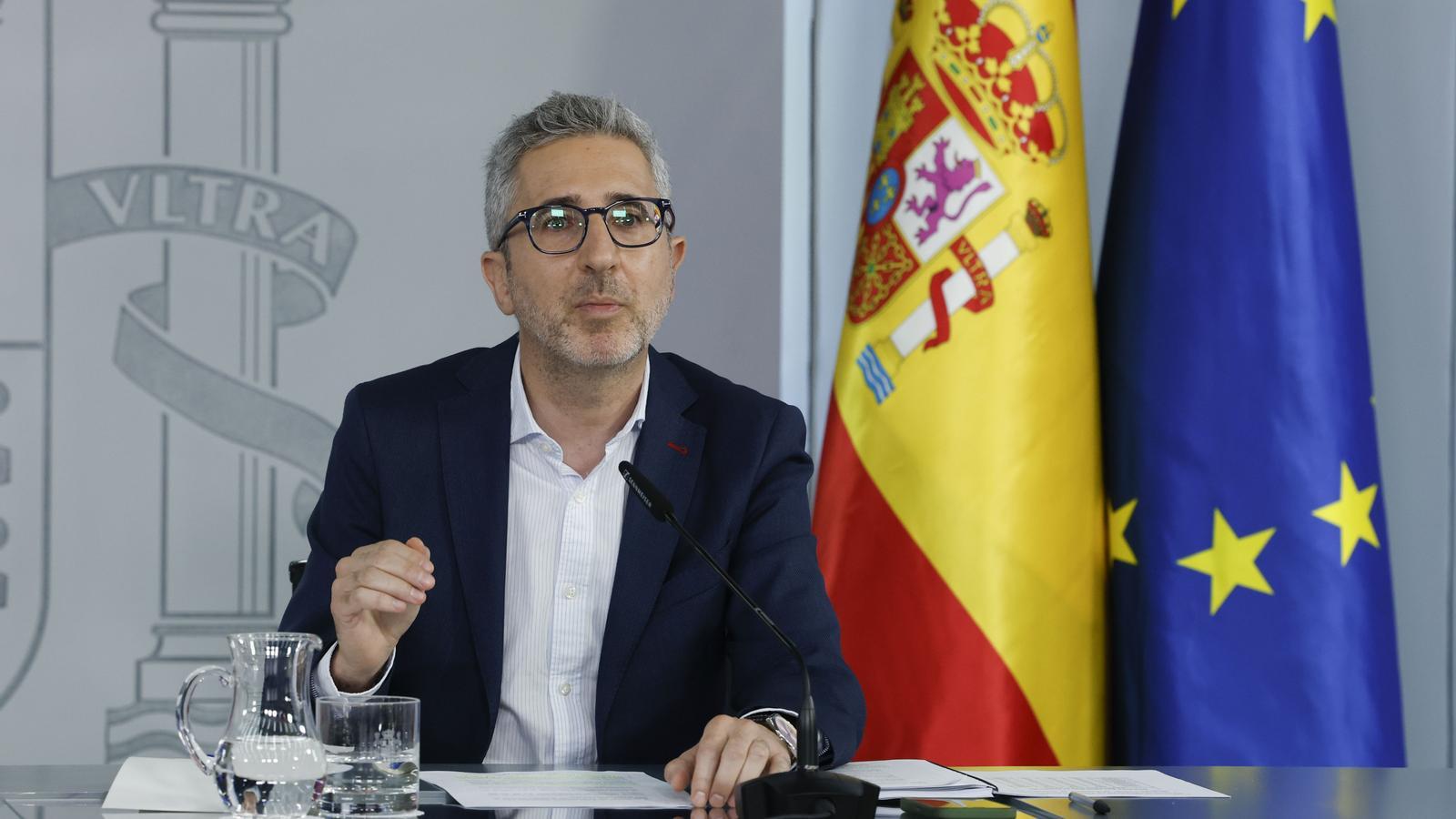
MadridNo script changes. The financing system was endorsed this Friday at the Fiscal and Financial Policy Council (CPFF), which must now be approved by the Council of Ministers and begin its journey in the Congress of Deputies, where support is not guaranteed. It passed with the expected votes: support from the State, Catalonia, and also the Canary Islands, which reached an agreement in extremis with the Treasury in the month of July for an additional 1.337 billion. The PP and PSOE communities, on the other hand, voted against it. "It had been 17 years since a financing model was debated in a Fiscal and Financial Policy Council," began the Minister of Finance, Arcadi España, in a press conference after the meeting, showing himself satisfied with an agreement he defined as "historic" and "relevant." "This model is better than the current one, more solidary, and provides more resources to our country's welfare state," he concluded.
In total, the State will put about 21 billion more into the model –"An unprecedented waiver for the benefit of the communities," said the minister– and increases the financing of the autonomous governments through having more fiscal capacity: the participation of the autonomous regions in personal income tax (IRPF) is modified upwards (from 50% to 55%) and VAT (from 50% to 56.5%). At the same time, a voluntary SME VAT system is established so that communities that want it, like Catalonia, can count on the money collected under this concept in their territory. Another new element is that the advance payment system is eliminated, so that the communities will be able to have the money from Treasury collections automatically, without waiting for subsequent liquidations. In total, Catalonia would gain about 4.7 billion euros compared to the current model.
To compensate communities with less fiscal capacity, the statu quo clause is established to ensure that after the distribution of resources they are not worse off than they are currently. And, furthermore, outside of the financing model, a reform of the territorial funds is being negotiated to compensate the communities that earn less under the new model, such as Asturias.
The head of this community's branch, Guillermo Peláez, who voted against the system despite being from the PSOE, has viewed this compensation fund, which he calls "economic dynamism," favorably. "There is a commitment for it to be implemented, not in the financing model but through another legislative mechanism. This does not change Asturias' position, but it is a step forward because it means that the communities that currently remain below the average will eventually reach it," declared Guillermo Peláez.
Can this change the outcome of the financing system? Esquerra sources consulted ensure that it cannot, because it is a separate issue and, furthermore, to push it forward in the Congress of Deputies it will also require the vote of the republicans and criteria can be introduced that favor Catalonia. However, it can impact the overall calculation of resources that each community receives beyond the financing. Generalitat sources also explain that the new fund created by the ministry will not be exclusive to the autonomous regions that are below the average –although they will be the ones that benefit the most–, but rather that all should be able to opt for it to allocate resources to "the digital and green transformation; depopulation; the externalities of tourism overcrowding; the risks derived from forest mass", etc., as noted in the document that has been approved.
Without personal income tax collection
The Treasury does confirm that during the processing of the law in Congress they are willing to change issues, since even if it is approved this Friday at the Fiscal and Financial Policy Council, it must then be approved by the Council of Ministers (in ten or fifteen days, according to sources) and then the processing in the Spanish chamber must begin. The negotiators' goal is to be able to bring the model to a vote before the end of the year, since starting in 2027 the electoral countdown for regional, municipal, and also Spanish elections will begin. At this point, the government and Esquerra will need the support of Junts, which has so far shown itself to be against the agreed system because it believes it is insufficient.
What can the Treasury offer the 'juntaires' to change their position? From the ministry they refer to the negotiation of the coming months, but they do close the door to a delegation of tax collection in Catalonia, an issue that ERC and the PSC had also agreed upon in the investiture of Salvador Illa. In the current model proposal, there is no reference to it, and when asked about the matter, Minister Arcadi España reiterated the refusal to transfer the competence: "We are in favor of a networked management of personal income tax (IRPF). There is no news in this regard," the minister limited himself to saying.

Minister Romero asked Carles Puigdemont's followers this Friday to sit down and negotiate, since Catalonia would benefit from it –she said–, and that they should at least not "block" its processing in Congress. Junts sources clarify that their position depends on the financing model passing the first step in the Spanish chamber (they would present their own amendment to the whole that would not prosper), but that if the "economic agreement" –that the Generalitat can collect all taxes– is not incorporated, their vote will be against it in the final vote.
Dart at the PP
Minister Arcadi España made an appearance defending his management, especially because the main criticism leveled at him, from the PP and also from PSOE communities, is that it is a model agreed upon with the independence movement and for Pedro Sánchez to "survive" in Moncloa. "The model is transparent [...]. Never before had the communities had so much information," he remarked, and he reviewed all the bilateral and multilateral meetings that have been held with the autonomous regions. For this reason, he criticized the bloc opposition of the PP communities, taking into account that not all of them have the same interests. "They have made a decision from Génova Street in Madrid," the minister asserted, and he gave the example of the Valencian Country, which is underfunded under the current model and gains resources with the new system. "They have voted against their own interests," he highlighted.
However, the truth is that, despite the multilateral meetings, the one who cooked up the model was a three-way negotiation between the State, the Generalitat, and Esquerra. The three parties have been meeting for many months to fine-tune the system, and it is what the PSOE and Oriol Junqueras' party closed that was brought to a vote this Friday at the Council for Fiscal and Financial Policy. Nevertheless, the minister also wanted to defend himself on this point: he recalled that the PP reformed the financing system during the Jordi Pujol governments, a model that was later extended to the other autonomous regions. Ministry sources reproach that at that time the protagonists were spoken of as "statesmen" and now the PP pretends that everything must be broken.
At the Generalitat, in any case, satisfaction reigned this Friday, as it remarked that the system had been expired since 2014 and that no other government until now had put the possibility of changing it on the table. "I want to thank the government of Spain for its courage," concluded the Minister of Economy and Finance, Alícia Romero.
