Plataforma per la Llengua has recorded 3,645 linguistic complaints in 2025, an absolute record. For a decade, complaints to the entity's linguistic rights defense service have risen in an accelerated and sustained manner: from 426 in 2015 to 2025, the increase is 750%. The private sector is the one that registers the most complaints (2 out of every 3 complaints): 25% of the complaints come from the hospitality and restaurant industry, which Plataforma per la Llengua attributes to an economic model that attracts a large floating population. They also recorded 176 cases of discrimination against Catalan speakers by public administrations, 40% in health services. If we look only at the autonomous administrations of the Catalan Countries, 92% of the discrimination is in the health sector. Òscar Escuder, president of the entity, said this Wednesday in Parliament that "none of the public administrations demonstrate a real will to enforce linguistic rights".
How is the mental framework of Catalanophobia constructed?
A study by the UPF analyzes how conservative media in Madrid associate Catalan with hostile concepts such as closure, radicalism, and inferiority

-
CAT -
CAST
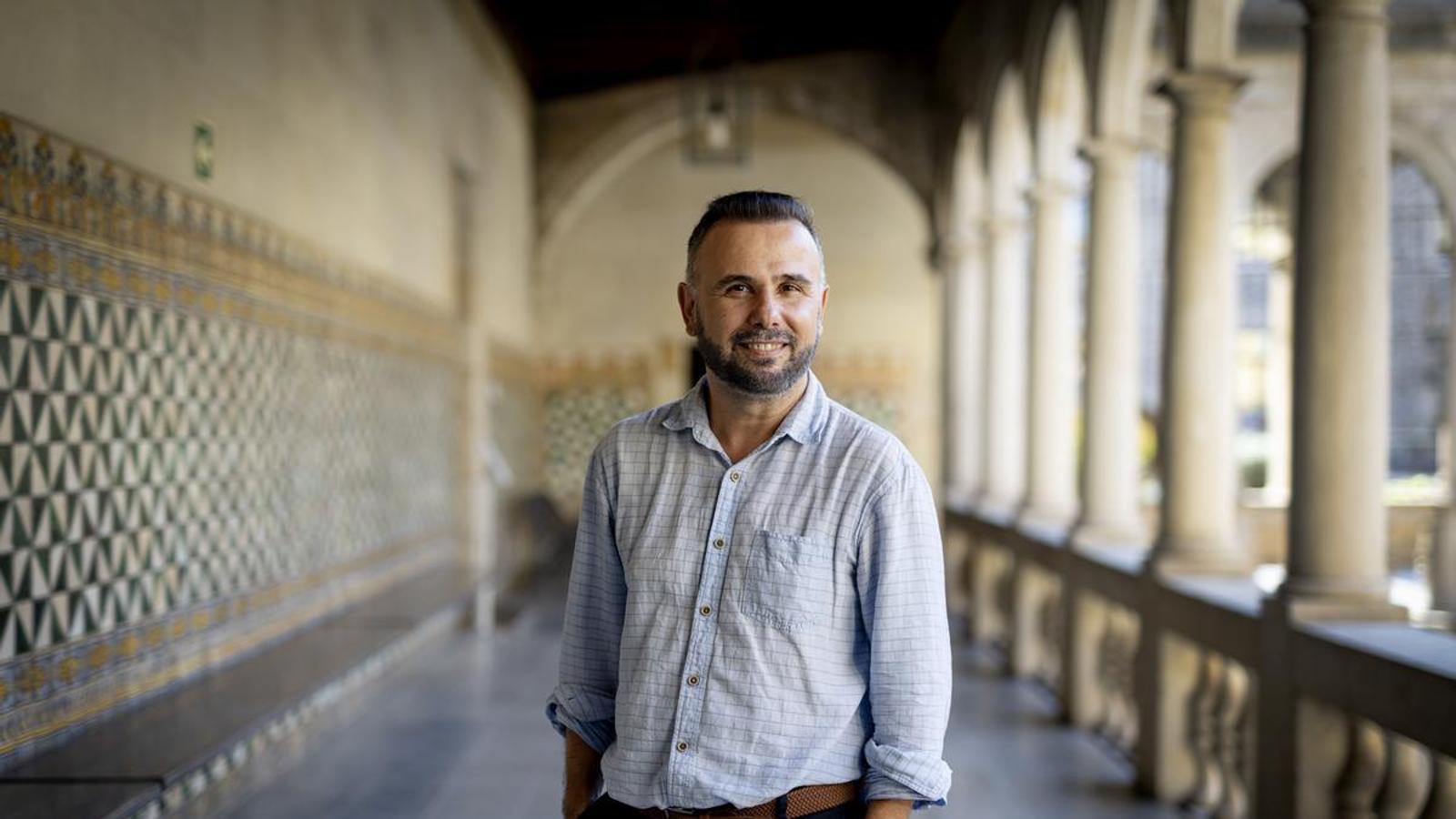
BarcelonaA study by Pompeu Fabra University that has analyzed the State's written press for ten years demonstrates that the discourse on language in conservative Spanish media "generates and perpetuates an image of negativization towards the Catalan language, because they link it to concepts such as closed-mindedness, radicalism, lack of freedom, lack of democracy, coercion, and obligation," explains Dr. Vicent Climent Ferrando, a professor in the UPF translation department and one of the study's authors along with Albert Morales.
These messages function like "the Chinese water torture" and leave an imprint over time. "On one hand, they build a hostile mental framework towards the Catalan language and, on the other, they implicitly establish a very marked linguistic hierarchy: one language is the good one, the appropriate one, the language of cohesion and the future, and the other is the subsidiary, regional, forced language. People exposed to these media end up having a habitus of linguistic negativization towards a language and, therefore, lower the social value of Catalan," says Climent Ferrando. This translates into "antipathy, hostility, belligerence" towards the language and, overall, into Catalanophobia.
Political intentionality
The study, which will be presented this Saturday at the sociolinguistics seminar Semicercles, organized by Plataforma per la Llengua at the Casa Convalescència, has selected 11,000 headlines and 286 articles dealing with languages and multilingualism, published from 2015 to 2021 in seven state media outlets (ARA, La Vanguardia, El Periódico, El Punt Avui, El Mundo, ABC and El País). From 2022 to 2026 the research focuses exclusively on the perception of Catalan. Through the analysis of lexicography, the semantic web, and the social context, Climent Ferrando and Morales have isolated the narrative of phobia towards Catalan in Spanish nationalist media, which according to the researcher is "deliberate, sustained, and hostile" and has a "political intentionality" on the part of conservative groups to maintain the statu quo surrounding the construction of the State.
Conservative media in Madrid focus especially on the educational sphere, when court rulings against the Catalan school system have been issued, and on the mandatory nature of the language in the civil service. The ideological bias is evident when they deal with multilingualism, which "is positive when associated with English and Spanish, but when it includes Catalan and Spanish in an immersion environment, it becomes an imposition and radicalism". "With the same reality, the editorial lines are radically opposed", the professor observes.
Lack of positive discourse
"Banal Spanish nationalism associates Spanish with the language that is appropriate, the natural language", and considers Catalan "an adjectivized language, a language that cannot walk alone, and, therefore, it is a connoted, inferior, co-official language", insists the researcher. This worldview has a concrete and palpable impact on the citizenry, beyond being perceived as "an identity attack" for Catalan speakers. Because in some sectors it can indeed condition the choice of the language of habitual use: "Catalan society grows exclusively through immigration, so it is dangerous for this narrative to be predominant because newcomers will bet on the winning horse and not on the negatively connoted language", he states.
The progressive Spanish press has a more modulated but also ambiguous discourse, which does not manage to counteract the negativity of the right. And the Catalan press does so through the discourse of linguistic rights and equality, but it falls short in the face of objective data. "We are already heading towards the Latinization of Catalan in some territories, where it is a mandatory language in school and administration but not for daily use", asserts Climent Ferrando, pointing out, for example, the 15% habitual use of Catalan in places like L'Hospitalet, which is already as residual as foreign languages. "Whoever is exposed to media contrary to Catalan will not join Catalan. The conceptualization of Catalan is to say «how annoying with Catalan» instead of saying «it serves to progress»", he laments.
The UPF professor misses more positive headlines and proactive policies: "If you respond to Catalanophobic narratives, you enter their mental framework. Rather than countering them, new narratives are needed. We need to decouple Catalan from administration, education, and obligation and link it to emotion and belonging. Oques Grasses at the Olympic Stadium is the right editorial line; it is the best linguistic policy that can be done", states Climent Ferrando, who is the academic coordinator of the Unesco Chair on Language Policies for Multilingualism.
