The SNP launches a major campaign to pressure Burnham and achieve a second referendum for Scotland
The nationalists want to measure the support for a new referendum with a survey done among 1.5 million people

-
CAT -
CAST
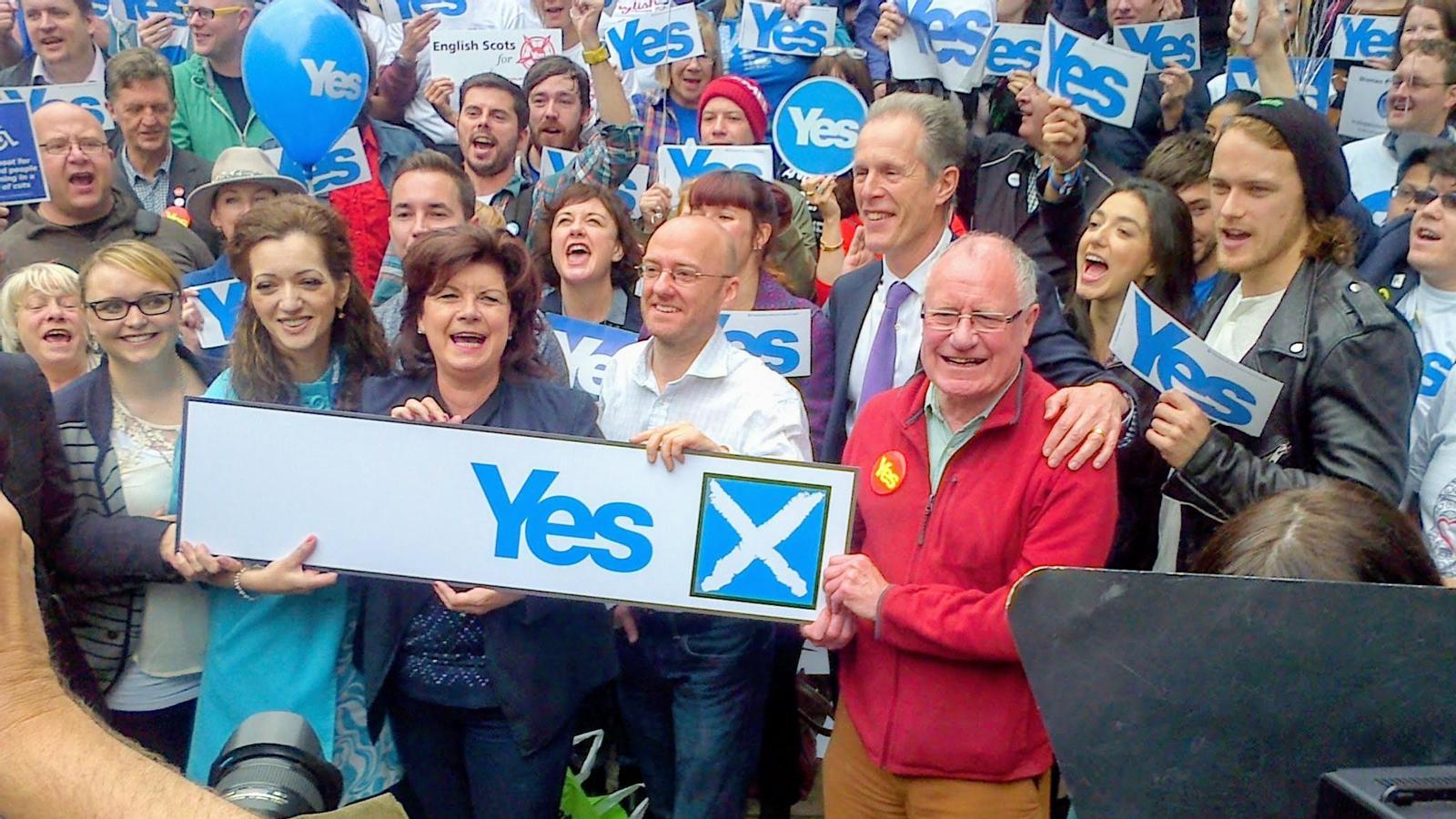
LondonThe Scottish National Party (SNP) is determined to show British Prime Minister Andy Burnham that independence, or at least a second referendum, has enough support among the country's citizens. For this reason, the independence supporters have taken advantage of the opening this Thursday of their annual conference, which is taking place in Aberdeen until Saturday, to launch the "Choose Scotland" campaign, defined by the SNP as the most ambitious since the 2014 referendum.
The mobilization will last until Christmas and will include digital advertisements, a televised political propaganda spot, and a survey on independence and the right to decide, which the party plans to distribute to 1.5 million people. There will also be a national day of mobilization on November 30, St. Andrew's Day, the patron saint of Scotland.
In statements to the press prior to the start of the gathering, Prime Minister John Swinney asserted that the independence movement is regaining momentum. "The wind is blowing in favor of the SNP and the yes movement," he said, and he highlighted the majority in favor of independence that exists, in seats, in the Scottish Parliament. The party, which will celebrate 20 years in power next year, also claims that support for yes currently reaches 52%, according to a survey published by Survation this very week, when undecided voters are excluded. The figure, however, does not equate to support among the entire electorate, more or less 4.3 million people.
In any case, the campaign aims to capitalize on the alleged erosion of the Labour Party north of Hadrian's Wall. The aforementioned survey places the SNP at the forefront of voting intentions for the 2029 British general election. A horizon far more than distant at this moment, despite the drumbeat of early elections heard at Westminster, according to which Burnham would seek the validation of his own mandate next spring.
Periodically, the Scottish independence movement tries to find formulas to revive the movement, with an eye on holding a second consultation. A month ago, the SNP, Plaid Cymru (Welsh), and Sinn Féin (Irish republicans) staged the creation of a common front to intensify pressure on the premier and break a lance in favor of independence and the acceptance of legal and binding consultations. London, for the moment, wants nothing to do with it.
"Westminster's time is running out," they wrote in the joint statement, signed by the First Minister of Scotland, John Swinney; the one from Wales, Rhun ap Iorwerth, and the head of the Northern Irish executive, Michelle O'Neill. A more than optimistic phrase, especially in the case of Wales, where supporters of breaking with the United Kingdom have never exceeded 30%, and where it is not an immediate priority, not even for the current executive, which is formally pro-independence.
It is, however, for Scotland's, and that is why John Swinney has cast the bait again this Thursday. And he has not done so in a vacuum. On September 9, during the First Minister's questions session, Andy Burnham asserted that a second referendum could be held if public opinion showed enough support for it. That is why the "Choose Scotland" campaign includes the conducting of the largest poll ever carried out on the matter.

Previously, as has been customary for all prime ministers, from Theresa May (2016) to Keir Starmer (2026), Burnham had said that the referendum was not "on the table". But in the chamber, Burnham compared the situation with the conditions for holding a referendum on the reunification of Northern Ireland with the Republic of Ireland, as established by the Good Friday Peace Agreements. In other words, if there are enough people who want to vote or who are in favor of independence, the right for them to express themselves cannot be denied. However, it is necessary to establish what the formulas to measure it are. Will a giant poll promoted by the SNP be enough? Hard to say, and hard for the London government to swallow.
Constitutional affairs, under debate
The Aberdeen conference has constitutional issues at the center of the debate, with resolutions on independence, rejoining the European Union –on this the SNP agrees with Burnham–, the transfer of more powers to Edinburgh, and the abolition of the Scotland Office. Swinney argues that independence would allow the country to decide on its energy resources, rejoin the EU, and manage elderly care with greater political autonomy.
The conference will coincide on Friday with Andy Burnham's first major public visit to Scotland after arriving at Downing Street. According to the British government, the visit will focus on decentralization, and the government has ruled out announcing any new developments regarding the future of the Jackdaw and Rosebank oil fields in the North Sea.
The SNP has invited Burnham to attend its conference and is demanding that he arrive with the 200 million pounds – about 230 million euros – that the Labour Party promised for the town of Grangemouth, an industrial city in decline where a refinery closed last year, which led to the loss of hundreds of jobs. The SNP reproaches the British government for having allocated public resources to other industrial facilities, such as the steelworks in Scunthorpe and other areas of England, while the commitment to Grangemouth remains pending.
