The table prevents Congress from voting on whether Sánchez should call elections
Together and the PP criticize the "extreme weakness" of the Spanish government for having vetoed two amendments that urged to advance the elections
-
CAT -
CAST
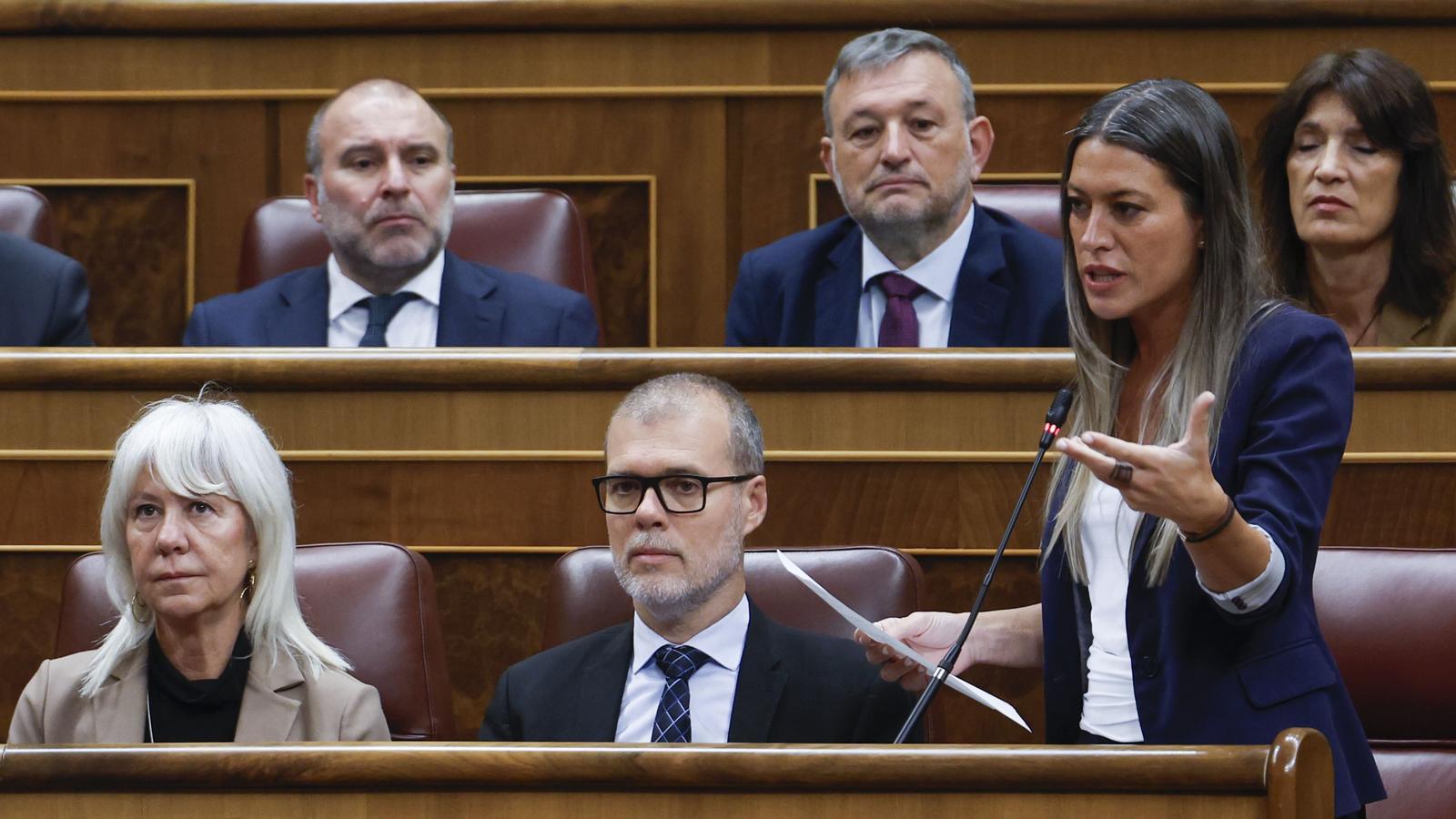
MadridPedro Sánchez's partners are increasingly uncomfortable with the alleged corruption cases affecting the Spanish government, and this Tuesday Junts made a move: although they have been demanding the call for elections for weeks, they have registered an amendment to a PP motion for the Congress of Deputies to pronounce on the matter. However, the chamber's board, with the votes of the PSOE and Sumar, has vetoed the vote and it will not take place: the argument is that calling elections is an "exclusive" competence of the Spanish president and that, therefore, the Junts initiative "invades constitutionally reserved competences" for the head of the executive. The amendment was going to go ahead and would have been a hard blow for Sánchez in a week horribilis for the judicial agenda surrounding the PSOE: despite not being legally binding, it would have been politically evident that he does not have the confidence of Congress and that a majority is demanding new elections.
The PP had presented another amendment, very similar to Junts', which also called for early elections. The board also vetoed it, which, in the opinion of the popular party, "proves that the legislature is dead". The PP spokesperson in the lower house, Ester Muñoz, has accused the Spanish government of acting with "cowardice". "If it was not binding, what are they afraid of the vote?", she asked. Muñoz insisted that this is an "arbitrary" decision that is not explained by a technical or legal decision but by the will to avoid "seeing reflected that [Sánchez] does not have a majority". Junts has also criticized the "unprecedented" decision of the board and reiterated that "the evidence of the extreme weakness" of the Spanish executive is clear, "incapable of facing a simple vote in plenary".
What exactly did Junts propose? The text that the Junts members wanted to add to a PP motion on the "extreme weakness" of the Spanish government said the following:
"To urge the President of the Spanish Government to propose the dissolution of the Courts and call general elections, in accordance with the prerogative conferred upon him by current legislation, taking into account the political nature, without legal binding, of the present initiative".
In other words, Junts introduced the nuance that it does not have "legal ties" precisely so that it could not be vetoed with the argument that the table is now using. In fact, the same group presented more than a year ago a non-binding proposal for Sánchez to present a confidence vote and the table made him reformulate it, adding that he had to make it clear that it was not binding. At that time it was admitted with wording practically identical to that of the amendment vetoed this Tuesday, but it was Junts who ended up withdrawing it in favor of the negotiation with the Spanish government. The Junts members have remarked that, "despite using the same legal and political principles", in February 2025 the table did "admit it for processing without any problem".
"Why yes a year and three months ago and not today?", has also asked the spokesperson for the PP, who concluded that it is because Sánchez has lost the parliamentary majority that he still had then. Muñoz has announced that they will ask the table to reconsider the decision and has opened the door to taking legal action.
The "coincidence" of PP and Junts
That the PP and Junts have each presented an amendment on their own, but proposing the same thing, is a "coincidence", in Muñoz's words. Both Alberto Núñez Feijóo's party and Carles Puigdemont's have denied having coordinated or discussed it beforehand. Before the bureau's veto, the PP spokesperson had assured that they had learned of the coincidence once both texts were submitted. However, once it had occurred, the Popular Party welcomed it with satisfaction. "This week a vote of confidence will de facto be held [...] It will not be just any vote. If [Sánchez] loses it, he will have to call elections because Congress will say so," celebrated Muñoz, even though the Spanish president was not obliged to do so no matter how many of the amendments had been approved.
Besides the pressure on the PSOE leader, the vote also obliged the rest of the plurinational majority to commit, even though with the votes of PP, Vox, and Junts alone, it was enough for one of the amendments to go ahead. The PP had also called upon the PNB and Canary Islands Coalition, who have stated in recent weeks that the legislature is over. This Thursday, the Popular Party's motion will also be voted on, albeit without the addition that called for elections, and the debate in the plenary session of the cut-back text, which promises to be heated, will foreseeably be on Wednesday. Junts sources have dissociated the vote they tried to force with the PP from a hypothetical motion of no confidence and deny that it means they are closer to supporting them if they present the instrument that could force Sánchez's downfall.
For their part, before the veto by the progressive-majority bureau, the Spanish government spokesperson, Elma Saiz, had said that she did not share Junts' proposal, but that she "respected" it. "We have a transformative agenda ahead of us," she remarked, to assure that the plurinational majority still has pending issues to approve this term, which Moncloa wants to extend until 2027. In fact, Moncloa sources took for granted that even if the initiative, which was finally vetoed, were approved, they would continue to govern: they consider that the European Next Generation funds "cannot be paralyzed by elections" and are convinced that they will continue to move forward with parliamentary initiatives all the same.
The positioning of the left-wing partners
And what did the left-wing partners say? ERC spokesperson Gabriel Rufián had not clarified the meaning of his vote, although he had criticized the pincer movement of Junts and PP while at the same time asking the Spanish government for what purpose they want to hold on: "Let's curb housing speculation, let's have fairer taxation... people deserve a left-wing that doesn't cause shame," he said. Republican leader Oriol Junqueras made it clear, once the amendments had already been vetoed, that his bet is on the continuity of the legislature "to close fundamental issues for Catalonia". "Catalan parties should be focused on making the country seize the opportunity and not on going along with PP and Vox so that when they reach La Moncloa they govern against Catalonia again," he proclaimed on X. It is the same position that EH Bildu had expressed.
