The National Court stops the third degrees of ETA prisoners
In recent months, prison surveillance judges have revoked five decisions by Imanol Pradales' executive to grant semi-liberty regimes

-
CAT -
CAST
MadridFifteen years after the announcement of the definitive cessation of armed activity, ETA prisoners are once again topical because semi-freedom regimes have confronted the Basque government with the Prosecutor's Office and the National Court in recent months. Throughout 2026, two prison surveillance judges have revoked five decisions by the executive, which are shared by the PNB and the PSE. Justice has particularly questioned the haste in granting regimes under article 100.2 of the prison regulations, which allows a prisoner to leave prison to carry out a specific treatment program aimed at their reintegration; or third degrees, which allow them to live outside prison and only return to sleep.
It was on October 1, 2021, when the Basque Country assumed prisons competencies after the Spanish government transferred them. In almost six years, and according to the latest report from the Association of Victims of Terrorism (AVT), the Basque government has granted 122 third degrees to ETA prisoners: 97 people have benefited, and 25 have been re-granted after revocations by the National Court. In fact, the Basque prison policy openly aims to "promote" the semi-freedom regime and establishes that it will be necessary to "justify" why a prisoner does not progress to an open regime.

“Premature and precipitate”
One of those who has been unable to leave prison has been Juan Ramón Carasatorre, sentenced to a total of 130 years and responsible for the assassination of Gregorio Ordóñez, councilor of the PP in San Sebastián. The prison surveillance judge admitted that he had experienced a “positive evolution”, but revoked his 100.2 because he had not yet enjoyed any permits. Despite this setback, two months later, the Basque government granted it to him again.
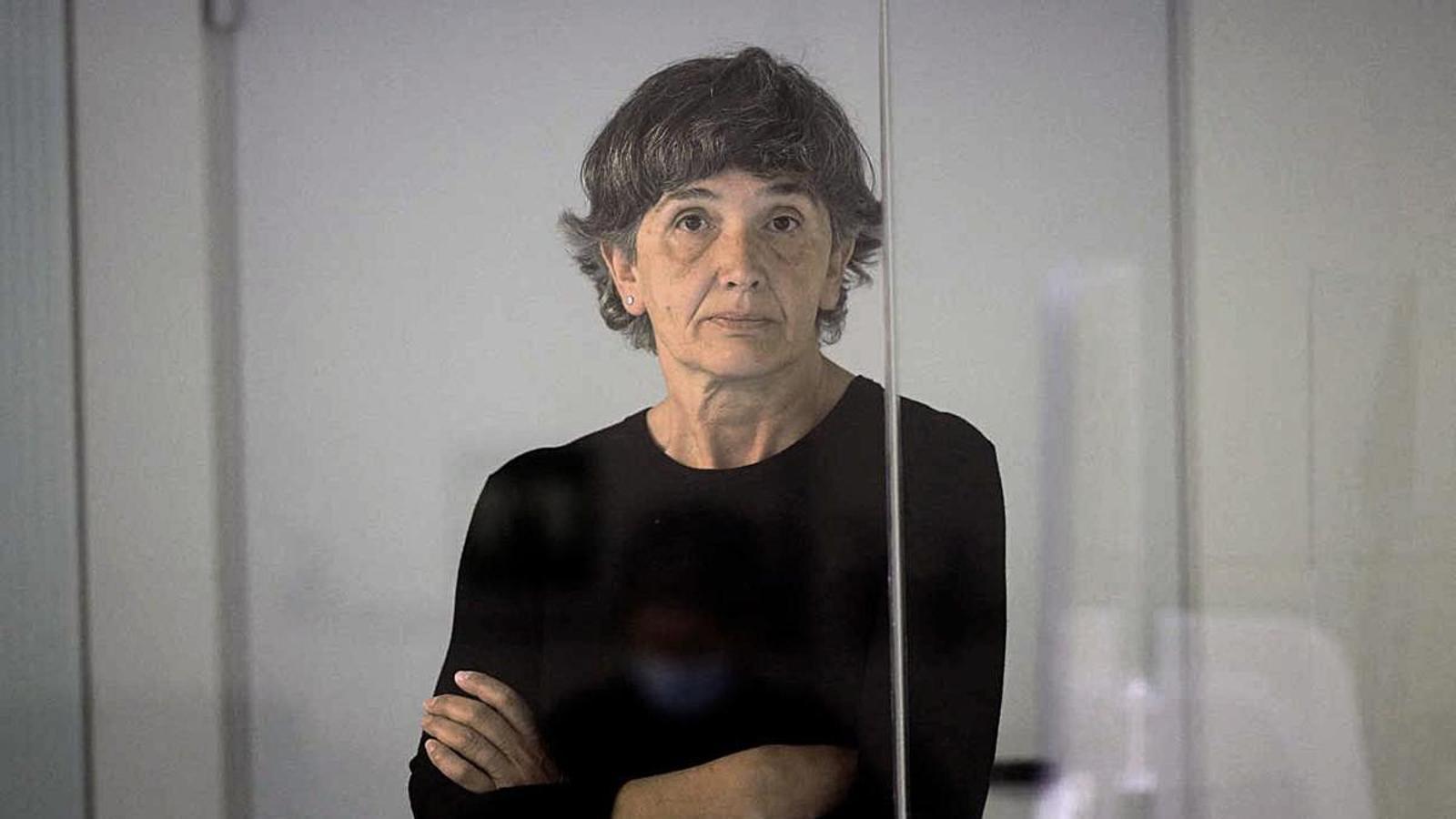
To Maria Soledad Iparraguirre, known as Anboto, the National Court also withdrew her 100.2 because she had not had any permits either and complained that haste caused backtracking: “This dysfunction benefits no one. The inmate is given false expectations and the victims, unnecessary unease”. Furthermore, she asked that the Public Prosecutor's appeals – as happens with third degrees – automatically suspend release from prison: “Common sense advises waiting for the judicial decision”.
In the case of Óscar Celarain Ortiz, who has accumulated sentences of more than 900 years in prison, the Basque government noted a "favorable" progression to grant him third grade, but the prison surveillance judge considered it "premature and precipitate". The prosecution had alleged that he had been under the 100.2 regime, which is the previous step, for a "very scarce" period of time. In the appeal against Olarra Guridi's third grade, which was also revoked, the public ministry emphasized that in sentences for terrorism, there needed to be "prolonged periods of verification" to confirm the inmate's evolution: "It must be proven through a sustained trajectory over time," it stressed.

Discrepancies between victims and the Basque government
The Basque government's decisions have been fundamentally amended by the judiciary, which has criticized its excessive speed, but have also raised the suspicions of the victims. The AVT believes that the Basque government intends to "empty the prisons" before the inmates "fully serve" their sentences. And the Collective of Victims of Terrorism in the Basque Country (COVITE) considers it a "disguised amnesty" that "dresses up as reintegration" what is actually "disguised and fraudulent releases."
For his part, the leader of the PNB, Aitor Esteban, acknowledged a few months ago to The Mail that there is a “push” by the Basque government to “normalize the situation” and end what it considers a “stumbling block” for the abertzale left. “I don't believe in revenge either,” he added. In similar terms, he recently statedthe Basque Minister of Justice and Human Rights, the socialist María Jesús San José, who argues that "the only objective" is "to re-establish coexistence" in the Basque Country. The executive maintains that it complies with the law, but COVITE considers that it "betrays its spirit" and that it uses an "appearance of legality" to "denature it".
The repentance letters of the prisoners
“I wish all this harm that I have caused had never taken place,” said Juan Ramón Carasatorre in his letter of repentance. It is one of the arguments used by ETA prisoners when they request release from prison. And they also show a “firm commitment” to “dialogue channels,” as did Anboto: “I renounce the use of violence”.

However, the victims find it insufficient. COVITE believes that these writings are "purely instrumental" and "have emptied of content" the requirement of repentance: "It is an insult to demand an act of faith from us", lamented the president of the entity, Consuelo Ordóñez, who called for a repentance "public, clear and supported by facts". Despite these doubts, Inés Soria, advisor to the Department of Justice of the Basque government, responded to El País that the law "does not require" the recognition to be public: "Everything they do in this direction is good".
