Gemma Pasqual: "When Franco had died, we continued to toast just as quietly"
Writer
-
CAT -
CAST
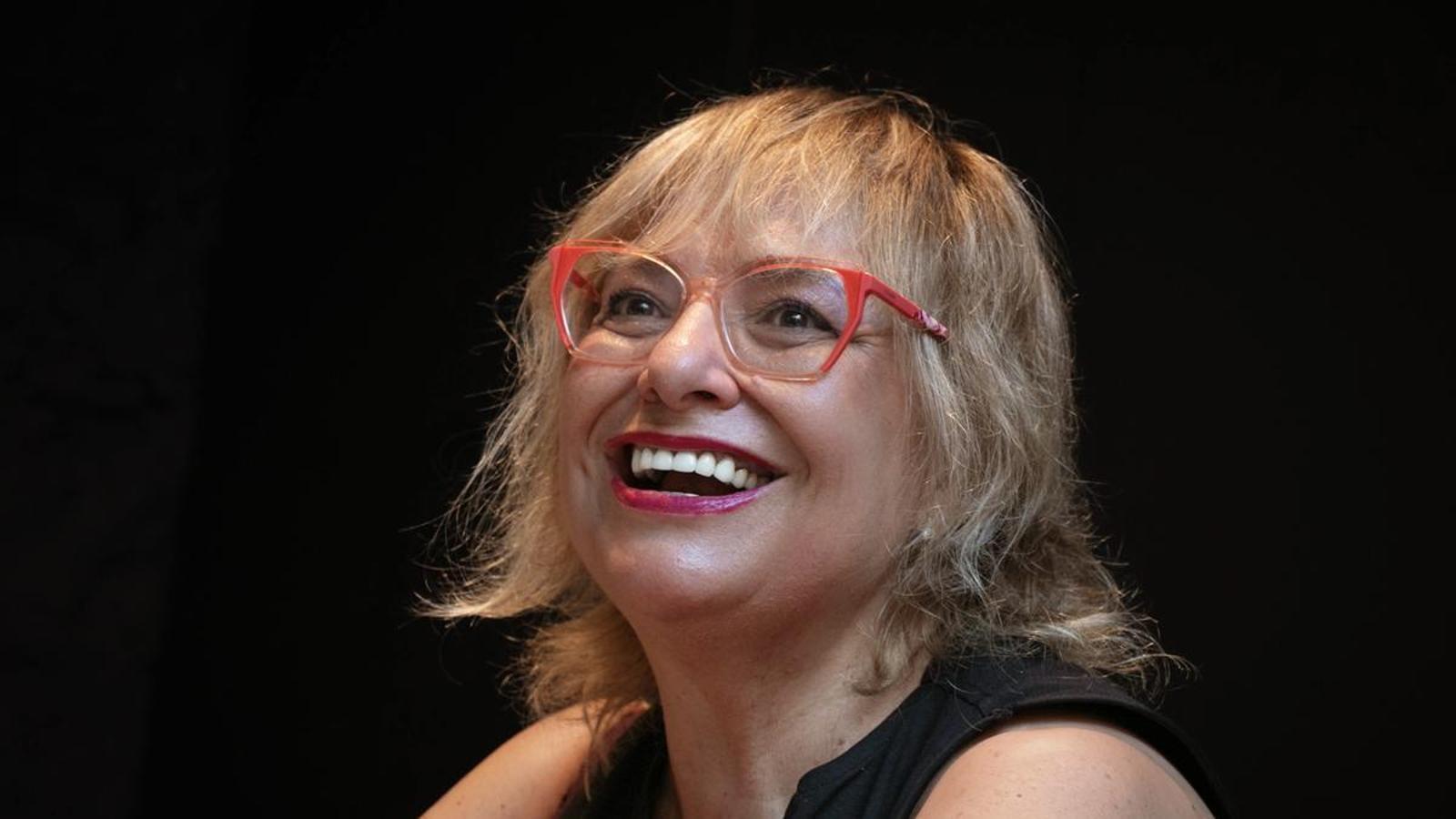
Although she has lived in Museros for thirty years and is moved by the neighbors taking the cool air on the street, the writer Gemma Pasqual (Almoines, 1967) considers herself an unashamed city dweller. The author, who was vice-president of Acció Cultural del País Valencià and is especially known for her works of youth literature, defines herself as a "pleasure-seeker" and explains that, concerning vermouth, she likes everything, even the lemon peel.
On the cover of Life is what happens while you wait for a match there is a woman with a vermouth. Why?
— Vermouth is very important. Having a vermouth on a terrace, on a farm, or in any of the bars I know is life. And always, with olives. And with lime and ice.
A wine you particularly like?
— I want to recommend fondellol. It is a wine from the Alicante area, which must age for at least ten years. And it is a very literary wine: Shakespeare already mentions it, it appears in The Count of Monte Cristo, Dostoevsky spoke of it… I often give it as a gift: it is always liked.
And at home, what wine do you have right now?
— A Juvé i Camps. And a red wine called Les Alcusses, from Celler del Roure [DO Utiel-Requena]. I like it very much and the quality-price ratio is very good. It has a Mediterranean character, but also a fresh touch.
How did he/she/it arrive?
— The owner of Mateu, a restaurant in El Palmar (Valencia) that I know well, recommended it to me. It's the one I always have at home and the one I bring when I'm invited to dinner at someone's house.
Would you recommend it with any dish?
— I strongly believe in taking things as you like them and when you want them. But I would recommend it with a baked rice casserole.
Is she a good cook?
— I sing badly, I dance badly, but I don't just cook well, I don't mind doing it either: I can make a baked rice at three in the morning without any problem. It's something I inherited from my mother.
Did he/she/they dedicate himself/herself/themselves to cooking?
— My family had a bar, Casa Pedro, in Gandia, where people who worked in the fields used to go. My mother, who was a super stylish lady, even went to serve in Paris for a season. When she returned, she made a mix of our classic recipes with those from there.
And you worked in this bar, when you were young?
— I used to spend summers there and sometimes I would stand behind the bar and clean a glass. We all helped in some way. But I didn't serve customers, because I wasn't used to it. Today the bar is closed, but many people remember Casa Pedro's paellas, and for me that is a source of pride. I am very proud of my family, and of these humble and repressed origins.
What did his grandparents tell him about the war?
— My grandfather Pedro, who was from the "Baby Bottle" class of '29, was locked up in prison. And my grandfather Lluís was in the Argelers camp. He was sentenced to death. On July 25th, he was already in the group of those who would be shot the next day, and on that very day Franco issued a pardon. He still spent some time in Argelers and other camps, but he was saved from death. Since then, every July 25th, we would make a paella at home and open a bottle of cider or cava. And we would toast very quietly – because it couldn't be said out loud –: "Long live the Republic!" When Franco had already died, we continued to toast just as quietly.
Casa Pedro was a meeting place for farmers. In Life is what happens while you're waiting for a match, the bar serves as a meeting place for the neighborhood's residents. Do you understand bars as a place where community is built?
— We live in a very individual world; that's why we are so much on social media. But a farm or a bar create community. It is the place where celebration happens, where problems are shared, where solutions are sought.
What places have you found to feel like this?
— In Valencia, the Lisboa Cafe. I've been going there since I was seventeen; it's a place with a lot of history. When the October Prizes were held, we always ended up there having an 'agua de Valencia'.
And when are you coming to Barcelona?
— At Les Cosines, in Gràcia, and at Plaça d’Osca, in Sants. I've been going to Barcelona for so many years and I have so many friends there that I feel like I've made it very much my own. But I will continue to go back and forth: I am very Valencian, I really like Valencia; it pulls me a lot. When I'm in Barcelona I miss things from Valencia, and when I'm in Valencia, things from Barcelona.
What do you miss about each place?
— From Barcelona, the cultural life and the freedom to go wherever you want; I have also fallen in love with the architecture. From Valencia, the naturalness, the being enjoyers, and, above all, the light: it reminds me a lot of Tuscany.
