Football piles and Israeli rescuers: the mess in the management of the earthquake in Colombia
Abelardo de la Espriella stars in various controversies while he turns the country's foreign policy upside down, and authorizes the United States to carry out military operations there
-
CAT -
CAST
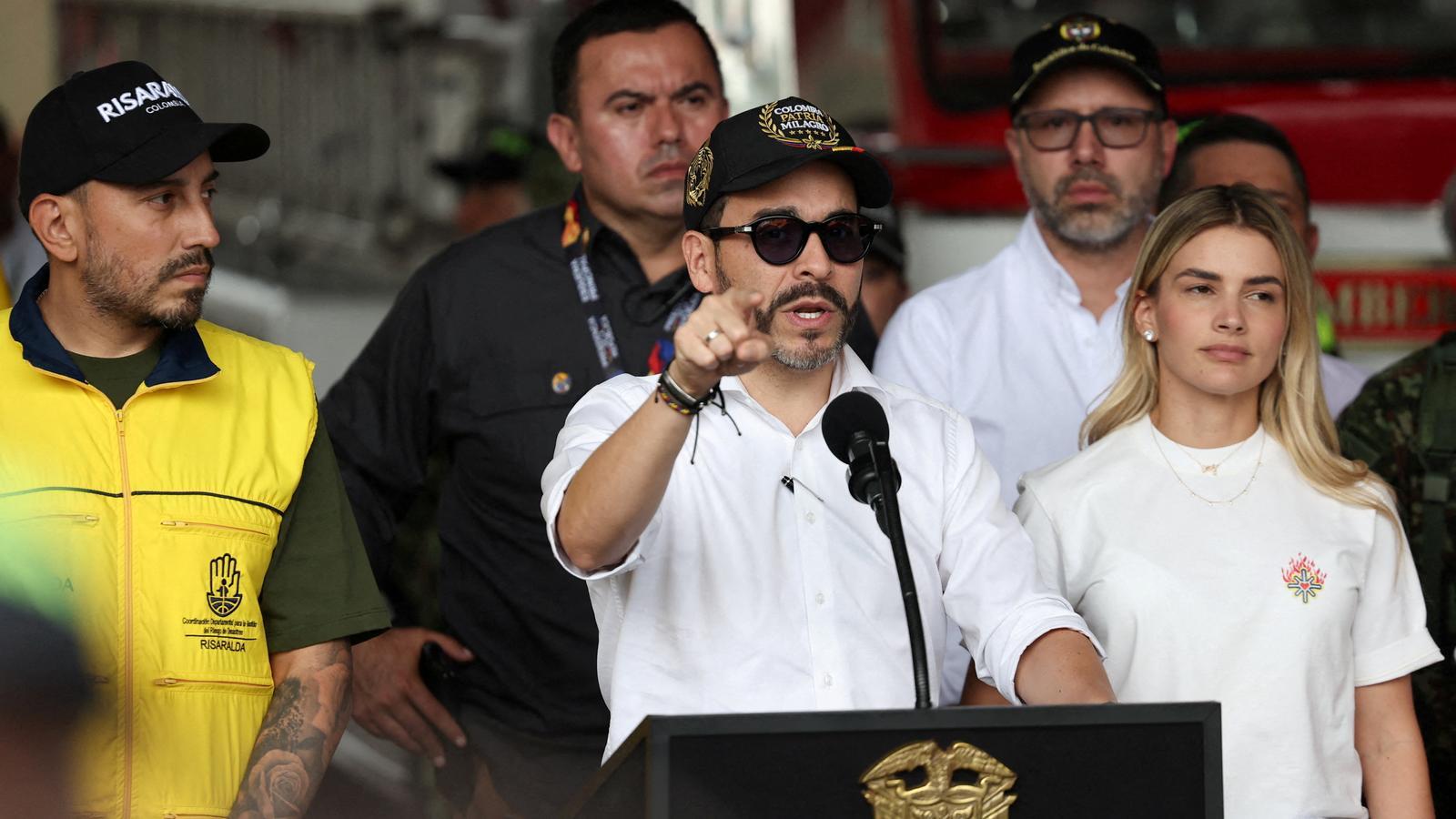
BarcelonaThat a president of the government tried, before taking office, to become a music star singing love ballads in Italian and starring in music videos without any plot beyond himself intoning a melody standing in a park to try to delight the viewer with his voice and presence is not at all incompatible with assuming the responsibility of leading a country years later. But that once he is already leading the state executive he continues to act like the star he projected in music videos and on music platforms can generate bizarre situations and cause discomfort of all kinds. And even more so after an earthquake with more than 300 fatalities. Since last Monday a magnitude 7.4 earthquake devastated eastern Colombia, President Abelardo de la Espriella, who had taken office three days earlier, has been involved in several controversies, and his management has caused a stir and unrest both inside and outside the country.
Despite the earthquake, De la Espriella has wanted to make clear from day one the ideological shift of the Colombian executive. On the very day the earthquake shook the coffee region of Colombia and when there were already dozens of deaths, the government overturned the country's foreign policy. De la Espriella recognized Morocco's sovereignty over Western Sahara and resumed diplomatic relations with Israel, accepting the Syrian Golan Heights as Israeli territory. As part of his announced alignment with the United States, last week the far-right president also authorized Washington to carry out military operations on Colombian territory under the pretext of "combating narcoterrorism".
The game of alliances has even extended to the response to the earthquake on a key issue, such as the entry of international rescuers into the country. The executive announced that it authorized the entry of teams from the United States, Israel, El Salvador, and Ecuador, all with governments anchored in the right and far-right. The decision was widely criticized. Mexico, for example, from the outset showed its willingness to send rescue teams and even communicated to the Colombian government that it had personnel and emergency materials ready to take off for the South American country. Humanitarian material was indeed sent, but the Colombian executive requested additional certification for the rescuers. The Mexican president, Claudia Sheinbaum, replied at a press conference that the brigade was the same one that in recent years has collaborated in rescue tasks "in 98 different countries.
"It is an episode that clearly responds to the ideological squabble, since Mexico, along with Brazil, is one of the few countries with left-wing governments in Latin America", points out Salvador Martí, professor of political science at the University of Girona, specializing in this region. In fact, the decision on which rescue teams were authorized was one of the first issues dealt with by the new director of the National Unit for Disaster Risk Management, David Tamayo, on the same Wednesday after the earthquake in which he was appointed to the position. Until then, during the first 48 hours after the earthquake, the director appointed by Gustavo Petro, the Colombian president until August 7, led the emergency response. De la Espriella, who had just taken office, had not yet had time to appoint the main senior officials of the administration, which is normal and usual. The anomaly, however, was that the far-right executive refused to formally transfer power with the outgoing left-wing government.
The showman De la Espriella
Beyond the game of alliances, the Colombian leader has starred in several episodes that have caused an uproar on social media. In one of his first public appearances on the same day as the earthquake, De la Espriella was exultant, to the point that a minister signaled him to lower his tone given the magnitude of the tragedy the country had just experienced. Days later, the controversy arose because the president recorded a video getting out of a car, pretending to be addressing a crowd, when in reality there were only about twenty people around the vehicle. And the latest episode: his appearance in Buenaventura, a city located in a historically impoverished and disconnected area of the country, where the earthquake has left 9,000 homes affected and nearly a thousand destroyed. There, De la Espriella decided to distribute soccer balls with the logo of his political party, Defensors de la Pàtria.
"Abelardo de la Espriella is a showman, a celebrity", describes Joan Urrea, an associate professor of Political Science at the University of Girona, who widely knows Colombia and its political and social life. "In the country, he was known, apart from for media cases he handled as a lawyer, for being a posh man from the Colombian Caribbean. Throughout the presidential campaign, he is an outsider, and until two months before the elections, it did not seem like he was going to win anything," he asserts. In fact, in the legislative elections held in the spring, just before the presidential ones, Gustavo Petro's party was the one that won the elections, and De la Espriella's party has no seats in either the Chamber of Representatives or the Senate.
"All the media strategy that De la Espriella has used to reach power is now grating," adds Urrea. The videos in which he shows a brusque and imposing gesturality, with a presence that often eclipses the message, now, in the eyes of many people, seem out of place. But it will hardly turn against him. "The popular classes of Colombia do not see an eccentric man in the new president. They see a self-made man, who has money, who says things without mincing words," describes the political scientist. Like various far-right leaders on the American continent, he is a profile that is highly valued at the polls. And, in fact, the attitude and manners he has adopted in managing the tragedy are the attitude and manners he showed in the campaign, and which served him to convince part of the Colombians and gain their support.

