Joaquim Bosch: "It is very regrettable that politicians incite to malfeasance with the expulsion of minors from Ceuta"
Magistrate

-
CAT -
CAST
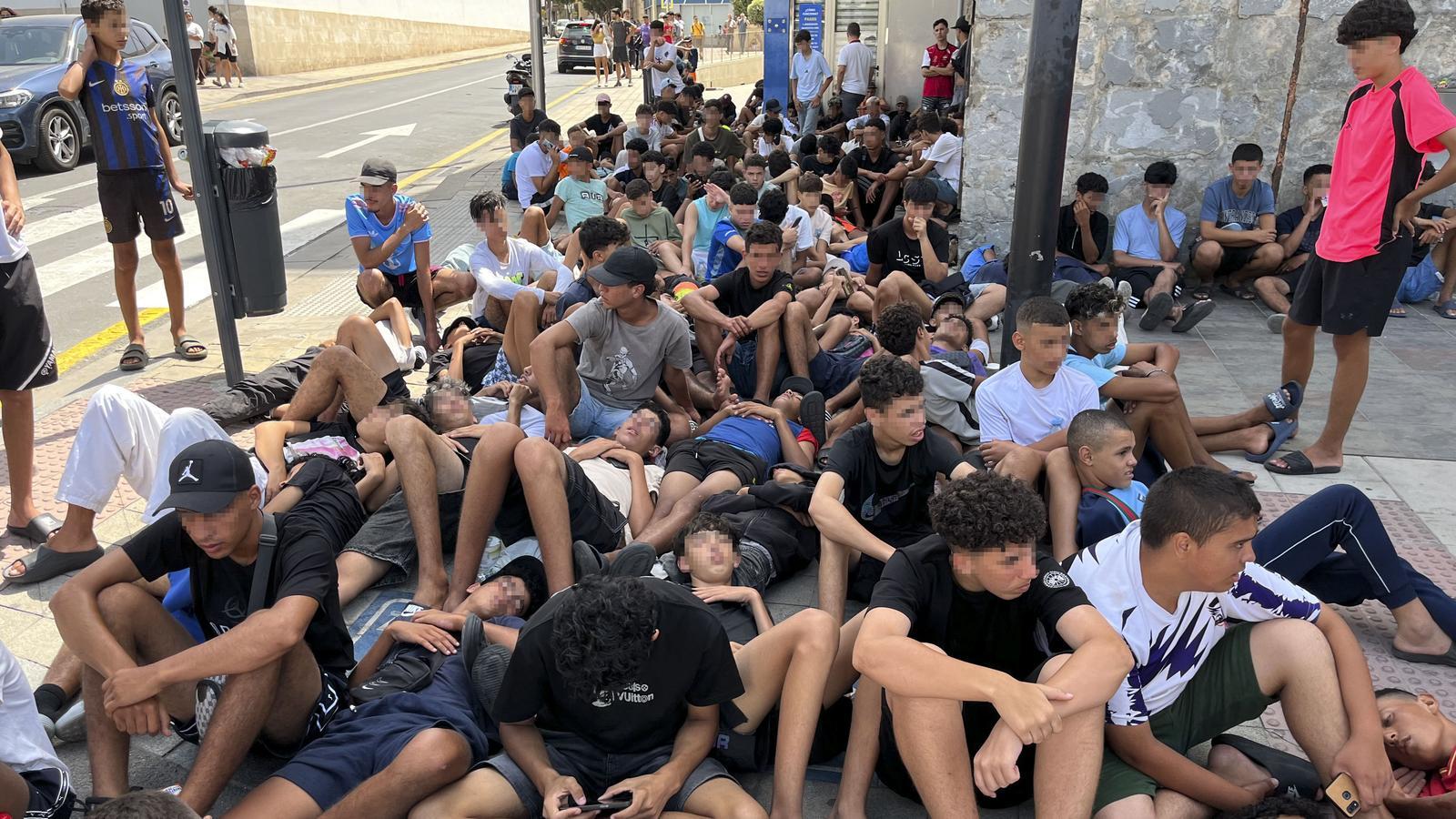
BarcelonaThe magistrate Joaquim Bosch (Cullera, 1965) speaks to ARA to explain the special protection of immigrant minors who are in Ceuta under the care of the Spanish authorities.
The European Union has positioned itself in favor of the return of all immigrants to Morocco, including minors.
— What representatives of the EU say is a bit ambiguous. They state that it is appropriate to return minors to Morocco, but that it cannot be done in any way. Nor is it that they say that an immediate and massive expulsion must be carried out.
Is it legally possible to return them en masse?
— Both European standards and Spanish legislation and jurisprudence make it impossible to carry out an indiscriminate expulsion from one day to the next. Article 35 of the immigration law is the clearest example. An individualized file is needed for each minor in which it must be obligatorily assessed what is best for each one. The family situation must be analyzed, the necessary reports obtained, the minor themselves heard... The best interests of the minor prevail over other conflicting interests. In some cases, it will be the return to the family. In others, they will have to stay here.
Does the Spanish government have room to bypass these procedures?
— The issue is so clear that public officials were already convicted of malfeasance, precisely for having agreed to an expulsion without guarantees.
And does the new European legislation change the procedures?
— The regulation of minors does not substantially change. The new European return regulation does not hinder procedures. It does impose a more restrictive and accelerated procedure for adults, but it also does not exclude necessary procedures, and for this reason, the government has not proceeded with the immediate expulsion of adults either. The evolution of European norms has taken more restrictive approaches, but international agreements on asylum cannot be disregarded. And, regarding minors, the new regulation stipulates that procedural guarantees must be respected and the solution that best satisfies the best interests must be sought.

What are these procedures?
— The Spanish state must register each situation, determine the age of the minors, identify them, and request the corresponding social reports from Morocco. And, with the Prosecutor's Office and legal assistance, ultimately the decision that is best for the minor must be made.
The PP and Vox are demanding that everyone who arrived in Ceuta be expelled, including minors.
— It is very regrettable that political representatives are inciting to malfeasance. The scope of action would be the same if there were another government of a different ideological leaning instead of this one. Another thing is that the immigration law can be reformed, but, even so, there would be limits regarding the treatment of minors. The law was drafted in 2009 and, although the PP later had an absolute majority, they did not introduce the changes they are now demanding.
How are the rights of minors protected?
— The law on the protection of minors does not differentiate between foreigners and Spaniards, precisely because international treaties stipulate it. In matters of child protection, it is very difficult to move towards legal regulation that ends up nullifying rights, because they have reinforced protection.
What difficulties are there in resolving the files?
— If Morocco does not cooperate in the return, it is impossible to carry it out. You cannot bring children to the border and expect someone to pick them up. And, in the past, we have seen zero cooperation from Morocco, as highlighted in the Prosecutor's reports. Now the authorities say they are getting to work, but we will see what happens. It is not so easy to make a decision about what is best for minors if there is no information about the family situation. Very few returns have been made so far due to Morocco's lack of cooperation.
If the minor does not want to return, should their decision be respected?
— The minor has the right to be heard, especially when they are mature enough. But their opinion is not binding, even if they say they do not want to return to Morocco. If the family is identified and the Moroccan authorities cooperate, it is easier to return them. In fact, if the file confirms that, against the minor's opinion, it is best for them to return to their country of origin, it is done.
In case the Spanish authorities massively returned minors, who could be held criminally liable?
— Criminal responsibility falls on whoever made the decision for the massive, collective return without following guarantees – last year the delegate of the Spanish government and the vice-president of the Ceuta government were disqualified. But also those who have participated in the decision can be held criminally responsible. If it is proven that a minister gave the orders or that other government officials did so, they could also be held responsible.
