Oscar Guayabero: "The Catalan bourgeoisie doesn't set foot here"
The paradeground designer has fallen in love with the Mediterranean taste of the lower Gaià

-
CAT -
CAST
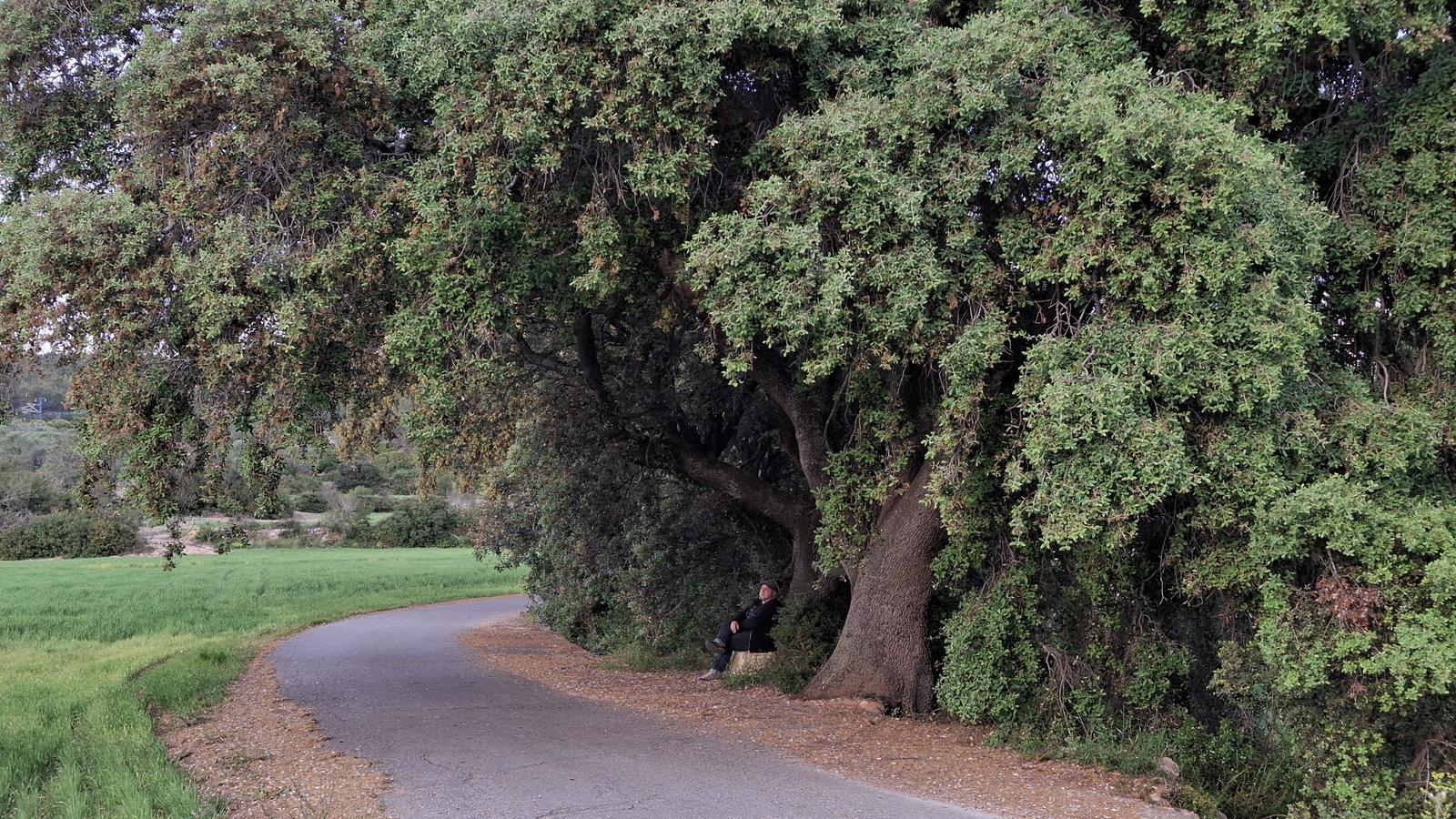
The curator and paradisdesigner Oscar Guayabero discovered Baix Gaià when visiting friends who had a house in the area. After some time, they did the same, first in La Nou de Gaià, where they were renting, and later, when it started to be difficult to find an apartment in Barcelona, they decided to buy La Montornesa, in La Pobla de Montornès, the neighboring town, “an old village house where we live and are restoring”. It is a studio and a workshop where his partner and he undertake projects, and it is also a meeting place to share knowledge and learning. The idea is that, in addition to living there, it will eventually become a space for courses, workshops, and exhibitions. When everyone was stopped by covid, they began the rehabilitation.He explains that he doesn't have the opportunity to miss Barcelona because he doesn't stop living it, he goes there twice a week and his work is very related to the city. What enchants him about Baix Gaià is that it has a Mediterranean flavor with the dry wall, the dry stone, the carob trees, the olive trees and the vineyards. "It's a fantastic place, a kind of Mallorca for the poor. It has its shortcomings and difficulties but it has a very humanized landscape," he states. They are twelve minutes by car from the beach, which they rarely visit in the summer, except for the late afternoon or at dusk when the crowds leave. The rest of the year they enjoy it a lot. For Guayabero, what's special about this area is that the villages are relatively close and if you move away from the coast, everything is immediately very peaceful. There are villages like his that are not excessively typical or photogenic, and there is still real village life: “The neighbor goes out with the tractor, life happens at the bar… There are cuter places, which although they are starting to become 'Empordà-like' with concerts and painting exhibitions, are nothing like this; here the Catalan bourgeoisie doesn't set foot”. “I consider myself an economic refugee, neo-ruralists who have had the luck to be able to come and live here,” comments Guayabero. With other "pixapins" like him, he says, who have arrived mainly from Barcelona but also from other parts of the country, they have organized themselves to form an energy community, working with the town hall to install solar panels and share energy. In parallel, they have created a consumer cooperative to buy directly from farmers in the area, and for the rest of the products they make joint purchases. They have also set up a chat where they share cars to move around the villages or get to Barcelona, because depending on the train is a drama. “We do a bit of bubbling, especially with the energy and cultural side. We organize parties, snacks, vermouths, where I usually play music. It’s easier to organize things here,” he assures. And he points out that by leaving Barcelona, you realize that many things happen outside the capital, difficult to see or hear them when you live there, because the city generates a lot of noise on its own.
