The right to the voice
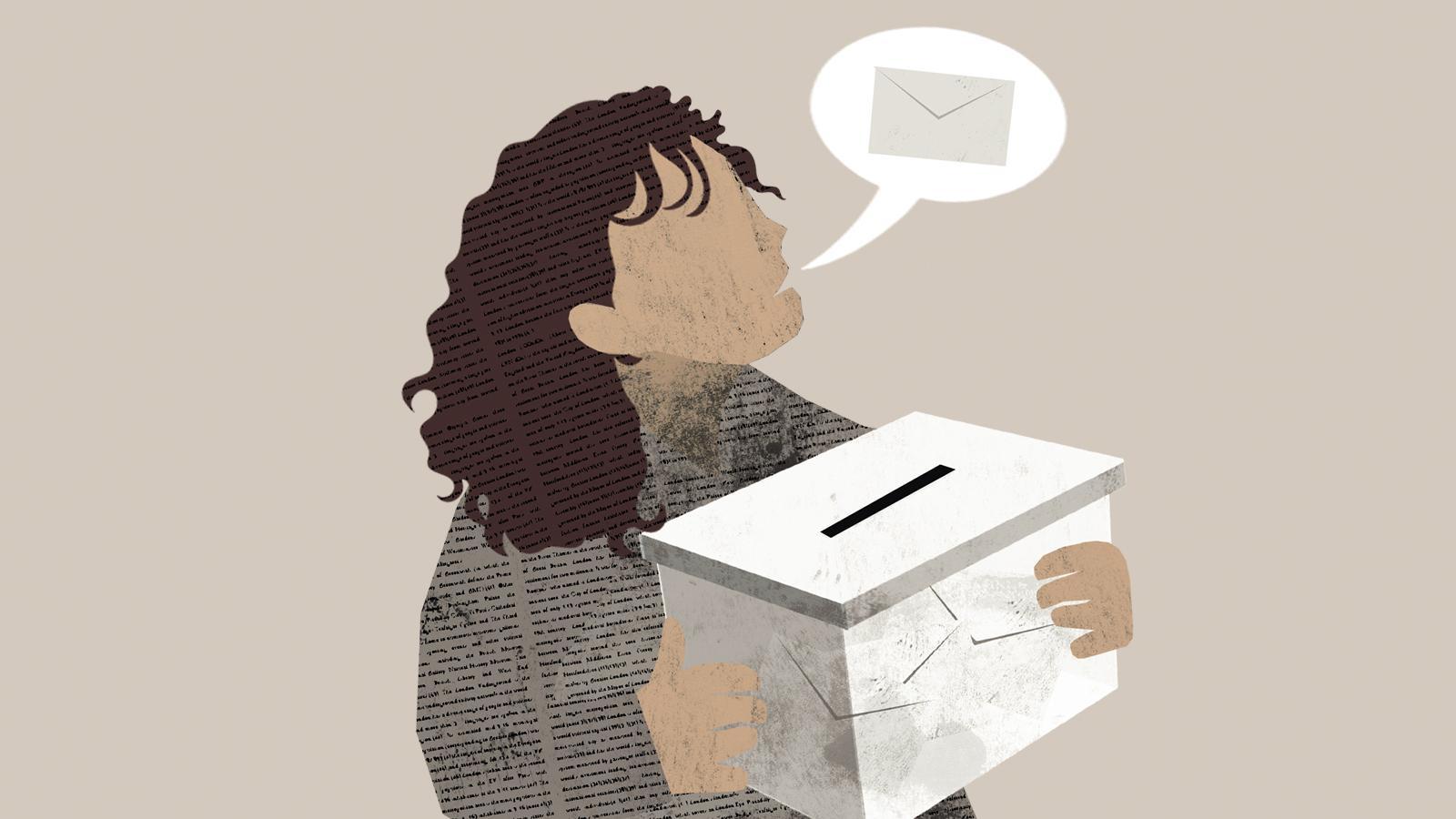

In the first song of the Odyssey, Penelope comes down from her quarters and asks the bard to change the song because it painfully reminds her of the absence of Odysseus. Her son Telemachus, still an adolescent, orders her to return to her rooms and attend to the loom. Speech is a man's affair and authority in the house belongs to him. The scene is the starting point for a brief, intelligent and highly recommended essay by the British historian Mary Beard, Women & Power: A Manifesto (Arcàdia), on the cultural codes that associate authority with masculinity.
The women's revolution has been one of the most profound in contemporary history. We women have witnessed an extraordinary transformation of our vital and professional possibilities. We have conquered spaces of freedom that our mothers could hardly have imagined and that our daughters consider natural and, mistakenly, irrevocable.
In Spain, until May 1975, married women were subject to marital license, that is to say, they needed their husband's authorization for a large part of the acts of civil life. We are not talking about the era of our great-great-grandmothers. And if anyone is tempted to think that history is inexorably moving in the right direction, they only need to observe what has happened in five years in Afghanistan, where, according to UNICEF, more than 2.6 million girls have been deprived of access to secondary education since the return of the Taliban to power. Women like our correspondent in Kabul have seen their freedom continuously limited, a fact that turns their lives and their country into a prison. In 2025, UN Women warned that nearly a quarter of the world's governments had recorded setbacks in women's rights during the previous year. The point is that civil rights have a history, but they do not have guaranteed eternity.
There is, on the other hand, an inequality that is especially difficult to correct via legislation: that of the credibility that society grants us. We have conquered the right to speak, but not always the right to be heard. Women who exercise responsibilities often have to manage, in addition to the difficulties inherent in the job, the expectations that others have regarding their behavior and their appearance. It is expected of them that they make themselves respected without ceasing to be pleasant, a skill that rarely appears among the requirements demanded of men.
The price of taking the floor
Verbal violence against women with a public presence has a function that goes beyond the expression of misogyny: to delimit the space they can occupy in society. Social networks have given a new life to a very old practice. It is enough to read the comments that the public interventions of many women provoke to verify with what ease one passes from political or intellectual disagreement to considerations about their physique, their age, or their sex life. It is a primitive, lazy way of avoiding having to bother to dialogue or dissent with them. There is no need to forbid women from speaking if one manages to make doing so unpleasant enough for them to eventually give up. Self-censorship is one of the great victories of contempt.
One of the most interesting reflections of Beard is that the incorporation of women into power has not necessarily modified its nature. It would be naive, absurd, to attribute to women a moral superiority in the exercise of power. We women also have the right to ambition, to ideological disagreement, to make mistakes, and even to be mediocre without our mediocrity compromising the prestige of other women. But it would have been a revolution of limited consequences if, after so many years of effort, we settled for reproducing its vices. Among which is the confusion between the exercise of authority and the exhibition of power.
We have spent decades giving advice to women on how they should behave to prosper professionally. We have told them to be more assertive, to learn to negotiate, not to be so modest when exposing their merits, and not to be afraid of making mistakes. Even, as a magnificent entrepreneur and mentor to young people says, that they dare to dress in red for photos.
Perhaps it would be advisable to dedicate a little more effort to educating society's ear. And it would also be advisable for us women to be aware of the fragility of some of these conquests. Three thousand years later, perhaps we should stop giving advice to Penelope and occupy ourselves with the education of Telemachus.
