The developmental Barcelona of 2035
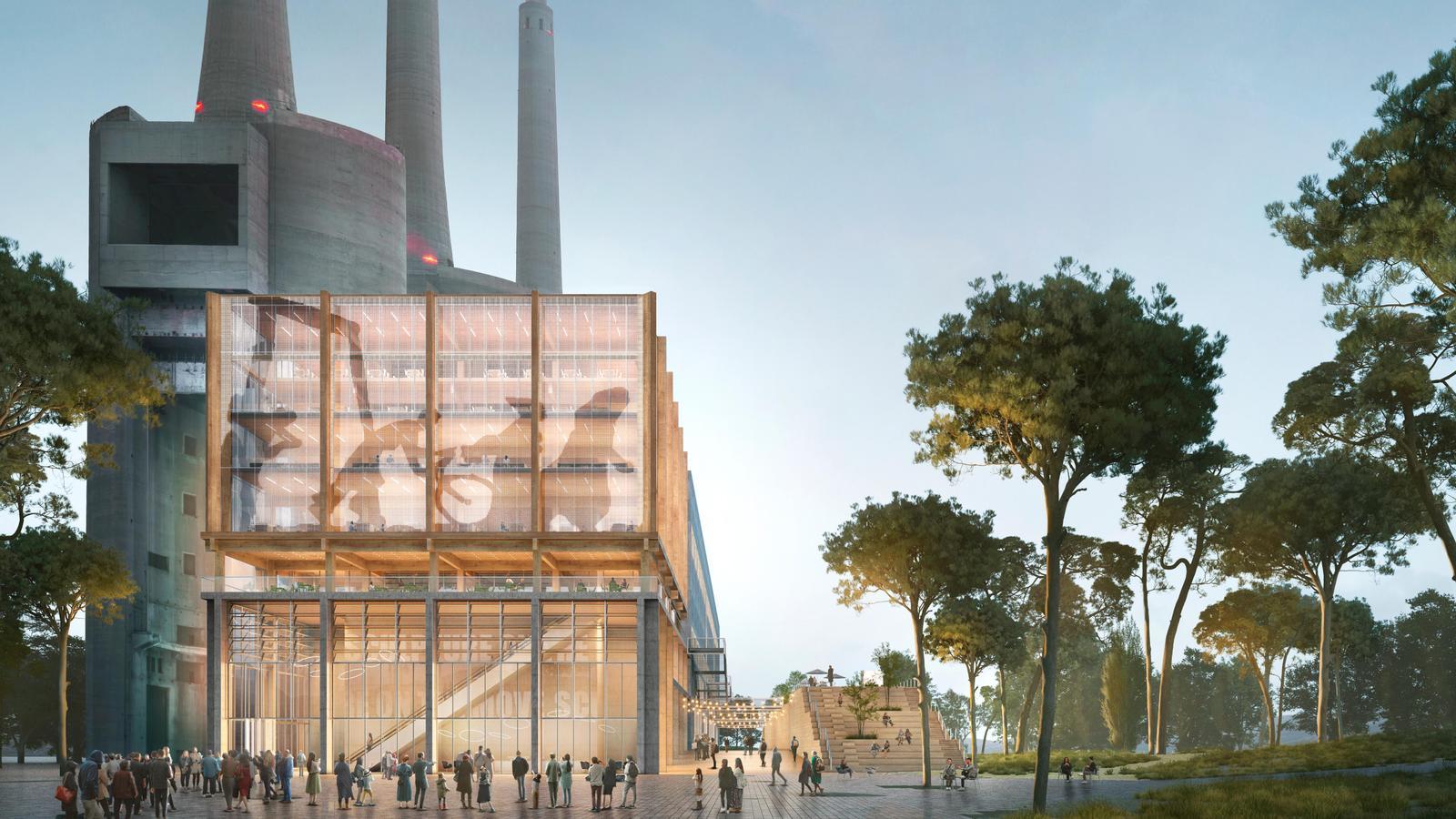

Within the World Capital of Architecture, the exhibition presenting the official city proposal by the current City Council is Barcelona 2035, at the Architecture House. What strategy and model are behind it? The exhibition is divided into four concepts similar to the parts into which rationalist urbanism of the CIAM, almost 100 years ago, divided the urban organism: to live, to work, to coexist, and to move. And it is organized into Major Transformation Areas, a version of the New Centrality Areas from 1987, at the end of Pasqual Maragall's term. But if then it was an open and successful strategy for the pre-Olympic restructuring, today it is incomplete and does not respond to the needs of the entire city. The exhibition presents the entire stretch of the Barcelona waterfront, without clarifying that Barcelona Regional has been working on it for decades. It focuses on four poles of health, innovation, and knowledge: the Ciutadella del Coneixement, next to Ciutadella Park; the BioClúster d’Innovació i Salut, around Bellvitge University Hospital and the Catalan Institute of Oncology; Porta Diagonal, where the new Campus Clínic will be located, and the new buildings at Vall d’Hebron Hospital, taking advantage of the platform of the Dalt Ring Road cover. It highlights the new Montjuïc, with the restructuring of the Fira's industrial buildings and a poorly defined new neighborhood in Poble-sec. The state of the three major transformation areas is presented: the classic 22@ and its northern part, citing the 2018 revision but without going into detail; the Marina del Prat Vermell, which contributes housing construction, and Sagrera, its station, the housing on the margins, and the 4-kilometer metropolitan linear park, which had a magnificent project by the renowned Catalan teams RCR Arquitectes and Alday/Jover, and which has been authoritatively decided to be suspended. And it ends with the controversial Catalunya Media City at Les Tres Xemeneies.
Two key centrality areas do not appear. Plaça de les Glòries, the authentic metropolitan center, which still lacks pieces, such as housing, facilities, and public spaces. Nor does the remodeling of Sants station, with the connection to Carrer Tarragona and the transformed Model prison. They must consider them Ada Colau's legacy, when they are projects, as in any city, that are inherited through various mandates.

When Barcelona's two major planetary challenges are tackling climate change and the housing crisis, what is being done is trying to revive the social democratic model, of economic and mercantilist dynamism, emphasizing infrastructure. The intention is to focus the future on attracting investors, companies, entrepreneurs and talent, strengthening accessibility to places of business exchange and insisting on hubs for health and innovation. What dominates are the figures. The big promise is that 180,000 jobs will be created, and it is estimated that 70,000 new homes can be built, but nothing is explained about how they will be managed and their characteristics. Where and how will these workers live? How can it be believed that homes will be built when during these three years only those promoted in previous mandates have been completed? How little account is taken of the necessary paradigm shift, in the face of the climate crisis and the growing complexity of the city, the diversity of neighborhoods and the origins of its inhabitants. And the competition to create green party walls will not save us, nor is it anything new.The exhibition erases the recent past, the values and qualities introduced in previous mandates, especially the model update carried out by the Commons, with the superblocks and green axes, the expansion of bike lanes, the start of an authentic housing policy, the Neighborhood Plan or the plans for climate shelters and school protection. The fine rain that reaches everyone.In short, a development-oriented scenario, with large projects, is presented, and it is noted that Jaume Collboni's Barcelona has neither memory nor any regard for the life of the neighborhoods, citizen participation, and real urgencies.
