How to avoid the injuries that most get on Hansi Flick's nerves
Experts consulted by the ARA give keys on how to survive an infernal schedule of matches
-
CAT -
CAST
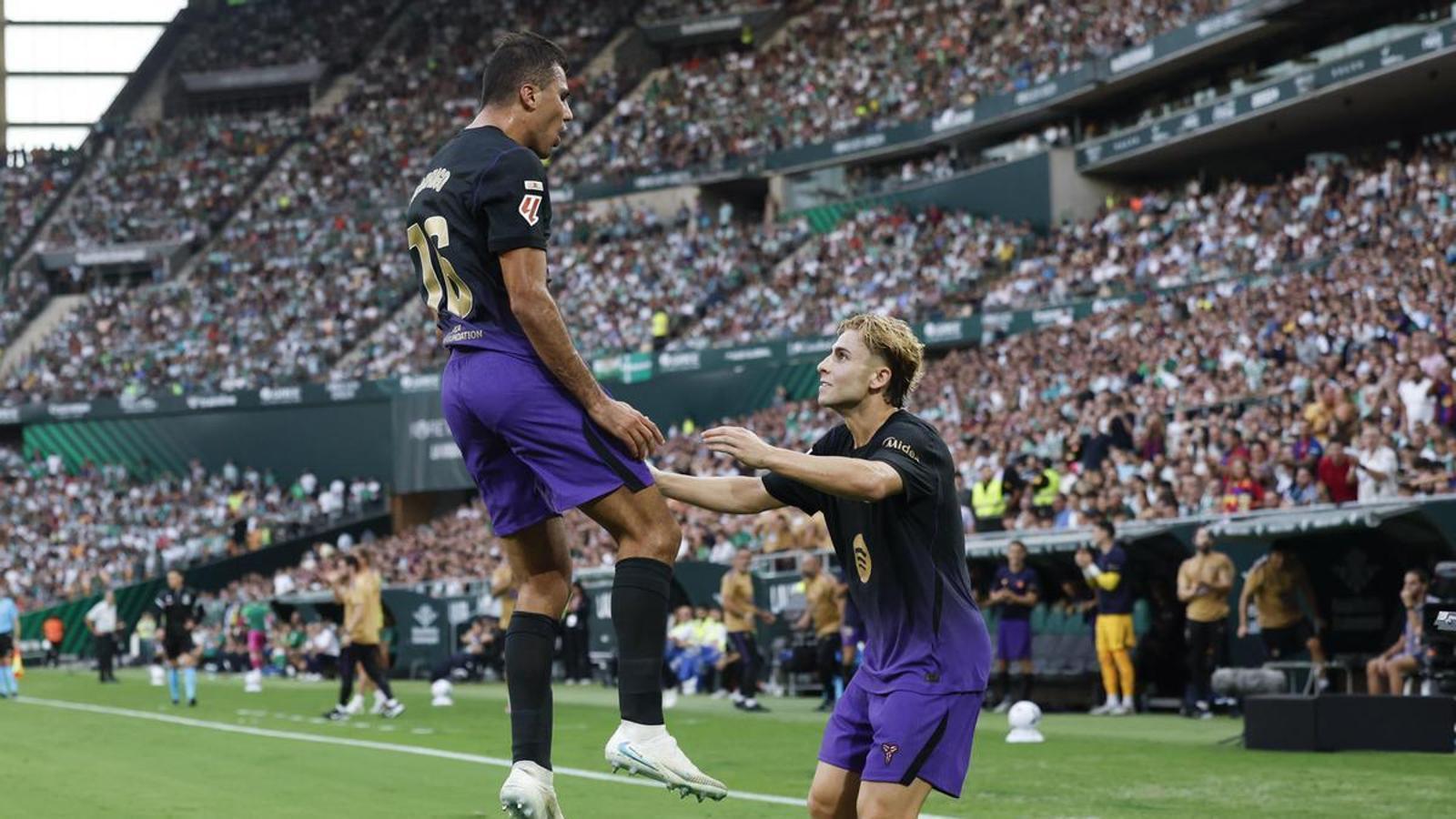
BarcelonaThe body of an elite athlete needs a recovery period before returning to compete. This commandment gains importance in disciplines such as football, where teams can end up playing more than fifty official matches throughout a season and face weeks with duels every three or four days. This calendar demands specific planning to manage physical stress, reduce accumulated fatigue, and prevent possible injuries. Of all the elite teams, Barça is one of those that must adjust the loads the most. Sometimes, however, the fibers say enough and break, as has happened to Rodrigo Hernández. These are the setbacks that most frustrate Hansi Flick. In this report, several experts give keys to the ARA on how to have a good recovery.
After a 90-minute match, a footballer's body suffers significant physical wear and tear. “It experiences a series of physiological, metabolic, and muscular changes,” explains Lluís Puig, a physiotherapist with more than 25 years of experience. This wear and tear is a consequence of the physical demands of the game, marked by explosive efforts, changes in rhythm, and physical contact. Edu Martínez, a former Barça physiotherapist, adds that the effort translates into “muscular fatigue, muscle damage, energy depletion, dehydration, neuromuscular and cardiovascular alterations, and an inflammatory and hormonal response.” According to Martínez, these effects can last between 24 and 72 hours after the match, depending on the intensity of the effort and the physical characteristics and recovery capacity of each player.
Post-match recovery
To recover from this wear and tear, players follow a series of protocols that combine different strategies to favor muscle regeneration and restore the body's balance. One of the most common are recovery training sessions, which include “light running or cycling, joint mobility, low-load muscle exercises, and motor control work”. Furthermore, “progressive accelerations, controlled direction changes, and technical work with the ball are performed”, Puig enumerates.
“A professional footballer needs between 48 and 72 hours to recover a good part of their physical capacity”, continues Martínez; although total muscle and neuromuscular recovery can extend up to 72 or 96 hours. In this sense, this process does not depend only on physical treatments, but also on nutrition and active rest. Lorena Delgado, a sports nutritionist, divides the process into four keys: fluid replacement, energy recovery, muscle repair, and rest. Regarding hydration, Delgado points out that “it is necessary to replace 150% of the weight lost during exercise”. In parallel, it is necessary to “recover muscle glycogen reserves through carbohydrates and aid muscle repair through protein”.
The 72 hours of rest
Although the 72 hours of recovery between matches are one of the main recommendations from organizations that look after the health of footballers, such as FIFPRO, the AFE, or FIFA, the calendar does not always allow for this margin to be respected. The coincidence of various competitions, international commitments, and the distribution of schedules force some teams to play matches with less recovery time than recommended. "A footballer might be in physical condition to play in 72 hours, but that does not mean that they have recovered neuromuscularly 100%," highlights Martínez.
Competing without being in optimal conditions can lead to a decrease in the ability to generate strength and power, as well as a reduced capacity to repeat sprints. It can also cause coordinative and neuromuscular deficits, muscle damage, and an increased risk of injury, especially if fatigue, high load, a history of injuries, and strength deficits coincide. For this reason, Martínez maintains that "the goal is not only to accelerate recovery, but also to reduce the accumulated load and detect in time those players who are not prepared to return to competition."
The time between matches also conditions the nutritional strategy of footballers. Delgado states that when there is little time, "every intake is vital" and it may be necessary to resort to supplementation to cover energy demands. The nutritionist, however, qualifies that these products "are not a substitute for an intake, but rather an aid" to complete needs that, in some cases, cannot be covered solely with food.
With matches every three or four days, recovery is not a process that begins and ends after each match, but rather continuous work throughout the season. Every session, food, and hour of rest counts towards arriving in the best possible condition for the next commitment.
