Life and the city
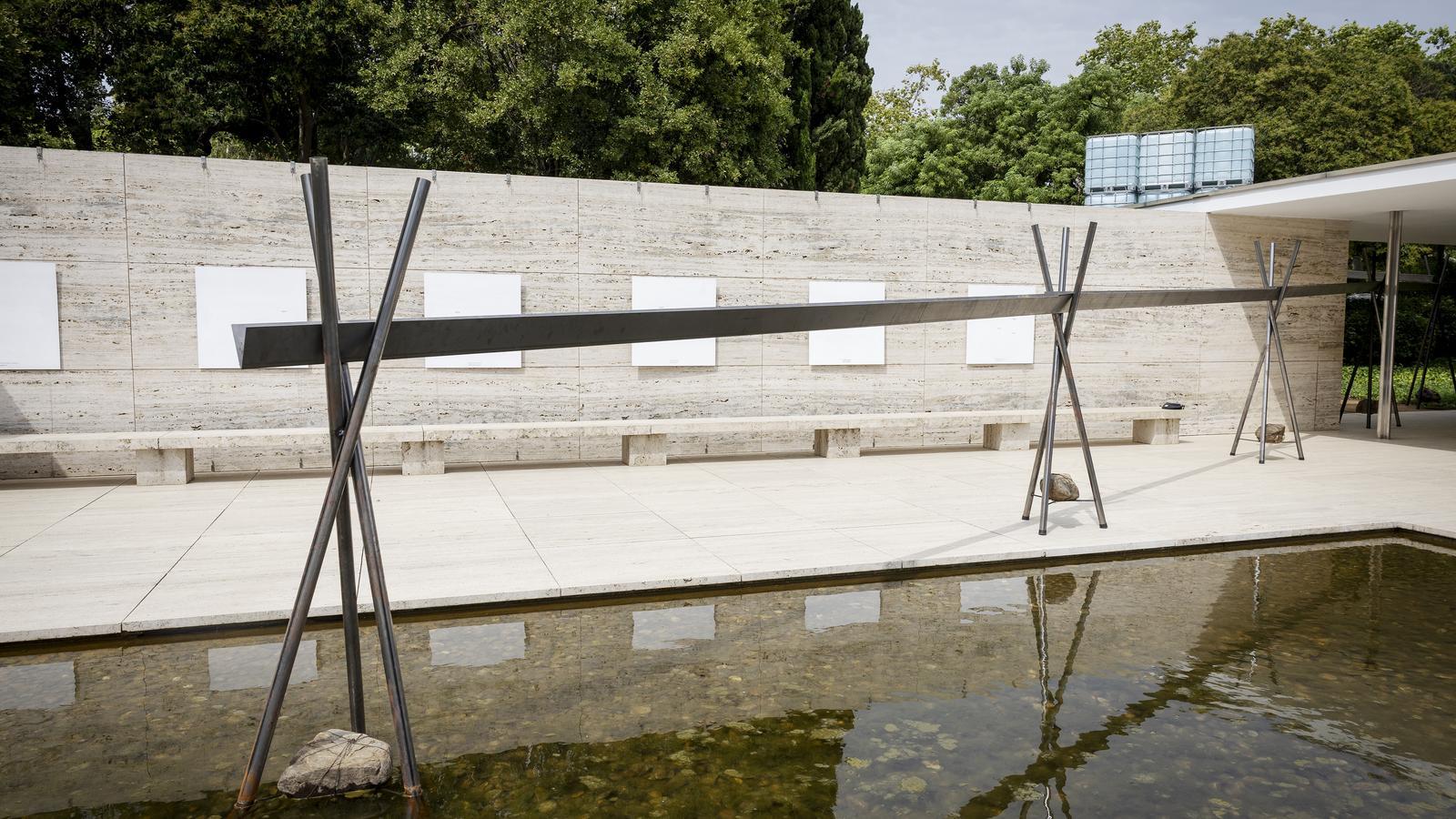
Just this Wednesday I was talking at the Mies van der Rohe Pavilion with Pol Esteve and Marina Povedano, both architects and thinkers, gathered around the project Plou prou?, an activation of the well-known building that collects and reuses rainwater to transform it into a habitable fountain in Montjuïc: a place to enter, stay, share, and generate community. The installation, conceived by Cierto Estudio, H3o, and Metrònom, aims to spark questions about the origin of water, the hidden infrastructures that bring it to us, and the need to rethink its management beyond its immediate use and daily convenience: the idea is to make visible the volume of water that evaporates from the pavilion's pool—in which, you will remember, the mayoral candidates dipped their feet during the 2019 campaign—by means of tanks that refill the disappeared water with water volume from the water table. Conversing with Pol and Marina, beyond digressing about the poeticalness of the gesture and the performative nature of contemporary art, I discovered that, when it was conceived, the Mies pond could have been full of life (microbes, water lilies), but that modern architecture, towards the end of the fifties, turned it into the most significant monument of the era and a visual icon, according to Povedano, detached from "its material, environmental, and temporal conditions," and "converted into a pure, autonomous, and immutable object." Today it is still this kind of museum mummy, and the pond, a mirror in which it can see itself reflected: a surface that redoubles its beauty, but denies life. It seems that in 2021, the architects explained, Andrés Jaque proposed an intervention, Phantom: Mies as Rendered Society, in which he showed the public the hidden materials that allowed the pavilion to be maintained in those conditions of conservation and control: the architect dismantled the building's basement and revealed the ghost that keeps, for example, the water crystalline and without a single alga. In a way, it revealed that form had won over substance. After the conversation, a bit disoriented (a writer among architects trying to save face by talking to them about the rain and water poems of Verdaguer and Carner), I thought about all the places in the city that, like the pavilion, have this cosmetic quality that pushes life away: Plaça dels Àngels, Las Ramblas, Plaça Universitat... and everyone could go on listing places according to their daily routes. Some will talk about Plaça dels Països Catalans, in Sants, or Plaça de Lesseps, in Gràcia; and we could write a very long list, but that is not the point now, rather it is to understand that what these places have in common is that they have become spaces that, like the Mies pond, reflect their own image and little else. And that, little by little, or more quickly in some cases, they have displaced life from places where, initially, the idea was for there to be life. Perhaps that is why they have become mere transit zones, at best, or reliquary monuments where one only goes to make a pilgrimage. What is most frightening, however, is how these places will continue to be transformed by new challenges such as, as we see now, the unlivable summers: elderly people who no longer sit out in the cool of the benches, children who no longer play ball under the scorching sun, neighbors who no longer meet. Where will the elderly find company? Where will the children play, what will their summers look like? And who will we end up talking to on the way back from shopping, or on the way to the market, if someone delivers our shopping to our homes, avoiding the streets? These are naive questions, I know, but no less urgent for that. Perhaps someone like Andrés Jaque should exhibit the hidden, subterranean mechanisms that make the city configure itself this way, and that cause life to be evicted from the spaces where it was expected. Or, come to think of it, we have it all right under our noses and it is we who do not want to look.
