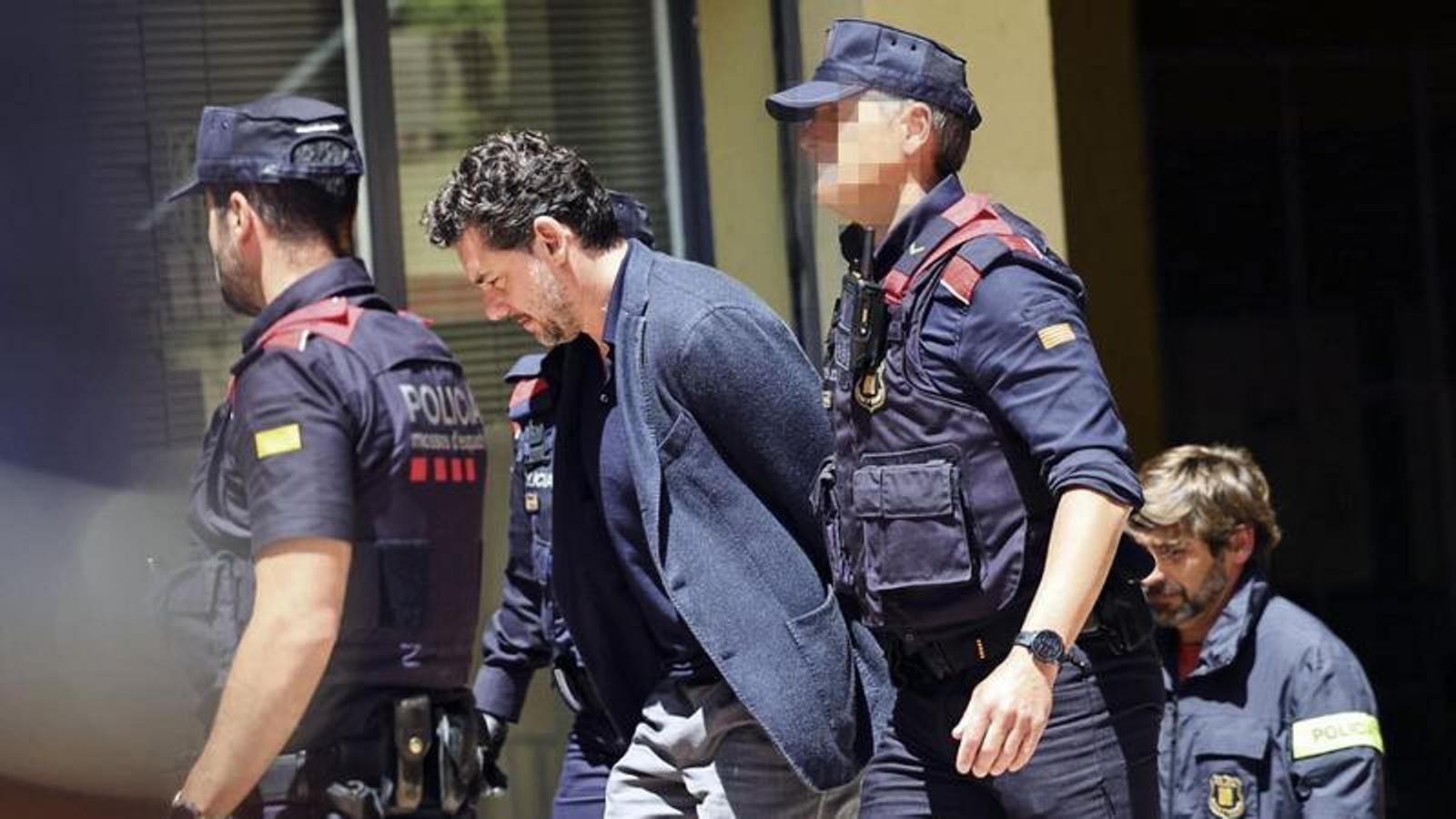

It is quite disheartening that, as soon as the news of Jonathan Andic's arrest appeared as an accused (but not guilty, nor tried, nor sentenced) in his father's death, the reaction of many compatriots was to wonder when Carles Porta would make an episode of Crims. The popular interest (or at least, what could be seen on Twitter) reached the point where Porta himself was forced to publish a tweet reminding good people that this would be jumping the gun. (But he also announced that they “will try to do the Andic case”, because indeed the program consists of documentary and dramatized recreations of real-life crime cases). Nor should we be scandalized by things that are more than known. Crime is morbid, parricide is morbid, the crimes and parricides of the rich and the very rich are even more morbid (because, yes, the mob is thrilled when the powerful fall into the same mud as the rest of mortals: that's what classic tragedies are about), and all this morbidity, when it hits the right note of success, always sells enormous quantities of whatever: tickets, copies, downloads, viewers. However, crime is not a trivial matter. It is sad and sordid, as we know from Dostoevsky, who in Crime and Punishment narrates a crime among the poor. It is also philosophical and chilling, as Tolstoy teaches us in The Kreutzer Sonata, a husband who kills his wife, in a well-to-do marriage, because he cannot bear the sexual act. Liberating and abysmal, as we read in The Infanticide by Víctor Català, or vengeful and dark as in The Cask of Amontillado, by Edgar Allan Poe. It can still be, moreover, hilarious, as Thomas De Quincey demonstrates in The Murder Considered as One of the Fine Arts. It can become a source of entertainment when presented as a puzzle to be solved, as in the infinity of stories (literary, cinematic, television) that follow the schemes of the stories of Sherlock Holmes, Hercule Poirot, or Inspector Maigret. We must naturally add the roughness and murkiness of the American hard-boiled, the coldness of the French polar, or the Mediterranean illuminations of the Italian giallo. Things become less interesting when they fall into sensationalism, opportunism, or a kind of catharsis for citizens of declining national communities (“it's just that we, if we set our minds to it, are also capable of killing each other, you know”). There are two more references, Truman Capote's novel In Cold Blood and Emmanuel Carrère's The Adversary, which have become easy justifications for all sorts of programs, podcasts, and more novels of what is known as true crime, a denomination where what has real power of attraction is more the true than the crime: an audience eager to consume recreations of real crimes, with their blood and guts, to then go to sleep warm. And who, when they hear the news of a sensational crime, already Pavlovianly imagine the narration that their favorite program will make. It is, also, an image of a country.
