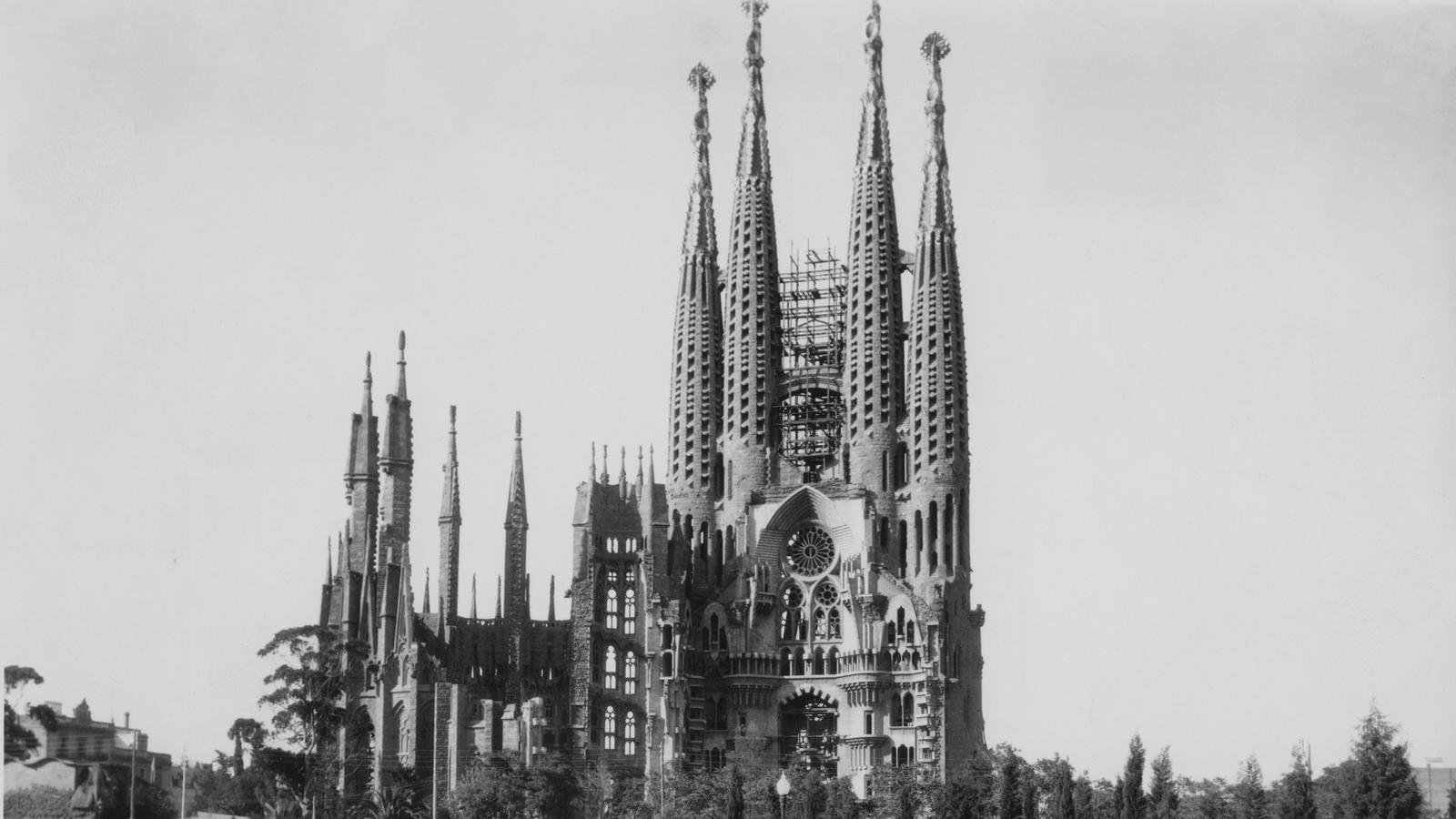

This country has extraordinary strength. I feel it as I solemnly watch Pope Leo XIV advance down the main nave of the Sagrada Familia, whose cross he will bless shortly before the cameras that will send the signal to all corners of the world.
For the third time in less than half a century, the head of the Catholic Church leaves Rome to tread upon what began as a plot of land in a half-finished neighborhood and a facade without entrails or context, exposed to the winds, and which today is a marvel of architecture of all time. No one, not even the high authorities coming from Madrid, wants to miss it, because they want to make it their own and because they know it is the place to be today. Antoni Gaudí is the origin of this strength. And Catalan identity and spirituality are the origin of Gaudí's strength.
Local and universal go hand in hand, but this indisputable reality must always end up being underlined in Catalonia, precisely because, lacking instruments of international political homologation, Catalan culture is forced to make its way among the cultures of the world with that touch of media overacting that comes when one has to tiptoe. Certainly, the Sagrada Familia does not need tiptoeing, because the attraction it awakens among such diverse people demonstrates how Gaudí knew how to strike a chord, in the happiest of coincidences between faith and constructive technique.
No, we do not need tiptoeing. As the Pope arrives at the main altar, Joan Maragall's words resonate, saying that Antoni Gaudí was a poet of stone. And the poetry of stone rhymes in all languages.
