Bob Dylan was tempted by Albert Serra
The Banyoles filmmaker and journalist Imma Merino present the book 'Dylan i el cinema. Filmar la llegenda', by Àngel Quintana

-
CAT -
CAST
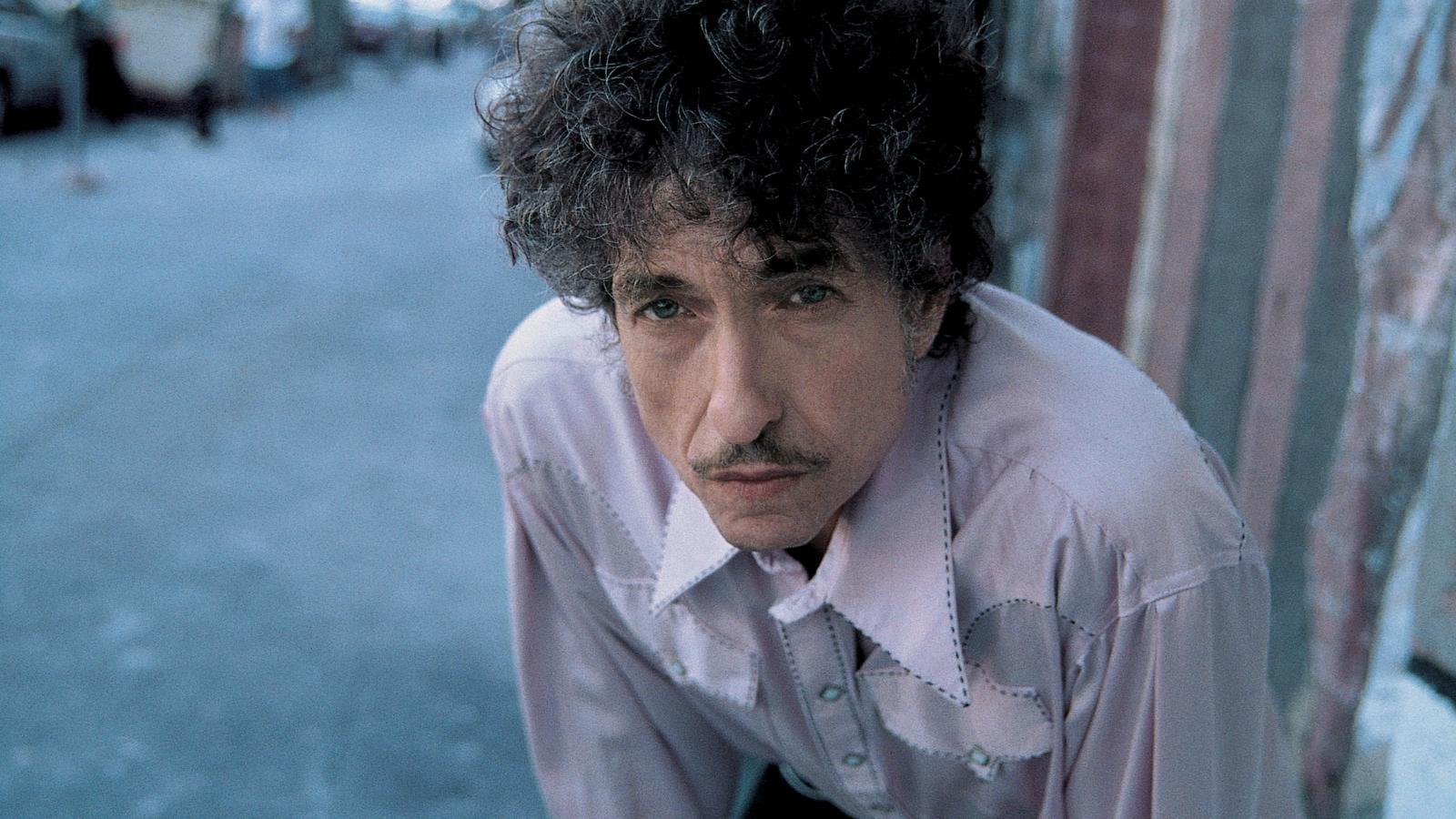
Barcelona"This is good cultural journalism," says journalist Imma Merino about Àngel Quintana's book Dylan and Cinema. Filming the Legend (Enderrock Llibres, 2026). "It's the fruit of a passion for Dylan, but you put that passion to work," continues Merino, who does not hide her friendship and admiration for Quintana (Torroella de Montgrí, 1960), a professor of film history and theory and one of the most relevant film critics in the country. At the presentation of this splendid book at Llibreria Ona in Barcelona, filmmaker Albert Serra is also present, who will recount an unexpected anecdote and also praises the author's work, highlighting some phrases that, he says, perfectly describe Bob Dylan, "a man who lives in the world as if he lived in a fiction": "You say that Dylan is someone who «decided to turn his existence into a kind of crossroads between old mythical fictions, the constant desire to live diverse experiences and to turn creation into an impulse that conditions everything»". By the way, both Serra and Merino agree in criticizing the book cover, which reproduces an image of Timothée Chalamet playing Dylan in the film A complete unknow (John Mangold, 2025). "What is that kid Chalamet doing here!", exclaims Merino, who, when it comes to criticizing, regrets that Quintana doesn't praise Cate Blanchett more, one of the actresses in I'm not there (2007), Todd Haynes' approach to Dylan's multiplicity. All three, by the way, admire Dylan. Merino, furthermore, values that he has Les enfants du paradis (Marcel Carné, 1945) as a cinematic reference. Serra considers him an "anti-academic in everything" who carries on the singer's legacy as a preacher, "like Hank Williams". "And he is a great poet and a great musician", adds Quintana, who is wearing a t-shirt with the phrase I contain multitudes which Dylan borrowed from Walt Whitman to title one of the songs on the album Rough and rowdy ways (2020).

Dylan is constantly fleeing, like a Ulysses, whose career, writes Quintana, "is nothing more than the chronicle of a long and endless return to an Ithaca to which he never quite arrives, because he is afraid of establishing definitive roots." And according to Serra, the "most important theme of the book is that Dylan's relationship with cinema is a frustrated, equivocal, failed relationship." "It is immediately apparent that Dylan, when he starts seeing the first filmed images of himself, already feels uncomfortable because he is too associated with a social movement as a protest singer. He doesn't have enough strength to fight this image, and he flees," says Serra, who underlines Dylan's inability to adapt the poetic mystery of flight to the concreteness that the cinematographic image demands. This is why Dylan's experience as a director and actor is so frustrating. "His entire relationship with cinema seems like self-sabotage," says Serra. And Quintana talks about it extensively in a book touched by erudition and analytical lucidity, "analyzing the sources in depth and written with a very clear narrative that does not exclude complexity," as Merino points out. Indeed, Dylan and cinema is an enriching read, which also addresses cinema in Dylan's songs and does not hide the fiercest criticisms, such as those received by the films Renaldo & Clara (1978) and Masked and Anonymous (2003), but which does not shy away from going further, as when it finds correspondences between the political failures that permeate Masker and Anonymous and One Battle After Another (Paul Thomas Anderson, 2025). The inability to interact
Quintana also talks about Dylan's disappointing performances as an actor, and Serra explains why. "Dylan has a profound inability to interact with another actor, because that has to be done based on concreteness. You can't be escaping all the time and not articulate something concrete. No matter how poetic it is, it has to be a concrete reaction that interacts with someone. But you look at the movies and you see that Dylan is absolutely never reacting to any kind ofinput. He reacts arbitrarily, always. And you don't explain that in the book," says Serra with all the confidence that friendship gives.
In fact, Albert Serra recently rewatched Bob Dylan's films. "It's an anecdote that doesn't have much importance, but it's a bit funny," he says. In Serra's next film, which is now in the editing phase, there is "a main character of about eighty years old who somehow has a somewhat ethereal and bohemian aura, and with characteristics that could be played by Bob Dylan". They included his name on the list they sent to the American casting director, "because it's an English-language film and it has to be with well-known American actors". "Of the five actors on the list, Dylan was the one who convinced me the least," he admits.
So he rewatched Pat Garrett & Billy the Kid (Sam Peckinpah, 1973), in which Dylan has a role. "I like what Àngel [Quintana] says, that Dylan was inspired by Chaplin when he makes that gesture with his hat, which is a rock-and-roll distillation of Chaplin's tramp," Serra interjects before continuing. The casting director made the proposal to Dylan, and it tempted him. The musician's "manager", "who is a kind of lawyer who handles everything for him, replied that Bob Dylan was very interested in the role because it was a type of character he likes very much, but that it was impossible for him because at that time he was on tour". On the endless tour that Dylan created as an eternal escape where "he shows practically no emotion and does not interact with the public". "It's another way of being in the world, incompatible with cinema," concludes Serra. In any case, this book by Àngel Quintana about a legend must be read.
