The amnesty: a political victory

On November 4, 2019, just three weeks after the Supreme Court had sentenced us for the October 1st referendum, the election campaign for the Spanish general election on November 10 began. It was the second call to the polls in a few months, following the failure of the investiture after the April 28 elections. That day, at an Esquerra Republicana political event at the former Model prison in Barcelona, together with the head of the list Gabriel Rufián, we demanded the approval of an amnesty law.
At that moment, no one was talking about amnesty. It was a chimera. For many, it was a proposal so far removed from the Spanish political reality that it seemed more like a declaration of principles than a possible objective. But there was a conviction: if the conflict was political, the solution had to be political and not judicial.
Ten months later, on September 3, 2020, once the most critical moments of the coronavirus had passed, Amnesty and Liberty was presented at the Ateneu Barcelonès, an entity born with the desire to promote this demand. And on March 16, 2021, an amnesty bill was registered in Congress, although it did not prosper due to a lack of support.
However, shortly after, the pardons arrived, which allowed the nine convicts who were still serving sentences to be released from prison. And, due to the demand of ERC in the negotiations for the investiture, a reform of the Penal Code was finally approved that repealed the crime of sedition, which made it possible for Carme Forcadell, Jordi Cuixart, Jordi Sànchez, Josep Rull, and Quim Forn to leave behind an unjust conviction that had deprived them of their civil and political rights.
After that, it seemed that the amnesty had definitively been taken off the agenda. So much so that Salvador Illa said emphatically that “Neither amnesty, nor anything like that!”, and maintained that “the amnesty is not feasible from the point of view of the rule of law”.
But after the Spanish elections of July 2023, a new scenario opened up and the political urgencies of the PSOE turned a chimera into a law. Pedro Sánchez's need to count on the votes of the independence movement made possible what for years had been considered impossible and on May 30, 2024, Congress approved the amnesty law.
The amnesty law is not the product of anyone's legal genius. In politics, things happen when there are political actors willing to turn a demand into a condition. The determination of ERC and Junts to place the amnesty as a requirement for the investiture explains a good part of what has happened.
The pardons had already been a recognition of the State's error in providing a criminal response to a political issue. And the amnesty represents the definitive step to remove from the courts an issue that everyone knows is of a political nature.
Given this, a part of the judicial leadership has experienced this rectification as a personal defeat and has felt as a painful slap in the face what the Courts have approved and what the Constitutional Court has ruled. In football terms, Marchena and Llarena have received a red card that expels them from the playing field for having infringed the rules they should have respected.
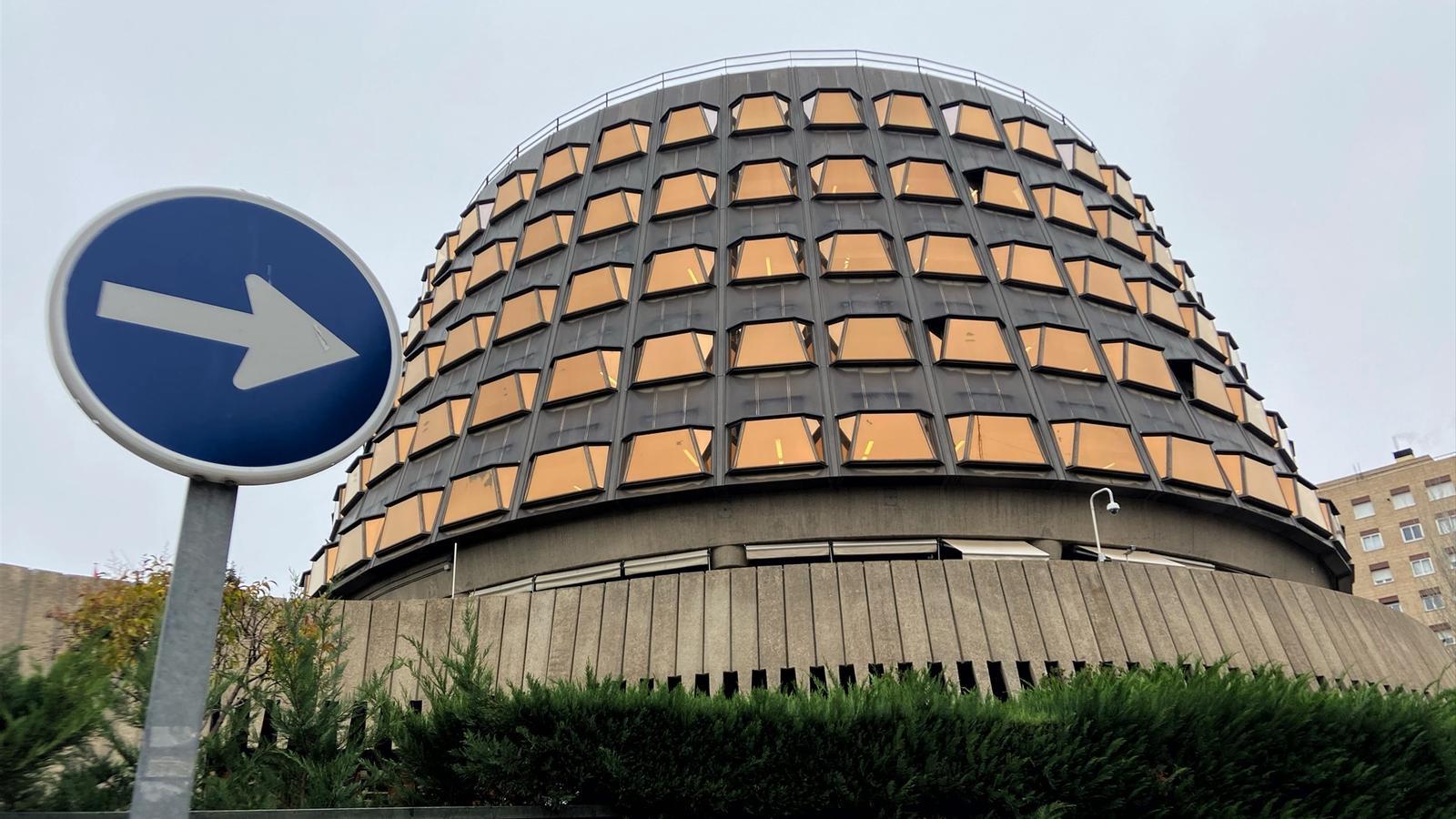
That the highest interpreter of the Constitution concludes that the Supreme Court has violated fundamental rights, such as the right to effective judicial protection and the right to political participation, is probably the most severe reproach that can be formulated against a court that has precisely the function of preserving the rules of the rule of law and democracy.
The application of the amnesty is, therefore, a legal victory for all the people who have fought in the courts and internationally during these years. But it is, above all, a political victory of great significance and difficult for a significant part of Spanish society to digest.
Pedro Sánchez's legislature is finished, but nothing ends with the amnesty. The political conflict between Catalonia and the State remains in force, even though the independence movement must recompose itself after a decade of repression. The application of the amnesty will allow for the recovery of the civil and political rights of those convicted for October 1st and the return of the exiles, leaving behind a disastrous period in which the response to a political conflict was subcontracted to the courts. It is great news that an end is being put to a decade of judicialization of Catalan politics and that the prominence returns to political proposals and the citizenry.
