European impotence in the Western Balkans
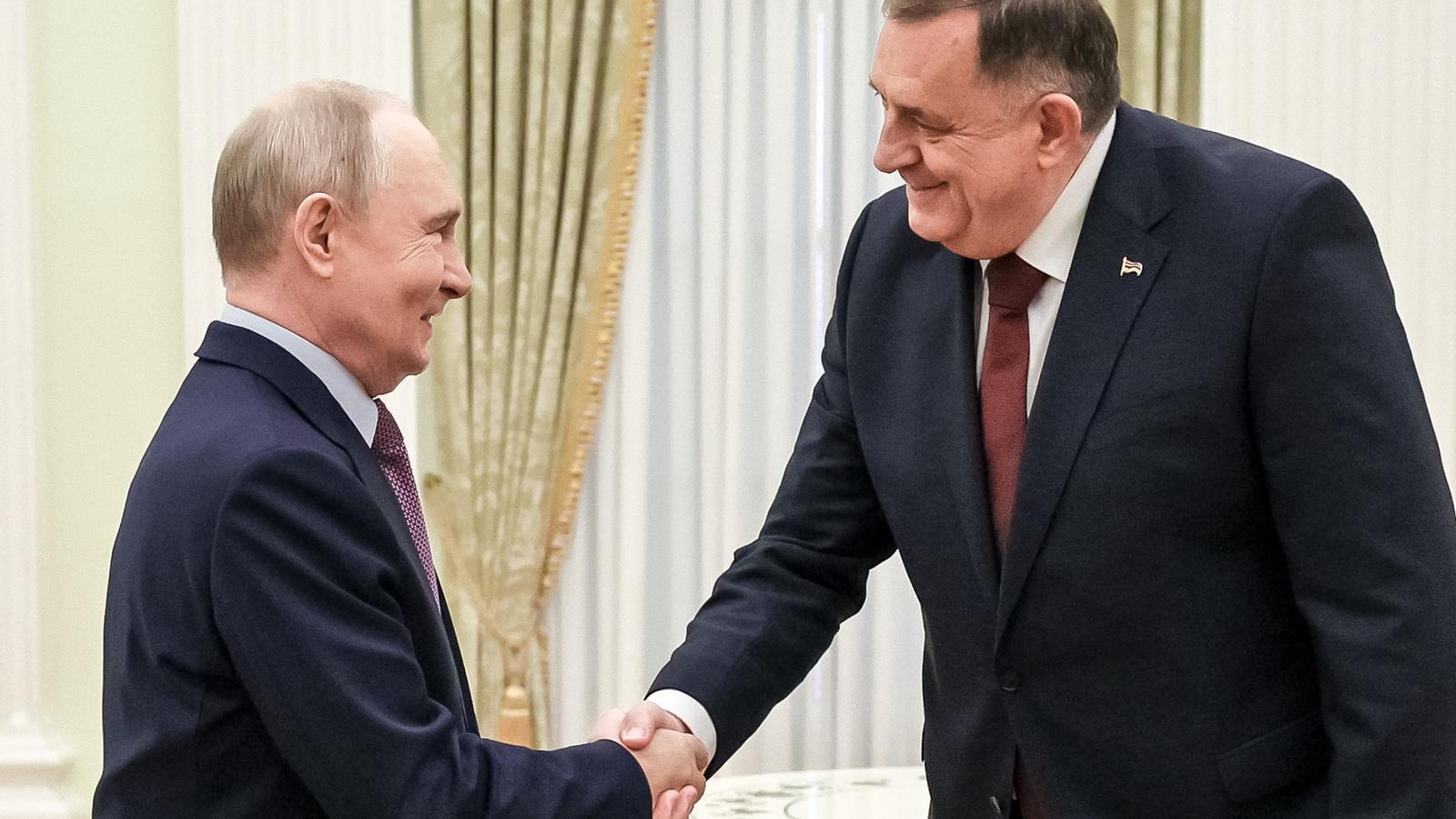

The straitjacket of the Dayton Accords continues to determine the dysfunctionality of Bosnia and Herzegovina. And the ballot boxes ensure that nothing changes. Sunday's general elections gave victory to the party of the Bosnian Serb leader, Milorad Dodik, the Alliance of Independent Social Democrats (SNSD). At the same time, the current Bosniak member of the tripartite presidency, Denis Becirovic, was also declared the winner. And the nationalist Croat candidate from Bosnia, Darijana Filipovic, did the same.
Dayton divided Bosnia into two semi-autonomous entities: the Republika Srpska and a federation of Muslims and Croats. Both, united by a weak central government, unable to reverse the frustration of many young people who, for years, have been torn between mobilization and emigration. The country is experiencing a deep economic and demographic crisis. Local sources estimate that more than 600,000 people have left Bosnia and Herzegovina in just over a decade. The official population is around 3.5 million inhabitants.
The past and the future live in constant contradiction. And, although the diaspora brings new hopes and possibilities –as a European diplomat who has been working in the Balkans for years explains–, the reality breathed in the streets remains immersed in sectarian rhetoric, which ignites with every campaign. “There is a sense of helplessness, but not of hopelessness,” assures this British diplomat, because the weight of history is heavy.
Dayton enshrined ethnicity as the basis of the political architecture of a country condemned to paralysis and deep-seated old war rhetoric, as demonstrated by the burial of war criminal Ratko Mladic, on September 7th, at the Topcider cemetery in Belgrade, with full military honors, and after the Serbian government had sent an official plane to transport the coffin of the butcher of the Srebrenica genocide from the UN detention unit in The Hague, where he died at the age of 84.
Dodik, the former Bosnian Serb president –who has actively courted Donald Trump and Vladimir Putin–, has stated several times that “the Srebrenica crime is a tragedy staged with the aim of demonizing the Serbs,” and has even gone so far as to define the execution of more than 8,000 Muslim men and boys at the hands of the Bosnian Serb army in July 1995 as “the great hoax of the 20th century.”
Mladic's farewell as a national hero is the most challenging staging of the failure of the European Union's influence in the Balkans.
Twenty years ago, the EU put on the table the most powerful instrument that any external actor could offer the Balkans: a credible promise of accession capable of inspiring societies, political reforms, and the healing of wounds. Initially, the offer yielded results. The prospect of joining the EU drove the massive return of minorities and the creation of a unified Bosnian army from the three forces that existed during the war; in addition to close collaboration with the International Criminal Tribunal for the former Yugoslavia. At that time, Belgrade considered this the price to pay for a European future that seemed real and attractive.
However, over the years and with the disappointments, the EU itself ended up emptying that promise of credibility and content. Therefore, now that enlargement has returned to the European agenda, the EU must grapple with a disenchanted Balkans that has placed itself in the hands of other actors with more influence in the region.
On one hand, energy dependence on Russia has taken hold, as it is the main regional supplier and provides 100% of all the gas consumed by Bosnia. On the other, the United States under Donald Trump has also decided to play the political influence card more actively. First, by diplomatically challenging the EU to force the resignation of the High Representative for Bosnia and Herzegovina, the German Christian Schmidt, and provisionally appointing their own candidate. But, in addition, this struggle between Washington and Brussels also enters the economic and energy terrain. A few months ago, the agency Reuters and the newspaper The Guardian asserted that the award of the construction of the Southern Interconnection gas pipeline in Bosnia and Herzegovina to the American company AAFS Infrastructure and Energy represented a very lucrative contract for a company with little experience in infrastructure but with close personal connections to Trump's circle.
The EU needs more than promises. Today, very few people in Serbia, Kosovo, North Macedonia, or Bosnia believe that accession is a real prospect. Only Montenegro is confident that it could become the 28th EU member state by 2028, followed the next year by Albania. But until that happens, the EU will remain trapped in its own inability to offer a credible future to the Balkans.
