50,000 years mastering fire

-
CAT -
CAST
There is debate about when human control of fire began. For hundreds of thousands of years there were only flames due to natural fires caused by lightning or volcanoes. But a day came when our ancestors were able to take fire from nature and maintain and transport it, although not yet produce it. This semi-appropriation must have happened between one million and 790,000 years ago. Scientists do not agree. Perhaps someone remembers the hypnotic film Quest for Fire (1981), by Jean-Jacques Annaud.The mastery of fire –the generation of fire by rubbing wood or striking stones– fully entered human societies 50,000 years ago. That is a lot and not so much. It was a fabulous technological revolution. Since then, we have been able to cook –and greatly improve our diet–, warm ourselves, light ourselves at night, better protect ourselves from all kinds of beasts and enemies, forge metal... Also to wage war more brutally among ourselves.
Thanks to advances related to fire, life expectancy has been increasing. And it seems that having more nightlife, promoting group sociability around it, was also key to developing language. The control of fire was, overall, the gateway to the emergence of agriculture and urban civilization, including writing, another revolutionary technology that arrived about 5,300 years ago.
The mastery of fire, therefore, has been a crucial element in human development. All ancient cultures worshipped it: Ra in Egypt, Agni in India, Hephaestus for the Greeks and Vulcan for the Romans, with Hestia and Vesta as protective goddesses of the hearth fire and families. Gratitude and respect for fire are part of our history and prehistory. Even today, without understanding why, we remain mesmerized by a lit fireplace, watching the magical crackle of the flames.
But many kitchens no longer have fire: more and more houses cook by induction or with microwaves (in others, they don't even cook anymore). Fire is slowly disappearing from our daily lives. For a long time, most of us have not carried matches or lighters in our pockets. Perhaps only the daily trace of the lit tip of the tobacco cigarette remains, which, however, is also socially condemned.
Nature has its own laws and dynamics. And at the same time, despite the evolutionary change experienced, humans like to play with fire, as if we felt an atavistic attraction to it: one out of every four forest fires in Catalonia in the last 40 years has been intentional. What's more: 68% of all fires since 1986 have been accidents, negligence, or intentional fires (therefore, only 32% have occurred due to natural causes).
Mediterranean vegetation and climate burn easily. If we add climate change (with increasingly extreme and frequent temperatures) and the progressive abandonment of forests, we already have the incendiary cocktail that currently plagues us. When we were still, not so long ago, an eminently rural society dependent on fire for cooking and heating, firewood was a precious commodity: that's why there was much less woodland and what there was was much cleaner and more exploited.
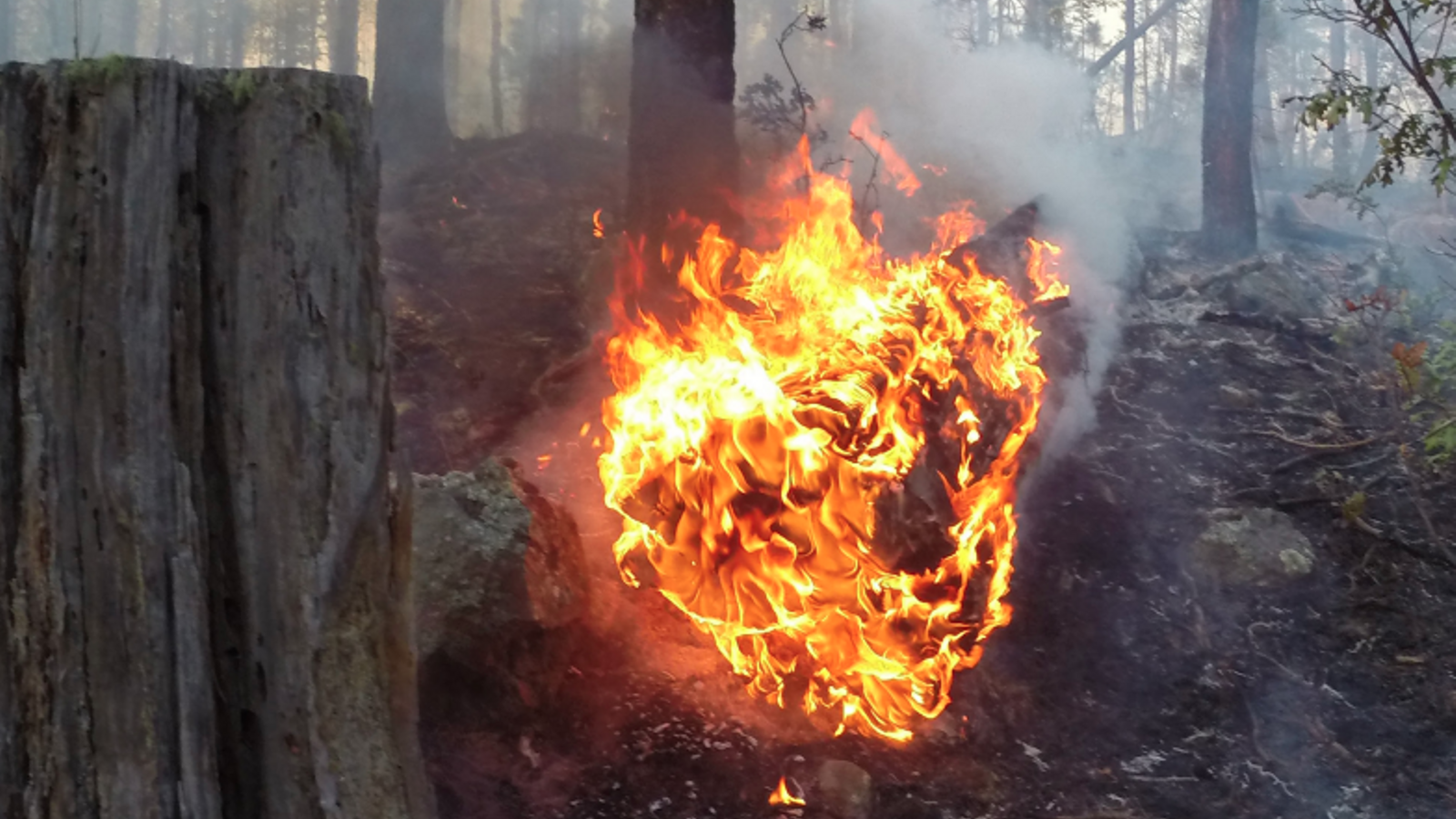
Today's fires, therefore, are largely related to the progressive human disconnection from fire. Poetically we could say they are a revenge of the goddess Nature: Ra, Agni, Hephaestus, and Vulcan cannot stand that we have forgotten them. We have come to dominate fire so much that paradoxically it has become invisible in our lives. It only appears in the summer, furious and wild, like a prehistoric calamity that diminishes us. Sixth-generation forest fires must resemble the fires of old, thousands of years ago, too much.
Now, whom we worship are the Firefighters, superhuman anti-fire heroes. Warriors against demonic flames. We should also worship the goddess Prevention: more subtle and elusive, we don't quite understand her.
