Martí Gironell delves into the secrets of the forests and gardens of the Empordà
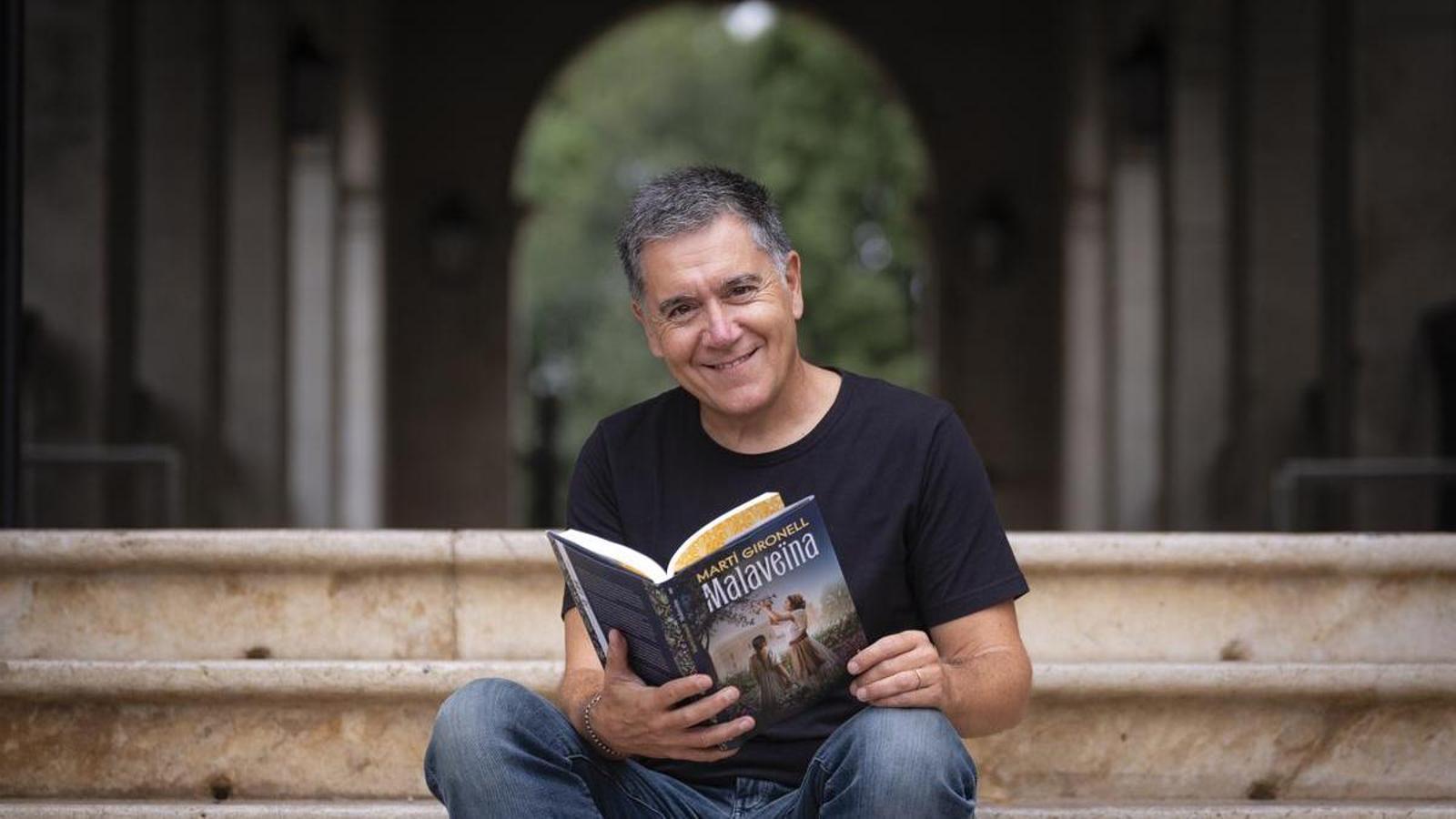
The writer publishes 'Malaveïna', a novel that contrasts the world of the counts of the castle of Peralada with the ancestral wisdom of the healer women

-
CAT -
CAST
PeraladaMartí Gironell returns to bookstores with Malaveïna, a new historical novel published by Columna that aims very high. The author from La Garrotxa leaves behind the adventures of the monks and choirboys of Montserrat from his last book to now immerse himself in the history of the gardens of the majestic Peralada castle, in the Empordà, which counts Antoni and Tomàs de Rocabertí had built in 1877. The novel, maintaining the thread of nature as a common denominator, connects the counts' gardens with the legendary character of the Malaveïna, a healer from the fields of Garriguella, a symbol of atavistic wisdom, who used flowers and plants to cure the sick of the region.
The book is articulated as a contrast between two worlds. Between two ways of understanding and relating to nature. On one hand, the stately gardens as a metaphor for power, control, progress, and institutional knowledge. On the other, the wild plants and trees that grow freely in the forest and are a source of popular knowledge that many women, often labeled as witches, have transmitted from generation to generation. The Peralada gardens were designed by the landscape architect François Duvillers, commissioned by the brothers Antoni and Tomàs, who came from Paris and returned to the Empordà after the death of their father. And the story of the healer Malaveïna stems from the legend that explains the origin of the fields of Garriguella, where today the Peralada winery produces a highly prized wine with the same name.
"They are two stories, a dialogue between two languages. That of flowers and plants seen to create a sense of elegance and power, and that of the knowledge that uses plants and flowers to heal," explains Martí Gironell, who throughout the book shows a special interest in highlighting and reclaiming from the present the ancestral wisdom of medicinal plants, which has often been demonized.
A well-documented novel to understand reality
It has been ten years since Gironell began to take an interest in the history of Peralada Castle through Jaume Barrachina (1951-2020), then director of the complex's museum. Throughout this time, the writer has dedicated himself to researching in order to provide the fiction with plausibility (though not academic veracity), following the usual method of his latest works: "Documentation allows you to write a historical novel about things that perhaps did not happen but could have perfectly happened that way. You start from real elements and make them play in fiction. And a well-documented fiction serves to understand reality," the writer argues. In this case, he has consulted a lot of books from the castle's library and also visited women who are specialists in the art of medicinal plants.
The two narrative lines of Malaveïna are not independent, but rather intersect and link up through the ramifications and relationships of the characters, all seasoned with a story of forbidden love between Antoni and a young plebeian woman, which brings dramatic tension to the plot.

Within the secondary stories that enrich the narrative, a real, very interesting, and quite unknown figure appears, who is worth making known. It is Antoni Balmanya, a teacher from Espolla and a benchmark of 19th-century education who, motivated by the philanthropy of the counts, established an absolutely pioneering arts and music school in Peralada for the village children, who until then were accustomed only to working the land. "I was surprised that already in the 19th century the seed was planted for what would be, many years later, the Peralada Festival, which the Suqué Mateu family would promote," recalls Gironell, who, in a veiled way, establishes a historical continuity in several passages between the past and the present of the Empordà castle.
Reconnect with the landscape through Catalan literature
The author constructs the novel with clear and fluid prose, effectively weaving together dialogues and situations so as to never lose the reader's attention. Without being baroque or convoluted writing, the lexicon is especially rich and genuine, since, in reclaiming the way the herbalists understand the world, Gironell inevitably also reclaims an entire language: expressions, actions, tools, flowers, spices, and recipes, typical of a landscape and an era that today are in disuse. "Follar el raïm" (treading the grapes), in reference to the action of stepping on them in the traditional way to extract the must, is a clear example of this. "For me, it is very important to enrich the literary narrative with all this diversity of adjectives, nouns, and verbs that lead the reader to go look for how these remedies were prepared. The book wants to offer the reader the possibility to reconnect, through literature in Catalan, to a landscape very much our own that we often push aside," concludes Gironell.

