From the monster to the trauma: how horror has evolved in series
The genre has expanded its forms to incorporate the individual and collective fears of each era
-
CAT -
CAST
BarcelonaHorror does not always need a monster hiding in the dark. Sometimes an apparently normal house, a gated community, or a family carrying secrets is enough. Over the decades, series have explored these possibilities and turned fear into a resource to talk about both what we do not know and what is too familiar to us. The genre has gone through ghost stories, alien invasions, killers, and supernatural creatures, but it has also found new ways to unsettle the viewer in trauma, grief, and social violence.
This transformation has not followed a linear path nor has it left previous formulas behind. More explicit horror coexists with psychological horror, and supernatural stories continue to be a vehicle for addressing very recognizable conflicts. However, some productions have contributed to expanding the genre's space within television fiction, both in the way they build stories and in the themes they bring into play.
From daily unease to the expansion of the genre
Television has been experimenting with the inexplicable for decades. The twilight zone, premiered in 1959, turned everyday situations altered by fantastic elements into a way of questioning society and the human condition. In that series, Rod Serling presented episodes with self-contained stories featuring different characters, without continuity between chapters. Historias para no dormir, by Chicho Ibáñez Serrador, also drew from this style and brought horror narratives to Spanish television for the first time. Later on, The X-Files made conspiracies and paranormal phenomena the center of a narrative universe that constantly played with the boundaries between reality and the unknown. The fiction starring agents Mulder and Scully was a success in a decade, the nineties, in which extraterrestrial culture and conspiracy theories were a phenomenon, to the point that they caused a peak of ufology in the media and cinema. On the other hand, Twin Peaks, created by David Lynch and Mark Frost, introduced an unsettling atmosphere in an apparently calm environment, where the secrets of an idyllic community only on the surface hid a much darker side.

These series demonstrated that television horror could go beyond the occasional jump scare. The atmosphere, mysteries, and character development allowed for sustained unease throughout entire episodes, and in some cases, over entire seasons. Serializing the product also offered the possibility of delaying answers, fueling suspicions, and turning bewilderment into part of the viewer's experience, especially in an era when episodes reached homes weekly rather than being delivered in full to a giant catalog of audiovisual content.
During the following years, the genre continued to develop in different directions. But from the 2010s onwards, one of the series that contributed most to making a new stage of small-screen horror recognizable was American horror story.
Terror as a spectacle

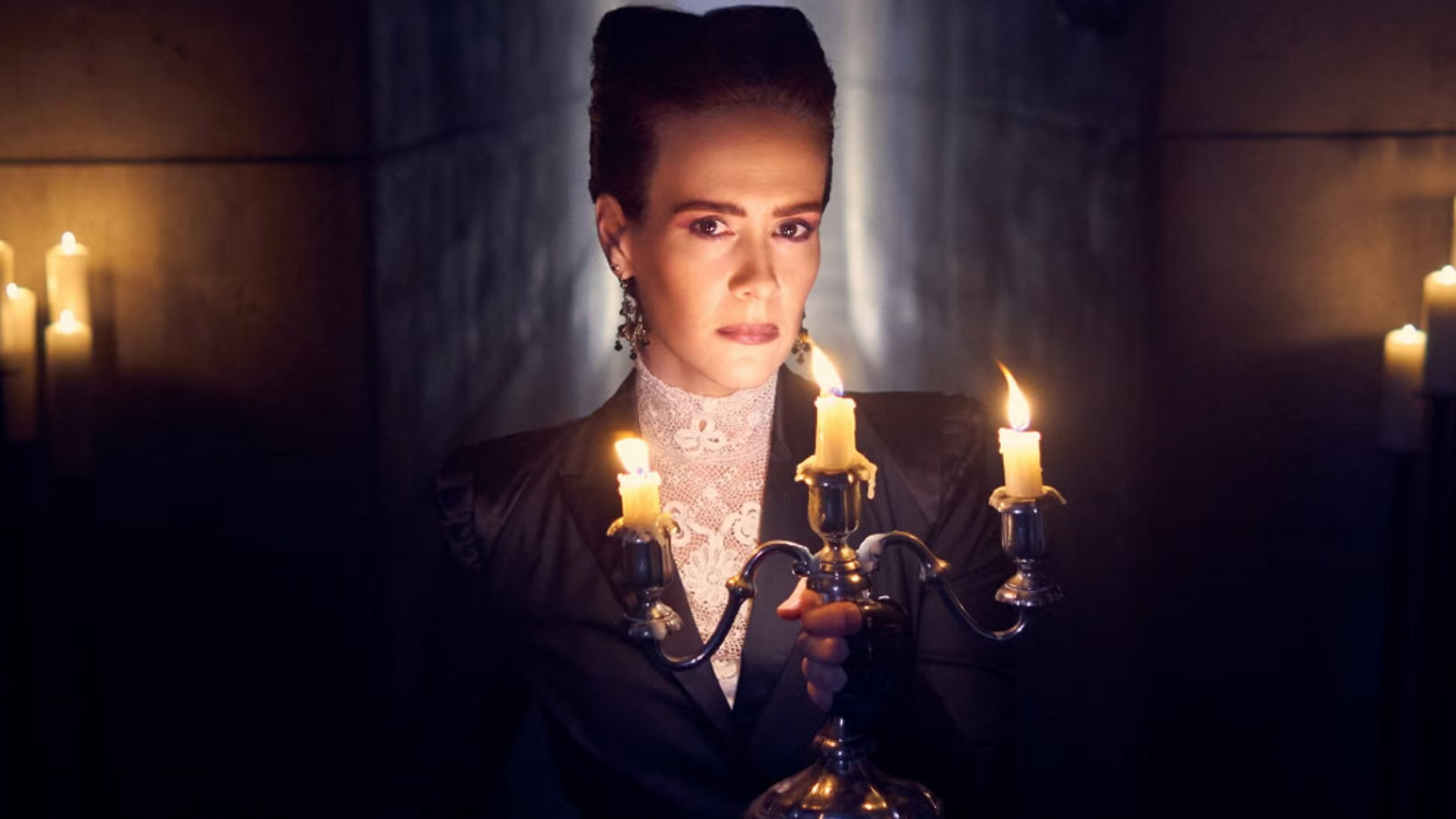
Released in 2011, the fiction created by Ryan Murphy and Brad Falchuk opted for an anthology structure: each season presented a different story, with new settings and characters, although it maintained much of the cast. The haunted house, the psychiatric asylum, the freak show, the world of witches, and extremist cults became settings to explore different variants of horror.
The formula allowed for changing universes without abandoning the genre and combining very diverse references: from classic horror cinema to the slasher, from the supernatural to gore, passing through visual provocation and social criticism. Each season could build its own imagery, with exaggerated characters, extreme situations, and an easily identifiable aesthetic. Horror thus became a serialized spectacle, capable of generating conversation around its stories, its twists, and the cast's performances.
The importance of American horror story does not lie in having invented the anthology format or having inaugurated television fear. What this fiction did demonstrate was that horror could address issues that went beyond creatures and killers. Violence, power, discrimination, religion, and social manipulation often appeared deformed by excess and fantasy, but they connected with fears present outside the screen. In this sense, the monster could be a supernatural figure, but also a person or a social structure.
Mike Flanagan: when the monster is also a wound
A few years later, a new style gained prominence with the productions of Mike Flanagan, especially on Netflix. The director born in Salem has built much of his identity from stories in which supernatural elements coexist with emotional conflicts.
In The Haunting of Hill House (2018), ghosts and inexplicable phenomena are part of a family history marked by the wounds of the past. The house is a terrifying space, and also the center of an experience that the characters have not managed to leave behind. The fear does not stem solely from what appears in the hallways, but from the way grief, guilt, and family relationships condition the protagonists.
Flanagan has explored this combination from different perspectives. The Haunting of Bly Manor (2020) uses gothic elements to speak about love, loss, and memory; Midnight Mass (2021) turns a religious community into the setting for a story about faith, fanaticism, and the need to believe, and The Fall of the House of Usher (2023), inspired by the literary universe of Edgar Allan Poe, combines supernatural horror with a look at power, greed, and the consequences of a family's decisions.

These series do not abandon the traditional resources of the genre. There are apparitions, disturbing images, deaths, and moments of tension, but horror also serves to give visual form to conflicts that the characters do not know how to resolve. The supernatural is not just an external threat: it often acts as an extension of their memories, their fears, or their contradictions.
Different monsters, different fears
The diversity of the genre can be observed in productions that have opted for other paths. 30 monedas, by Álex de la Iglesia, recovers the demonic and religious imagery to build a grotesque, violent universe rooted in folklore. Horror here adopts an explicit dimension, with creatures and supernatural phenomena that overwhelm the characters' daily lives.
In another direction, The last of us places the horror in a world devastated by an infection that transforms humans into aggressive creatures. Physical threat and survival are central, but the fiction based on the video game also focuses on the bonds that emerge in an extreme environment and the moral limits that survivors can reach. The monster is a tangible presence, but human violence is part of the landscape.
Another proposal, Them, combines supernatural horror with a representation of racist violence in the United States. The anguish is not limited to apparitions or inexplicable phenomena: it also arises from the hostility of the environment and the forms of brutality that the protagonists suffer. For its part, From starts from a community trapped in a place from which it cannot escape and threatened by creatures that appear at night. The mystery and isolation fuel a sustained restlessness, based both on the immediate danger and on the impossibility of understanding what is happening.

These productions show that television horror has not replaced one formula with another. Body horror, monsters, ghosts, murderers, and apocalyptic threats remain present. What changes is the way they are articulated and the function they have within each story. The same creature can serve to provoke rejection, represent a collective fear, or put to the test the bonds between characters. Part of the appeal of horror lies in the possibility of experiencing intense emotions in a controlled environment. The viewer can feel anguish, disgust, or tension without being exposed to real danger. But the genre also allows for the exploration of issues that, when posed directly, can be difficult to address: death, loss, loneliness, violence, or the inability to control what happens to us.
The different forms of horror offer, therefore, very diverse experiences. There are those who look for the jump scare, explicit violence, or extreme imagery; others prefer stories that slowly build an unsettling atmosphere or that leave a lingering sense of unease beyond the end of the episode. There is no single way to be afraid, just as there is no single type of viewer. The monster may continue to be the center of the story, but, nevertheless, in many of these fictions, horror also speaks of what happens when the lights go out and we are left alone with that which unsettles us.
