15 excursions with a lot of shade
Easy routes through shady forests and water areas to avoid the heat and hike safely this summer
-
CAT -
CAST
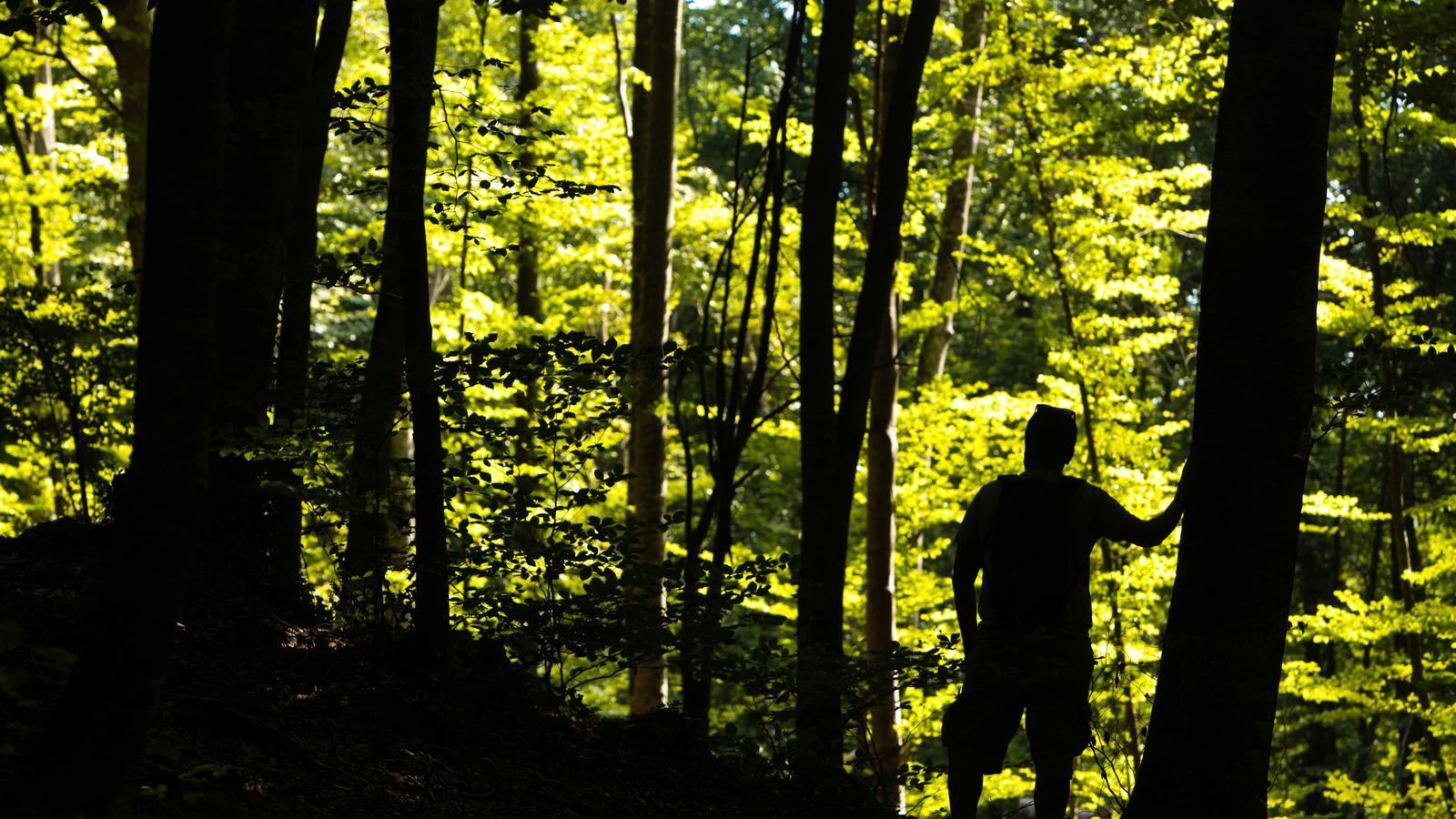
In the heart of July, the mountain can be a suffocating trap or an inscrutable oasis. The difference, basically, depends on a millennia-old technology that doesn't plug into anything: the tree. We all know the blast of heat when we open a car parked in the sun, and the sigh of relief when we find it under the protection of a good canopy. This same logic of survival, translated on a large scale, turns forests into the planet's most efficient primitive air conditioning.
And we are not talking about poetic license, but pure thermodynamics. Reports from the United States Environmental Protection Agency (EPA) have put numbers on this feeling: under good forest shade – with the original canopy intact and not mutilated by urban pruning – the thermometer can drop between 6 and 8 degrees. Where does the magic lie? Unlike a tarp, a bar awning, or a concrete porch – which block the sun but reheat like a frying pan – the tree evapotranspires. The leaves release water vapor, steal heat from the environment, and create a cool, humid microclimate. It's such a perfect system that, according to the U.S. Forest Service (USDA), having these green guardians near a building can reduce the need to turn on artificial air conditioning by up to 30%.
Therefore, if you want to go on easy hikes this August without suffocating, we have asked for help from one of the entities that knows the paths of our natural spaces best. The Centre Excursionista de Catalunya (CEC) has guided us in tracing a selection of routes where the heat does not hit as hard. Marcel Blanes, technical director of the CEC, is clear: “The priority objective in summer is to find shaded areas, preferably in deciduous forests such as beech forests, or dense forests like fir forests.” In addition to seeking the protective shade of vegetation, the CEC points to another key factor for selection: the orientation of the paths. “It is advisable to trace itineraries along north-facing slopes or shady areas, which have less direct sunlight during the central hours of the day,” details Blanes. This guarantees us lower temperatures, more ambient humidity, and a much cooler environment. Prepare your boots and backpack, because we are going to find real coolness with these fifteen sanctuaries of shade and water.
Era Artiga de Lin and Uelhs deth Joèu (Aran Valley)

The spectacle of water emerging from the bowels of the mountain, coming from Aneto, will captivate you. The water springs of the Joèu river, originating from Forau d’Aigualluts at the foot of Aneto, are the best incentive to walk through a lush valley with a cool atmosphere: a real natural cooler in the middle of summer.
You can reach it from the parking lot of the hermitage of Mare de Déu de l'Artiga de Lin (Es Bòrdes)
Llauset Lakes Route (Ribagorça)

If you want to experience high mountains without complications, this is an ideal route that will take you to the Cap de Llauset refuge through different lakes. Although the forest is scarce at this altitude, the heat is neutralized by taking advantage of the thermoregulatory effect of glacial lakes, which compensate for solar radiation.
It can be reached from the Llauset reservoir car park (Aneto).
Bosc de la Mata de València (Pallars Sobirà)

We are in front of the largest continuous fir forest in the Iberian Peninsula. The Pyrenean altitude, combined with a dense forest of mossy and humid ground, gives us a mystical and dense shade, perfect for walking without suffering the asphyxia of the plain.
You can reach it from the Callau car park (la Bonaigua de Baix).
Path to Sant Pere de les Maleses (Pallars Jussà)

Combines forest and medieval history. The trees will provide us with natural shade for a good part of this pleasant journey, which leads us to discover the remains of a Romanesque monastery magically embedded under a large rock overhang.
It can be reached from the rest area of the Font de la Figuereta (La Pobla de Segur).
Camí del Riu Bona (Alt Urgell)
Ideal for all audiences because it has little unevenness and because it runs practically alongside the riverbed. The riverside forests here form a green corridor that guarantees a long and grateful strip of continuous shade from the heat.
You can get there from the parking lot of the hermitage of Sant Julià dels Garrics (la Vansa i Fórnols).
Camí de l'Aigua (Cerdanya)
A pleasant and flat walk that follows the old Solana Canal. We will cross beautiful wooden bridges while the rows of trees growing along the stream perfectly protect us from the Cerdà sun.
You can reach it from the hermitage of El Remei in Bolvir.
Camí dels Empedrats (Berguedà)
A classic route that spectacularly embeds itself along the bottom of a gorge, flanked by the Pendís river. The vertical rock walls and riverside vegetation block the midday sun, offering a very shady walk. The final treat, if there is enough water, a very photogenic waterfall.
It can be reached from Cal Cerdanyola (Bagà).
Itinerary of the Fonts del Llobregat (Berguedà)

Short and spectacular route (even suitable for some strollers) to see how the water bursts with fury from inside the rock to become the Llobregat River. The shade is abundant, although not everywhere, which is why the sensation of freshness from the water is appreciated.
Linear / 2 km / +50 m / 45' / Start: Castellar de n'Hug.
Grevolosa Forest (Osona)

Monumental beech forest where the beeches exceed thirty meters in height. It is a green cathedral where light arrives filtered and the strong evapotranspiration capacity of the trees instantly dispels the sultriness.
You can get there from the Coll de Bracons pass.
Fageda d'en Jordà (Garrotxa)

Unavoidable walk over the lava flow of the Croscat volcano. The foliage of these exceptional beeches forms an almost opaque canopy. Inside, a dark, cool, silent world opens up, completely isolated from the summer outside.
You can reach it from the Can Serra area (Olot).
Gorg del Molí dels Murris (Garrotxa)
Gentle hike to introduce young children to river hiking. We ascend the Cogolls stream under a very dense riverside forest that acts as a thermal shield until we find a clear water pool to cool off in.
You can get there from the car park near the cemetery of Les Planes d'Hostoles.
Gorgues del Freser and Salt del Grill (Ripollès)
Ideal itinerary for summer thanks to the refreshing roar of the Freser river. It is a route with good shade, as there is a lot of vegetation at the bottom of the valley, which culminates in the Salt del Grill, a vertical waterfall that releases moisture and freshness into the air.
You can reach it from the Farga car park (Queralbs).
Font de la Tosca and Torrent de la Masica (Ripollès)
Charming linear route that follows the Torrent de la Masica and the Torrent del Tornall. We will advance between moss-covered nooks and small waterfalls, which create a humid shield ideal for frequent stops. It is especially rewarding with children.
It can be reached from the parking lot of Vallfogona de Ripollès.
La Fageda del Retaule (Montsià)
We leave the Pyrenees and find ourselves in the heart of the Ports, where one of Europe's southernmost beech forests is hidden. This prodigious forest grows in a humid shady spot that acts as an unbeatable climatic refuge, guarded by the imposing roots of the monumental tree called Faig Pare (Father Beech).
It can be reached from the recreational area of the Infern valley (la Sénia).
Gorgs de la Febró (Baix Camp)
Descent into a natural fissure opened in the limestone rock. The water has carved a succession of pools and clear water basins perfectly isolated from insolation thanks to the narrowness of the walls and a dense forest.
It can be reached from La Febró.
Walking under the canopy protects us, but before leaving home, the technical director of the CEC warns that planning is essential. Furthermore, we must care for the environment: “Natural spaces are public shared areas that must be known, respected, and preserved to ensure that current and future generations can continue to enjoy them,” points out Blanes. Before leaving home, read these ten commandments for a safe and cool summer of hiking:
- 1. Active mornings (11 am-5 pm in the shade) Concentrate your physical effort early in the morning and seek shade during the central part of the day.
- 2. Time margin Heat makes steps cumbersome. Calculate distance and elevation gain, being generous with your time.
- 3. At the pace of the slowest The group's speed must always adapt to the slowest member.
- 4. Natural springs can be deceiving Springs on the map may be dry. Carry extra water and add mineral salts if you sweat a lot. Drink small sips before you feel thirsty to avoid dehydration.
- 'Engine' running Thermoregulation through sweat consumes a lot of energy. Eat energy-rich foods frequently to avoid sudden energy drops.
- 6. Forget cotton It retains sweat and causes uncomfortable changes between cold and heat. Use technical, breathable clothing in light colors with long, thin sleeves to protect against radiation.
- 7. Non-negotiable sun protection Hat or cap, sunscreen, and good sunglasses with approved UV filter.
- 8. First-aid kit within reach Carry a basic one and closely monitor any warning signs from your body (dry mouth, dizziness, headache, cramps, or exhaustion).
- 9. Weather monitoring Before setting out, check fire risk, storm warnings, wind, or high temperatures. Inform someone of your whereabouts and check for coverage.
- 10. Responsible bathing and zero waste Swimming is prohibited in high mountain lakes and some rivers. If you swim in permitted streams, do so without sunscreen. Return with all your trash (including organic waste) and stay on the marked path.
