ERC seeks a change of cycle with Rufián as pilot
The republicans, whom the polls place as the second force, want to dispute the useful vote to the PSC

-
CAT -
CAST
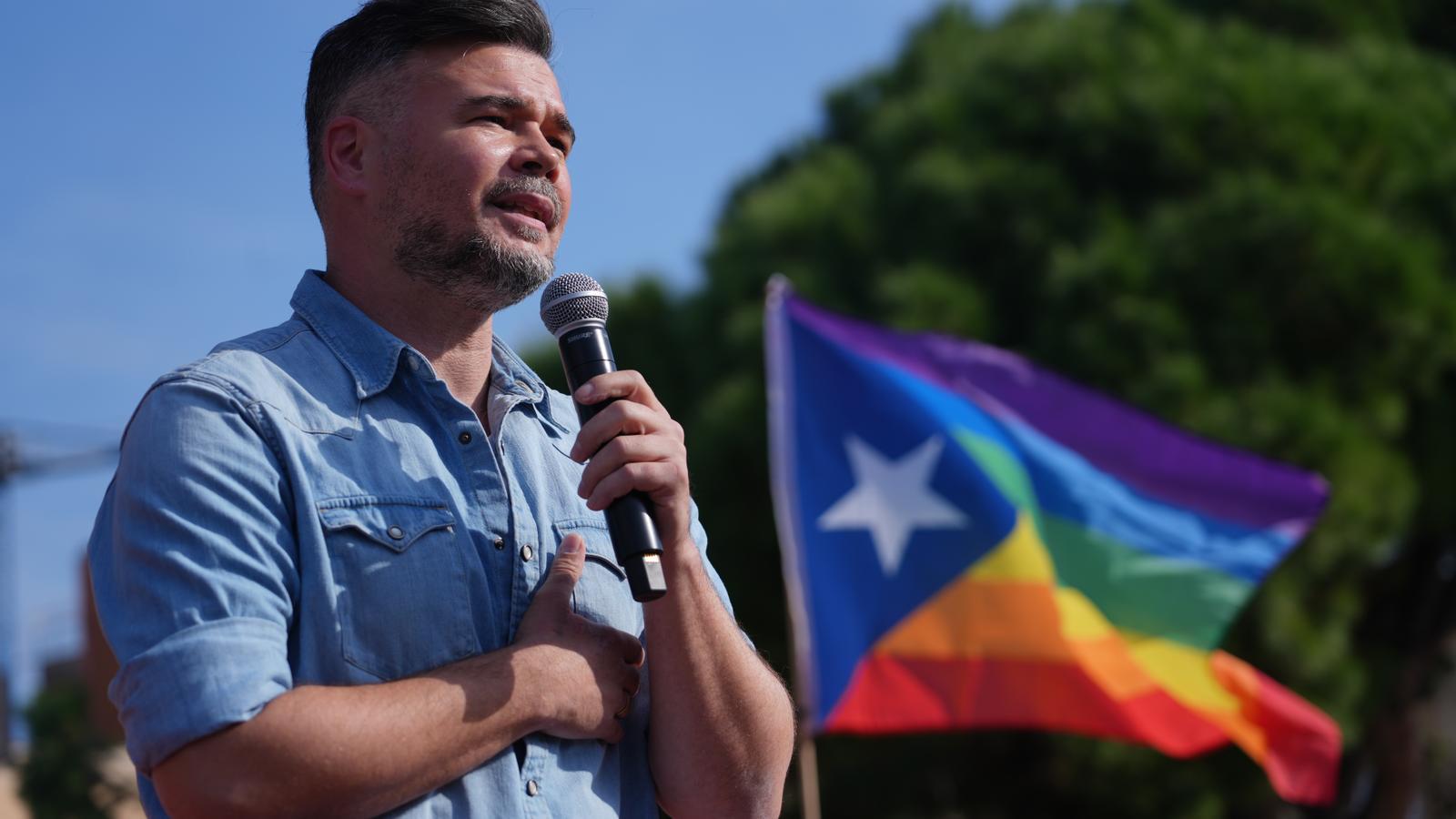
BarcelonaERC is one of the few parties in the progressive bloc that polls predict will rise ahead of November 29 (perhaps only alongside Bildu and the BNG). Encouraged by the media appeal of their candidate, Gabriel Rufián, the Republicans are kicking off the campaign prepared to try and dispute the tactical vote with the PSC. In fact, they wanted this evening's opening event to be in Tarragona, one of the socialist strongholds where the Spanish Prime Minister, Pedro Sánchez, made a stop last Saturday. In the elections three years ago, the Republicans were the second-largest force in this district, but they remained more than half the votes away from catching up with the PSC. Now, according to polls, Esquerra would narrow the gap with the socialists across Catalonia and could become the second-largest force. In fact, some polls predict they could reach 12 seats, a result that would be at the level of 2019, when the Republicans won the elections in Catalonia with 13 deputies. A scenario that would instill optimism in the party, but which would have a bittersweet taste if the overall result in the State opens the door to a PP-Vox government.
The key to this upward trend for Esquerra, among others, can be found in the profile of their candidate. Gabriel Rufián is one of the most highly valued political leaders—the most, according to some polls—in the State. Never before had an ERC deputy had such high valuation indices in state polling. And in Catalan polling as well, because the surveys show that Rufián also makes an impact among the Catalan progressive electorate. In fact, in the Centre for Opinion Studies (CEO) survey in July, he was the third most highly valued leader. "It is his personal brand and we are playing with that," they defended a few days ago from within the party.
This benefits Oriol Junqueras' party and its electoral prospects ahead of November 29, because they would see the end of the last downward electoral cycle, in which the Republicans chained two electoral defeats, in the 2023 municipal and general elections, in addition to the setback of the last Catalan elections two years ago. In fact, the group aspires for this November 29 to be the start of a cycle change that continues with good results in the next municipal elections next year and culminates in the 2028 Catalan elections, where Junqueras could already run again as a candidate for the presidency of the Generalitat.
The tension between Rufián and Junqueras
The only thorn in the side that the Republicans might encounter in this campaign is if the tension between Rufián and Oriol Junqueras' leadership picks up speed. Last Sunday's embrace in Badalona between Rufián and Junqueras on stage at the first event held together before 29-N was quickly forgotten the very next day. The mess regarding Rufián's absence from the debate organized by Pimec highlighted another clash between the Republican candidate and the ERC leadership —Rufián publicly contradicted the version the party had given regarding his absence from this business association event—. The discrepancies, however, go back a long way, especially since Rufián launched his proposal for a left-wing front at the state level that Junqueras' leadership rejected.
Ultimately, it all ended with a “collaboration” alliance between ERC and Podemos. Rufián will campaign in Catalonia, but also in Madrid. There, he will participate in the main event of the 'lilac' party in the Spanish capital, alongside Irene Montero. In total, the Rufián-Montero tandem will have held four events together before 29-N, two in Madrid and two in Barcelona, to showcase the pact signed between the two parties. An agreement that has raised dust, because not everyone within the ranks of ERC has viewed it favorably, and also because it has angered the Broad Front. Ada Colau’s followers consider that Rufián, by allying himself with Podemos, has broken the unity of the left that he had spent months preaching.
The left-right axis
What will ERC's campaign be about? The party considers that the left-right axis is the one that prevails in these elections, especially given the rise that polls predict for the far-right, which could reach the Spanish government for the first time hand-in-hand with the PP. For this reason, they want this race towards November 29th to serve to present ERC as the party that guarantees the most basic rights that could be seen as threatened in the face of a PP-Vox alliance. They want to place the emphasis, in this sense, on issues that have remained unresolved this term, such as the new financing model, the transfer of Rodalies, and also shielding the right to housing.
These are issues that can serve them to dispute their main voting frontier, which they have with the PSC. According to the party's own figures, they are vying for about 250,000 votes with the socialists, while with the Comuns the number is reduced to 150,000. With Junts, against whom Rufián fires the most, the frontier has been narrowing in recent years and now the republicans are vying for about 50,000 votes.
