Death of Til Stegmann, the German professor who explained what Catalans want to be
Creu de Sant Jordi and Pompeu Fabra award, he dedicated part of his life to projecting the Catalan culture and language

-
CAT -
CAST
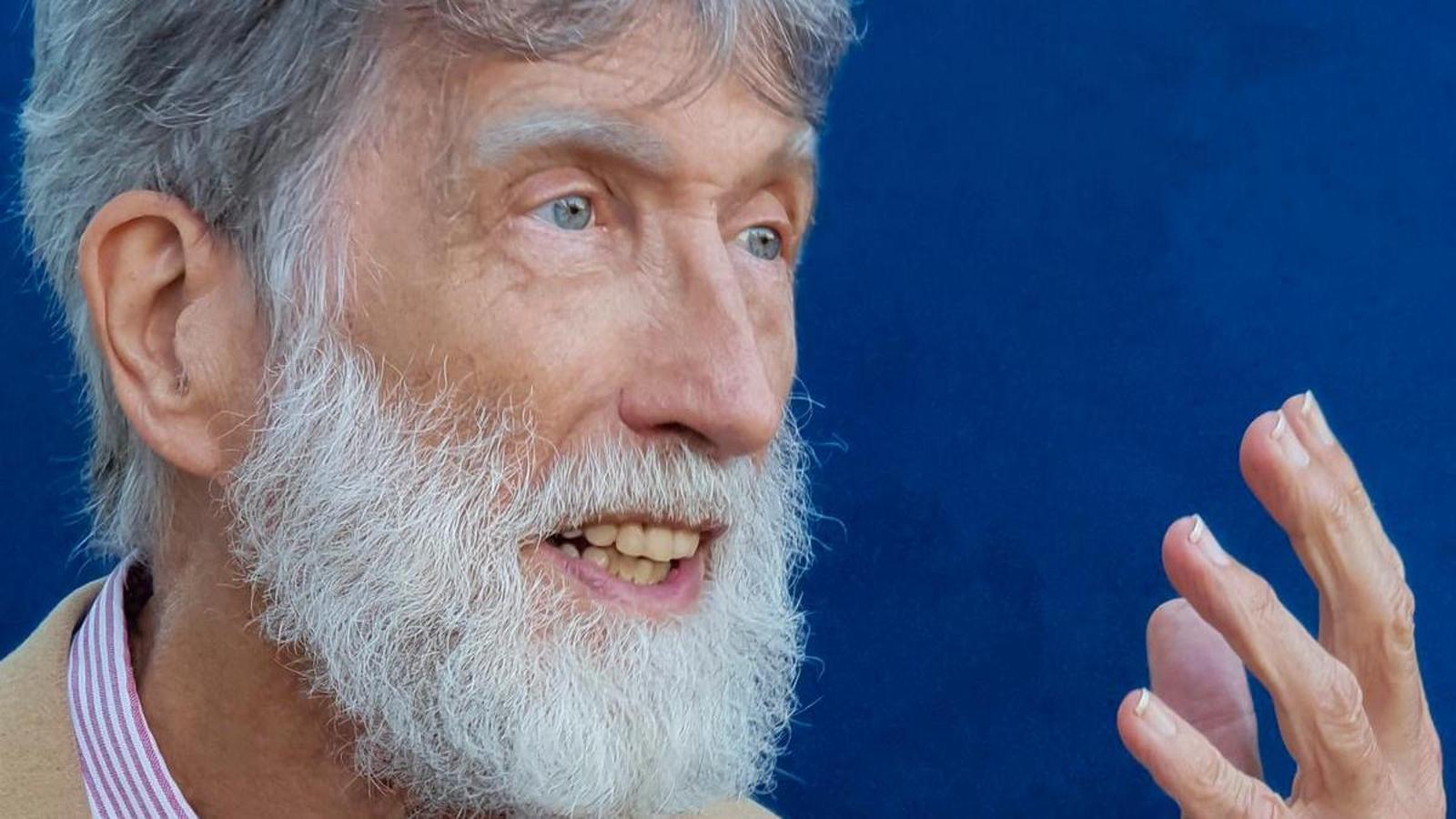
BarcelonaThe leading German Catalanist, Til Stegmann, has died at the age of 85. A professor of Romance philology at the University of Frankfurt, where a memorial service was held this weekend, Stegmann was the great Ambassador of Catalonia to Germany (Pagès Editors, 2015), as his memoirs were titled. He dedicated a good part of his life to civic diplomacy, spreading Catalan culture, language, and the political situation in that country. In his role as a cultural bridge, he was one of the key instigators behind the guest literature at the Frankfurt Book Fair in 2007 being Catalan, one of the peaks in the dissemination of our language. In 1980, his appearance on the program Vostè pregunta had a great media impact.
Tilbert Dídac Stegmann (Barcelona, 1941) was born in Catalonia and lived his first ten years here, as he was the son of the director of the German School of Barcelona. At that time, however, in the middle of the post-war period, he was not even aware of the existence of Catalan. It was when he returned to the country to conduct research, almost at 30 years old, in 1969-70, that he became aware that Catalan existed and the repression it suffered. Since then, he became an activist for "Catalan culture, which is not the same as Spanish culture," he explained at the Summer University of Prada.
Stegmann defined himself as "the professor from Frankfurt who explains what Catalans want to be" and his bibliographic production proves it. He translated everything from an anthology of Catalan song (Diguem no) to a Guide to the Catalan Countries. Among his outreach works, the bestseller Catalonia seen by a German (La Campana, 1988),which has reached 13 editions, Serving Catalonia from Germany. (Pagès Editors, 2018) and The pleasure of reading Catalan literature (Pagès Editors, 2016).
With the goal of defending and making Catalan known as a fully-fledged European language, "at the same level as French or Spanish," he created in Frankfurt the largest library of Catalan studies outside the Catalan Countries, the Catalan Library of the Goethe University, with more than 40,000 volumes. He also promoted the creation of the Catalan Office in Frankfurt and the Journal of Catalan Studies. One of his fields of study was multilingualism and intercomprehension in Europe (the EuroCom method). His connection with Catalan entities was constant, and he also positioned himself in favor of independence.
"Living is also about associating with others, and we are always free to choose who these others are who, alive or dead, end up forming part of our own frame of reference. And isn't that also a culture? I mean a culture not just atavistic, received by inheritance, but a culture consciously adopted as one's own", he wrote to explain his emotional affinity with Catalonia. Throughout his career, he has received the main distinctions that can be obtained in this field: the Pompeu Fabra award for the projection and dissemination of the Catalan language (2008), the Ramon Llull International Prize (2006) and the Creu de Sant Jordi (1985), among others.
