"If the 'Cites' movie is made in Spanish it is because TV3 did not want to get involved in it"
Pau Freixas and Gemma Ferraté lead the series' journey to the big screen
-
CAT -
CAST
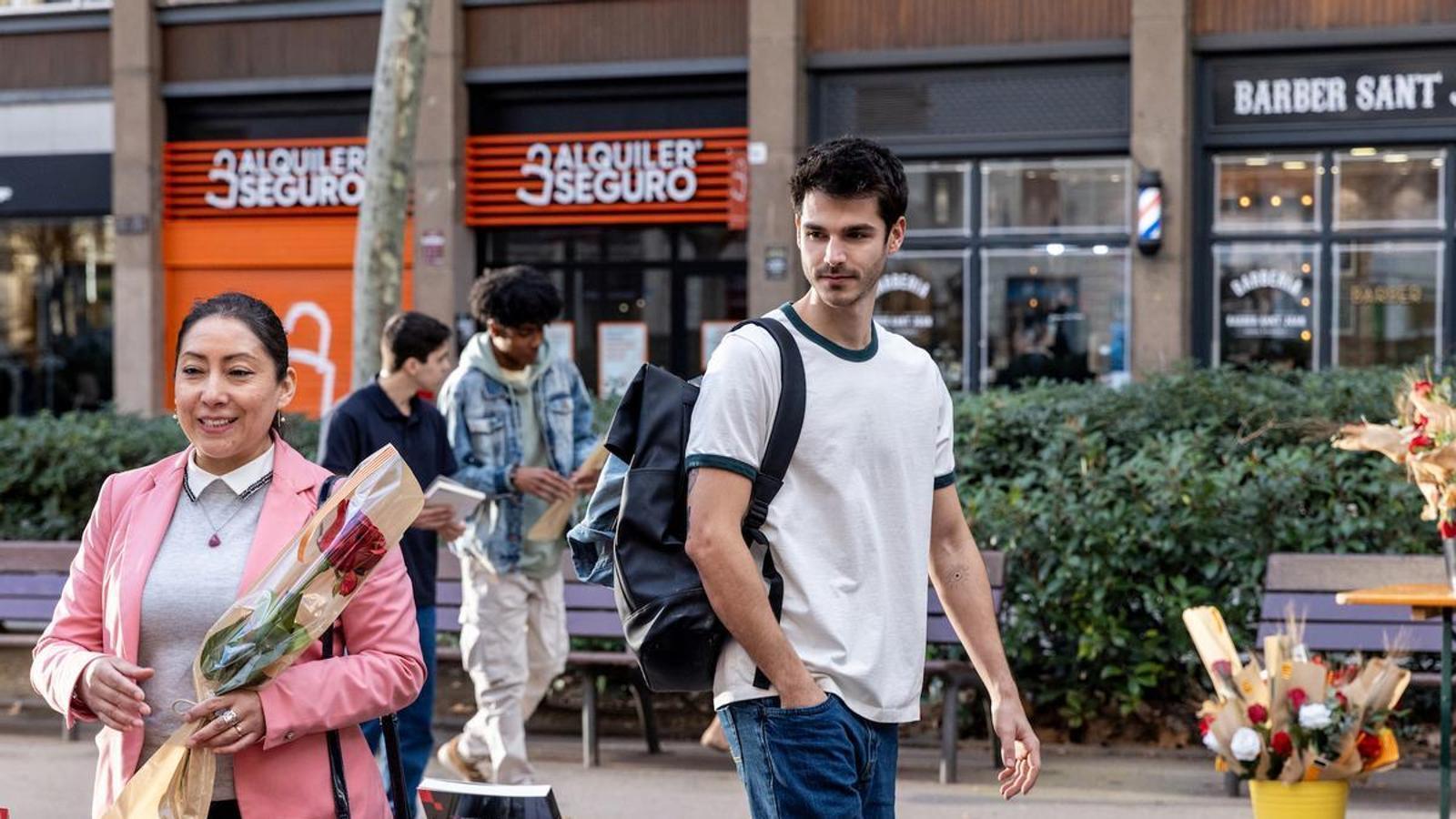
BarcelonaThe festive atmosphere in the streets and the book and rose stalls at the beginning of the film do not deceive: the film version of the series Quotes is set on a Sant Jordi day that hosts four stories of love and desire with the characteristic DNA of this fiction born on TV3, which this weekend arrives in cinemas for the first time. “We wanted to get out of the episodic format and experiment a little,” explains Pau Freixas, the creator and executive producer of the series. “We did two seasons of 13 episodes on TV3, and then three seasons of 6 episodes on Amazon Prime. At two dates per episode, we are dangerously approaching 100 dates; quite a lot. So we explored the possibility of making a film and, since we needed an idea to tie together a series of stories that happen one day in Barcelona, it occurred to us that it should coincide with Sant Jordi,” he says.
But Saint George ends up having little to do with it, in the four stories of Quotes: The movie, which are steeped in the gentle romanticism so characteristic of the series to bring together before the camera characters familiar to fans of Quotes (those of Paula Malia, Àlex Maruny and Berta Castañé already made an appearance in the series) and new faces such as those of Álvaro Mel, Christian Checa, Natalia Verbeke, Javier Rey, Susana Abaitua and Oriol Pla. The tone does not deceive: comedy feel good without edges and with a touch of melancholy that increases as the characters age. “Although intense love is associated with youth, when you are young there is also a certain lack of transcendence –points out Freixas about Castañé and Checa's story–. When you are older, however, you have baggage, and falling in love is a problem: family, what you gain, what you lose...”. This is what happens to Verbeke and Rey, two lovers who cannot agree on the need to break up their respective marriages.

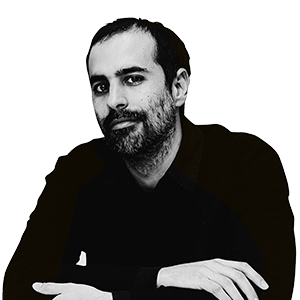
Freixas appears in the film's credits as a showrunner, an Anglo-Saxon term from the world of series that he champions in cinema for the person who is “in the creative trenches” of the production. “I supervise everything: I ask for rewrites, I decide on the director, the crew, and the actors, and I am involved in the editing. But I only get the executive producer credit, which is the same one the person from the platform will have,” he laments. The person chosen by Freixas to direct the film, Gemma Ferraté, had already directed episodes of Cites Barcelona. But Citas: La película is not Ferraté's debut, as in 2015 she released a film at the opposite end of the spectrum from a romantic comedy, Tots els camins de Déu, (All of God's Paths), nominated for the Gaudí for best film, which was a refined and allegorical exploration of the figure of Judas Iscariot, whom it followed during the three days separating his repentance for the betrayal of Christ and his suicide.
Authorship is not precariousness
Ferraté acknowledges that one work and the other have almost nothing in common. “Only Oriol Pla, who played a role in Tots els camins de Déu –she points out–. That was a very arid film that responded to a moment of crisis in the sector when I had just graduated from ESCAC and guerrilla cinema was the only way to direct a film.” After Tots els camins de Déu, Ferraté tried to develop a “free and feminist” adaptation of the novel Solitude, by Víctor Català, but she didn’t succeed and began directing episodes of series, a terrain in which she felt very comfortable. “I feel very comfortable with the figure of the showrunner, it makes me feel accompanied, and I have approached the second film with very different codes than the first,” explains Ferraté, who stresses that she does not feel “less of an author” or a “less creative” director for having directed a commissioned work like Citas: La película: “My involvement is the same. Besides, if authorship means living in precariousness, I don’t want to be an author. I want to enjoy my work and my craft.”
A thorny issue for followers of Cites is the gradual abandonment of Catalan, which in Citas: La película is now only spoken by the couple formed by Paula Malia and Àlex Maruny, and only among themselves. Conciliatory, Freixas explains that the language of the film is the decision of the platform that finances it alone, Amazon Prime. “If the film is made in Spanish it is because TV3 did not want to join in –summarizes Freixas–. The decision lies with whoever puts up the money. The first two seasons were paid for by TV3 and were in Catalan. I would have continued making it in Catalan for my whole life, but they cancelled it. And then Prime came along and we found a way to do it together with TV3: the Prime episodes in Spanish and the TV3 ones in Catalan. What was I supposed to do? Give up? The same happens with the film: TV3 has every right to want to promote other projects, but we believe in it and we have the right to look for a plan B and try to make it another way.”
