Anna Molas: "Egg donors are sustaining a large industry with their work"
Anthropologist specialist in reproductive issues

-
CAT -
CAST
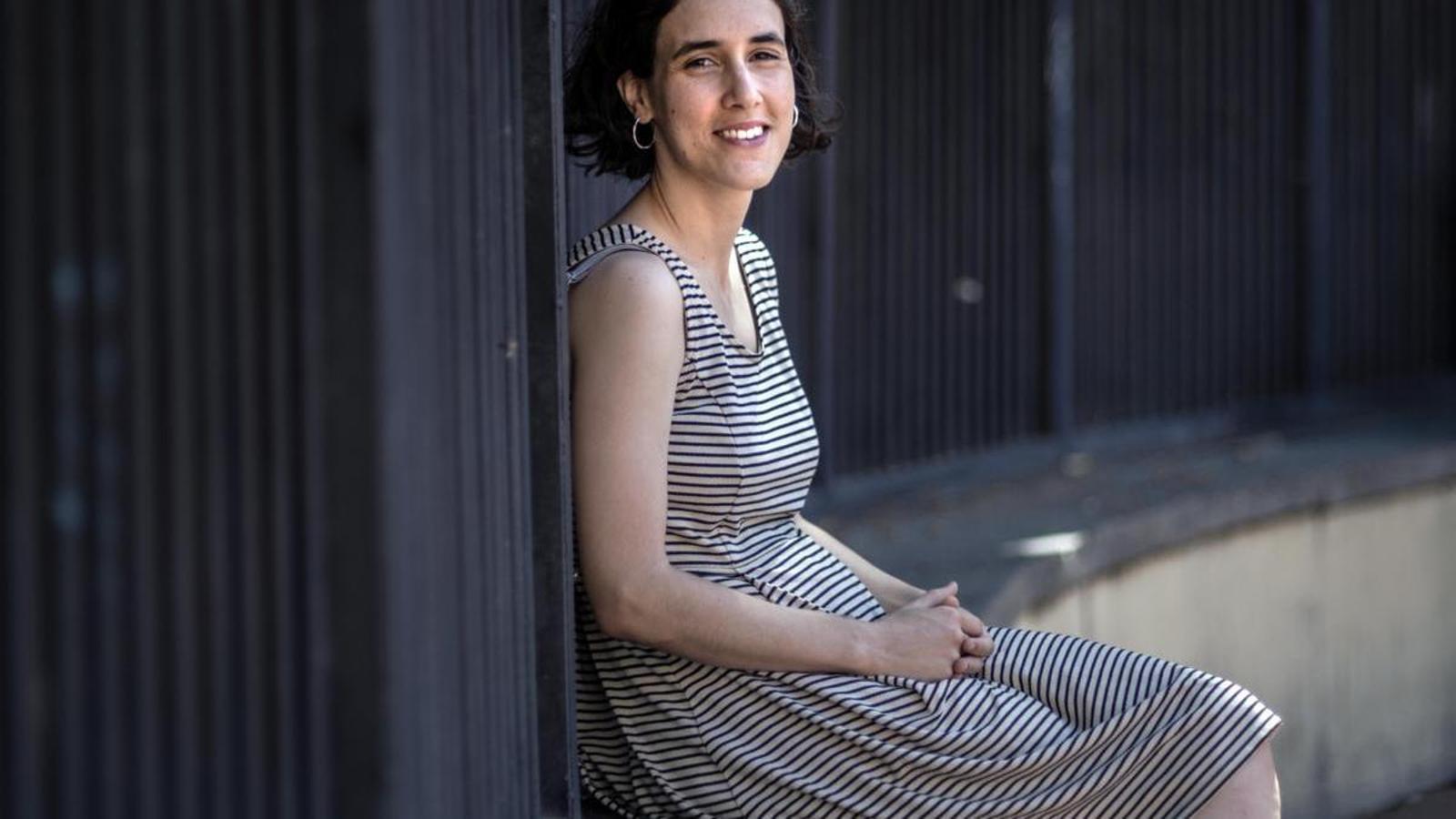
BarcelonaShe studied journalism but soon continued with anthropology studies that have taken her to Australia, where she has obtained her doctorate, and where she lives and works. Anna Molas (Barcelona, 1991) has turned her doctoral thesis on egg donation in Spain into a book, Taming Egg Donors: The Egg Donation Reproductive Market in Spain (Palgrave, 2025), which raises many questions and calls for rethinking one of the most frequent assisted reproduction techniques. The first time she encountered egg donation was over ten years ago when an advertisement to be an egg donor appeared on a job search portal. "On the one hand, I got angry – I was looking for a job, why was this coming to me? – and, on the other hand, it also generated many questions for me. That lit the fuse".
Why is the assisted reproduction industry in Spain a pole of attraction for couples from all over Europe?
— There are several factors, and one, clearly, has to do with the legislation we have, which is one of the most permissive in the European framework and which, for example, does not impose limitations regarding age [in the private system] or marital status. And another very central issue is that Spain right now is one of the few countries that still maintains anonymity. And this is important because it is what allows donors to understand egg donation as a decision that will have no consequences.
And Spain is a leader in treatments using donor eggs.
— Data shows that more than half of the people who come from abroad to Spain are looking for treatments with donated eggs, which is precisely where they have the most limitations in their own countries.
It is what is known as reproductive tourism.
— Exactly, because there are countries where egg donation is directly prohibited. In others it is not, but since there is no economic compensation offered or it is not anonymous, they have very few donors. Therefore, the waiting lists are eternal, and it is easier here.
And who are the donors? You've done fieldwork and interviewed some of them.
— What I found were people who had made the donation when they were quite young, 22 years old and under. And, then, what I found is that their decision to donate had to do with a complicated and unstable job market. This is not to say that they didn't also like the idea of helping someone, but that wasn't the driver for most. There were those who directly defined the donation as just another job they could do:"I'm a seasonal waitress in the summer and this is also part of the same thing".
As an easy way to get money at a specific time.
— Yes, even though it's not easy, even if the narrative is constructed like this. Others didn't necessarily frame it as work, they didn't call it that, but the objective was related. One told me she had been looking for a job for a long time and wanted to start university but her parents couldn't support her, and with the egg donation she had a little cushion to continue looking for a job. Or another who wanted to pay for unpaid internships in Argentina with this money. It's around 1,000 or 1,200 euros that can increase as they donate. And there are also incentives if they bring friends.
There is a tension between a supposedly altruistic donation and this economic compensation.
— It is spoken of as if it were an altruistic donation, but in practice this money does represent an incentive for some women. But this altruistic narrative also has a gender bias. The moral weight falls on them. Why is it assumed that this donation should be altruistic? And the clinics, do they do it altruistically? All the other actors are making money. In my interviews, this dichotomy was very evident. Some even felt a little ashamed to admit that they were doing it for the money. In the end, what these women are doing is reproductive work that is sustaining a large industry. And this narrative of altruism makes women volunteers and not workers and, therefore, as volunteers, they cannot negotiate conditions.
In addition to genetic testing, donors are also evaluated, explain, for their behavior.
— Yes, the donation process requires a lot of involvement from the donor: she will have to inject medication daily for two weeks or more, she will have to go for different check-ups, she will have to endure the physical changes that occur and she will have to go through the operating room. And the clinics also look at how much that person can be trusted and whether she will be able to follow the treatment correctly. And for this reason, they do a lot of follow-up via WhatsApp to ask if they have taken medication, at what time... And the financial compensation is not guaranteed until the end.
Is there an ambivalent relationship between clinics and donors?
— It is a relationship of control but also of care and with an economic background. They depend a lot on the donors. They dedicate many efforts to donor management because right now there is a lot of competition. But at the same time it is a presence that is uncomfortable.

Is there a class inequality between women who donate and those who receive eggs? Explain that 24.8% of egg donors are born abroad.
— There is a class gap that is also very related to age. We are talking about 20-year-old girls versus women between 40 and 45 years old or older. This age factor alone will have a lot to do with their economic capacity or what life stage they are in. And there is also a large number of donors who are immigrants. Here, for example, clinics highly value foreign donors from Eastern European countries because they bring a phenotype that they find difficult to find among the Spanish population. They like to have a pool of everything.
Under what conditions do they donate? What are the risks? Do donors have enough information about the entire process?
— The clinic is the sole mediator of information, and this, in part, is thanks to anonymity. When recipients ask who the donors are, it is the clinics that respond, and they usually do not mention many of the things we are talking about now. What the clinics know and communicate to the donors, because it is in the informed consent, are the short-term risks. But there are few studies on long-term risks and informed consent does not mention them. And another thing that donors do not know is how the global reproductive market works: they do not know what will happen to their eggs, but they also do not know the economic value they will have once they are outside their bodies. If they knew, perhaps they would claim a larger slice of the pie.
Children born from assisted reproduction techniques have begun to raise their voices, demanding the right to know their origins and for donation to no longer be anonymous. What do you think, should it stop being anonymous?
— Yes, I think right now is what would benefit more parties involved in the process. In a way, they had sold us a story, which was that genetics doesn't matter, and it turns out there are people who say: "Listen, I don't agree. I already know who my parents are, but I still want to know where I come from." And this forces us to rethink rights, to rethink what it means to know your biological origins, if you can decide for another... It cannot be denied that these people should have the right to choose how important genetics is to them. Furthermore, anonymity is obscuring many parts of the process.

If the donation ceases to be anonymous, the number of donors may fall.
— It may be that for some women it is no longer an option and that we would have, as happens in other countries, waiting lists. I think the question is how we want to do it. Does achieving all these pregnancies justify everything that is at stake right now, or do we prefer to take a step back and rethink it? Do we want to create different relationships with the donors? Do we want to create different relationships with our children? I also think it is a way to defend the family in a more solid way that does not involve genetics. Because when you prohibit access to this information, the message you send is that this information is so important that I hide it from you because it could turn everything upside down. On the other hand, this transparent approach is the opposite message: that this does not have to destabilize my family.
But it also puts a brake on a booming business.
— Obviously, anonymity is one of the pillars that have allowed Spain to have the business it has. And the cancellation of anonymity clearly puts it in jeopardy. It is also important to note that right now the majority of fertility clinics have been bought by large investment funds. We are talking about an economy that is not local, it is transnational.
What surprised you the most?
— What impacted me the most is the work that this donation implies both physically and emotionally, and that this work is very invisible. It has not been described what this process entails, we do not know what concrete situations it generates in the lives of these people who, as we said, are sustaining the entire industry, and it is something that I think we should know.

