"We live in constant threat": Lebanon's healthcare workers, under Israeli fire
The health teams have become the only support network for the neighbors and are often the target of Israeli attacks

-
CAT -
CAST
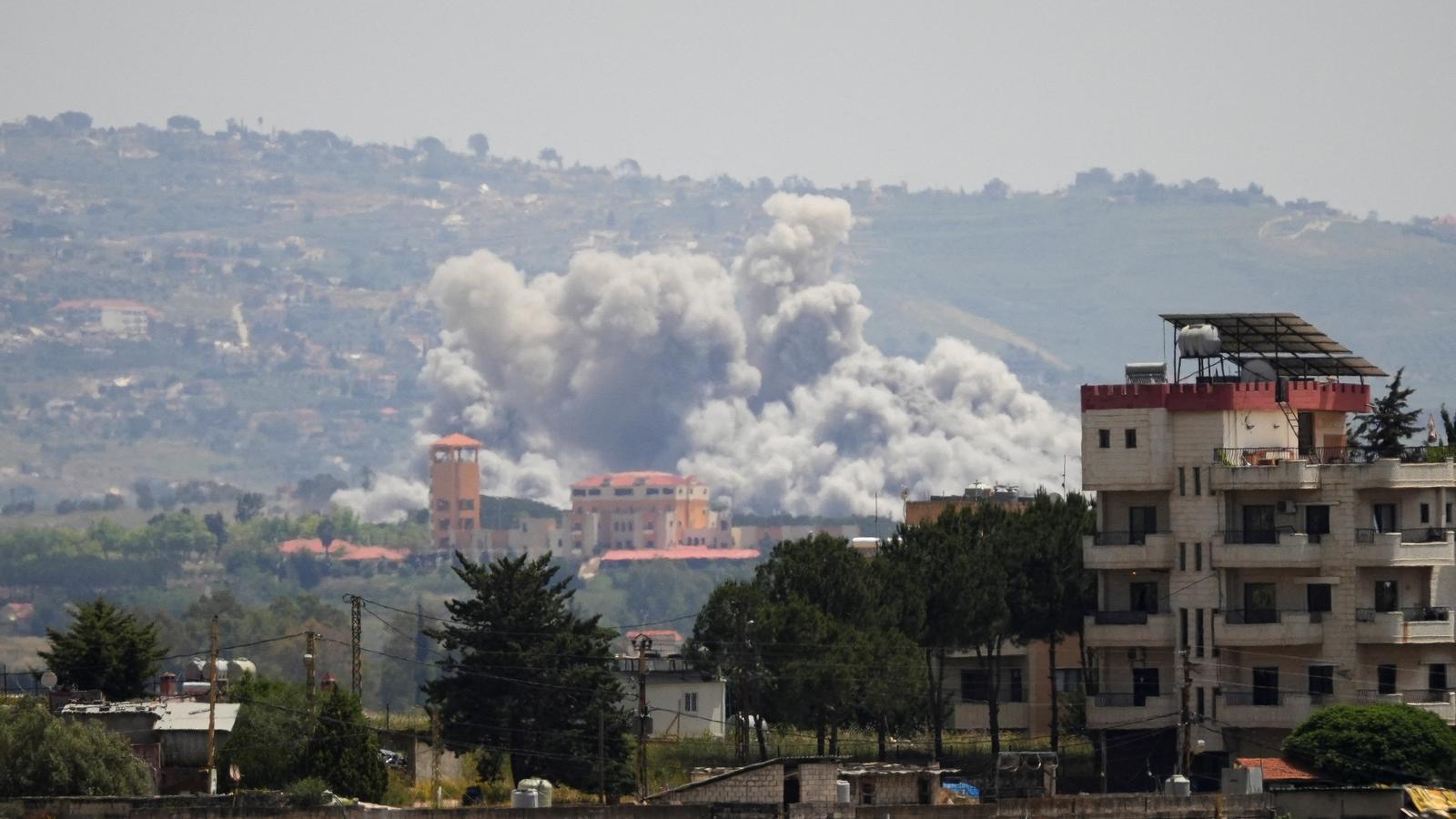
Nabatieh (Lebanon)In Nabatieh, the silence only lasts until the next explosion. From the terrace of a makeshift rescue base, Mohamed Sulayman scans the southern Lebanese valley for columns of smoke. Every gray cloud on the horizon could signify a hit house, a bombed road, or a family trapped under rubble. When the phone rings, volunteers rush to the ambulances without knowing if they will return.
even after the April 17 ceasefire, it continues to leave deaths every week, even after the ceasefire on April 17, continues to leave deaths every week.
Only about 160 people survive in this half-empty city. Before the bombings and evacuation orders, Nabatieh had nearly 70,000 inhabitants. Most fled months ago, when systematic attacks against the south began. Shops remain closed, streets are deserted, and the dominant sound is no longer traffic, but drones.
At the ambulance base where 35 volunteers live crammed together, the war has left visible scars. Several ambulances were destroyed in Israeli attacks, and three members of the team have died since the start of the offensive, including Mohamed's son, Ali. The young paramedic died when an Israeli drone hit his motorcycle as he was going to help distribute food for the inhabitants trapped in the city.
Mohamed speaks slowly, with the serenity of someone who has already exhausted their grief. “The people who have stayed have nothing. We try to help as much as we can. We are like a family. My son believed in helping others, and that's what we continue to do,” he says, holding a cup of coffee in front of a wall covered with photos of fallen colleagues.
For those who remain in Nabatieh, the paramedics have become more than emergency teams. They are also the only support network that continues to function. Every day, several volunteers prepare hot meals in a kitchen next to the city center mosque. Afterwards, trays of rice with chicken are loaded into a van escorted by two ambulances, in an attempt to avoid attacks during the journey.
The men arrive quickly, almost always alone and on motorcycles. They collect their rations in silence and immediately return home. The streets remain empty. There is hardly a soul in the city. Khaled is one of them. Every day he crosses Nabatieh to get food for his family. “I’m the only one who goes out,” he explains while waiting at the entrance of the mosque. “The streets are not safe. But we decided to stay. This is our home and we have nowhere to go. The state offers no alternative.”
Attacks against medical personnel, as in Gaza
For months, Israel has accused Hezbollah of using ambulances and medical facilities for military purposes, although without presenting conclusive public evidence. Lebanese health authorities reject these accusations and denounce that rescue teams have become direct targets. According to the Lebanese Ministry of Health, at least 120 emergency workers have died since the start of the war, seven of them in the last 48 hours. Many died while evacuating the wounded or responding to bombed areas.
“What we are seeing here is increasingly resembling Gaza”, warns Mona Abu Zeid, director of Al Najdi hospital in Nabatieh. “Hospitals, ambulances, medical staff… we all live under constant threat”. This public hospital now functions as a field hospital. With limited resources and reduced staff, doctors stabilize the most seriously injured before sending them to Sidon or Beirut. In the intensive care unit is Fatima, 15 years old. She was seriously injured in a bombing that killed seven members of her family. “The majority of the injured we receive now are civilians”, explains Abu Zeid. “Entire families. Sometimes both parents die and the children are left orphans”.
Almost 600 deaths despite the ceasefire
Since March 2, more than 3,000 people have died in Lebanon and nearly a million have been displaced, according to official Lebanese figures. Even after the April 17 truce, the violence has not stopped. Nearly 600 people have died since then.
As darkness falls, Mohamed drives the ambulance to a small temporary cemetery on the outskirts of Nabatieh. There his son Ali rests, alongside other paramedics killed during the war. In the Shiite south of Lebanon, many speak of the dead as martyrs. For families like Mohamed's, helping others even under the bombs is part of a deeply rooted idea of sacrifice and duty, inspired by the memory of Imam Hussein and the battle of Karbala. Minutes later, the phone rings again at the ambulance base. Another explosion has just shaken a nearby village. Volunteers get up almost automatically. They know that ambulances and rescue teams can once again become targets. Nevertheless, they leave.

